

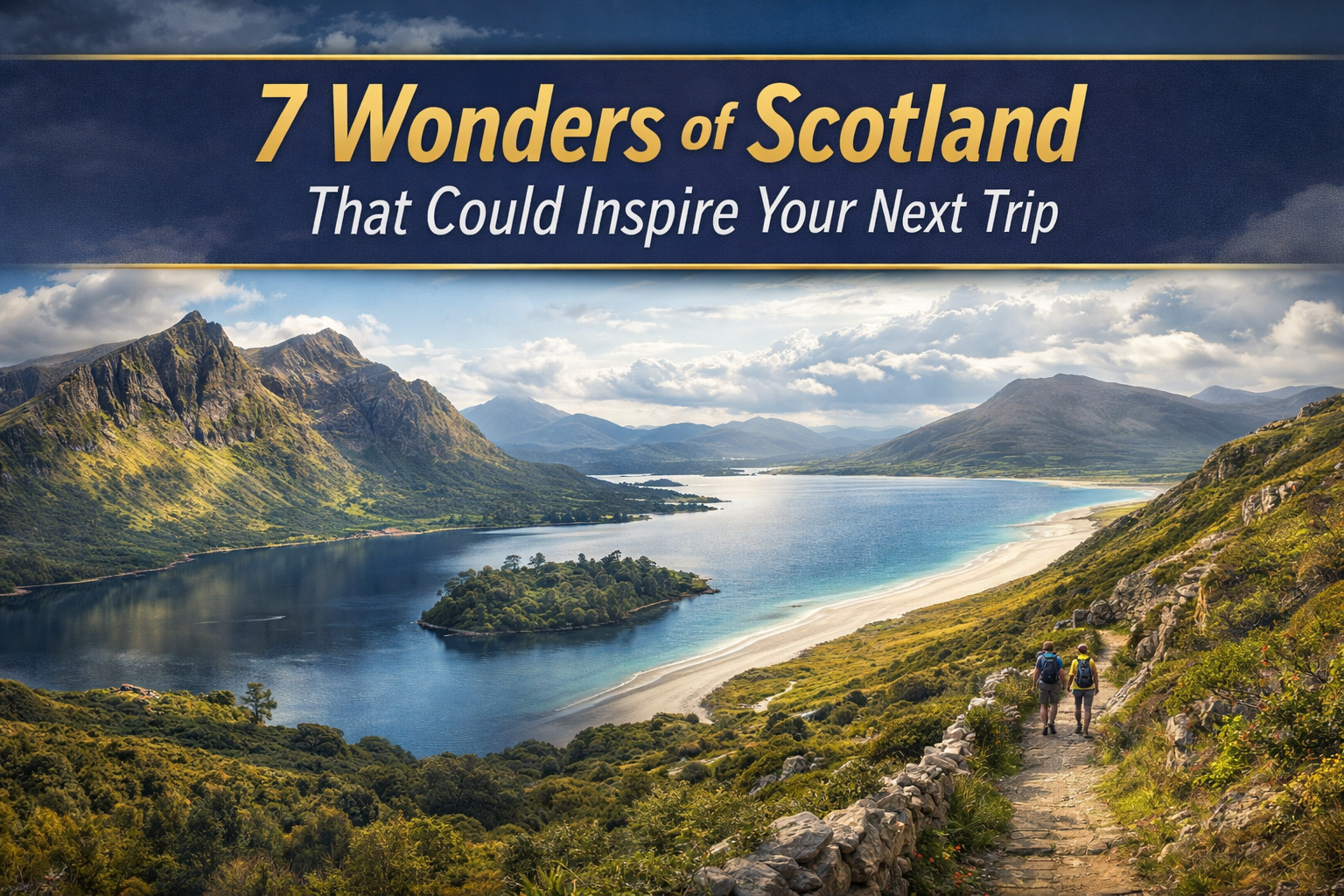
7 Wonders of Scotland That Could Inspire Your Next Trip
Beginner | April 8, 2026
✨ 혼자서 기사를 소리 내어 읽거나 튜터를 따라 각 단락을 반복해서 읽으세요. 레벨...
A Travel List Full of Wild Beauty
A new Condé Nast Traveler article is getting people excited about Scotland by highlighting seven beautiful places to visit in 2026. The list includes peaceful islands, remote beaches, mountain views, and long walking paths. Some of the featured places are Inchcailloch in Loch Lomond, Luskentyre Beach on Harris, and the Fife Coastal Path. Instead of focusing only on famous cities, the article points readers toward quieter and more dramatic parts of the country. (Condé Nast Traveler)
Why 7 Wonders of Scotland Feels Different
What makes this story interesting is that the list is not built around the usual tourist checklist. It leans into places that feel wilder, calmer, and sometimes harder to reach. Condé Nast Traveler’s seven picks are Inchcailloch, Rannoch Moor, Castle Stalker, Luskentyre Beach, Kearvaig Bothy, Suilven, and the Fife Coastal Path. That means the article is really about a different style of travel—less rushing, more exploring. For travelers who want space, nature, and fewer crowds, the 7 Wonders of Scotland idea has real appeal. (Condé Nast Traveler)
From Loch Islands to Long Coastal Walks
Several places on the list already have strong reputations with official tourism groups. Inchcailloch is part of the Loch Lomond National Nature Reserve and is known for its natural beauty and cultural history. The Loch Lomond & The Trossachs National Park Authority says the island offers a feeling of remoteness while still being safely accessible. Meanwhile, VisitScotland describes the Fife Coastal Path as a long coastal walk through fishing villages, sandy beaches, wildlife areas, castles, and caves. In other words, Scotland is not just selling pretty views—it is offering active, experience-based travel. (Loch Lomond & The Trossachs National Park, VisitScotland)
Beaches That Look Almost Unreal
One of the biggest stars on the list is Luskentyre Beach on the Isle of Harris. It is famous for bright white sand and blue-green water that can look more like the Caribbean than northern Britain. The Outer Hebrides tourism site describes Luskentyre as the largest and most spectacular of the Harris beaches. VisitScotland also promotes Lewis and Harris for their white-sand beaches, wild landscapes, and island culture. That helps explain why places like Luskentyre are becoming dream destinations for travelers who want something beautiful but less obvious than the usual European hotspots. (Visit Outer Hebrides, VisitScotland)
Travel in 2026 May Be More About Space Than Speed
This article also reflects a bigger travel trend. Many people still want famous destinations, but they also want quieter places, deeper experiences, and more time outdoors. Scotland fits that mood very well. Some of the Condé Nast Traveler picks, like Kearvaig Bothy and Suilven, are more remote and demand real effort. Others, like Loch Lomond or the Fife coast, are easier to add to a wider trip. Either way, the message is clear: in 2026, some travelers may choose windswept paths and silent beaches over crowded city lines. (Condé Nast Traveler)
Why This Story Matters for English Learners
For English learners, travel stories like this are useful because they are full of descriptive language you can use in real conversation. Words like remote, dramatic, coastal, and spectacular appear often in travel English. The story also gives you easy speaking topics: dream trips, nature travel, walking holidays, and places you want to visit one day. And honestly, Scotland has a strong sales pitch here—mountains, beaches, castles, and no need for fake sunshine to make it sound good.
Vocabulary
- wonder (noun) – something amazing that makes people feel surprise or admiration.
Example: The article highlights seven natural and cultural wonders in Scotland. - remote (adjective) – far away from towns or cities.
Example: Some of the places on the list are very remote and quiet.* - coastal (adjective) – connected to the sea or the shore.
Example: The Fife Coastal Path gives walkers beautiful sea views.* - dramatic (adjective) – exciting and impressive in appearance.
Example: Scotland is famous for its dramatic landscapes.* - spectacular (adjective) – very impressive and beautiful.
Example: Luskentyre is called one of the most spectacular beaches in Harris.* - accessible (adjective) – easy to reach or use.
Example: Inchcailloch feels wild, but it is still accessible to visitors.* - destination (noun) – the place where someone is going.
Example: Luskentyre Beach is becoming a dream destination for many travelers.* - wildlife (noun) – animals and birds living in nature.
Example: Walkers on the Fife Coastal Path may see interesting wildlife.* - bucket list (noun) – a list of things someone wants to do in life.
Example: Visiting Scotland is on many travelers’ bucket lists.* - explore (verb) – to travel around a place and learn about it.
Example: The article encourages readers to explore quieter parts of Scotland.*
Discussion Questions (About the Article)
- What seven places were included in the Condé Nast Traveler list?
- Why does this list feel different from a typical tourist guide?
- What makes Inchcailloch and the Fife Coastal Path special?
- Why is Luskentyre Beach getting so much attention?
- What kind of traveler would enjoy this list the most?
Discussion Questions (About the Topic)
- Do you prefer famous tourist spots or quieter places? Why?
- What kind of scenery makes you want to travel most?
- Would you enjoy a walking holiday like the Fife Coastal Path?
- What country has the most beautiful natural scenery in your opinion?
- If you visited Scotland, which type of place would you choose first: beach, castle, island, or mountain?
Related Idiom or Phrase
“Off the beaten path” – away from the most common tourist areas.
Example: Many of the places in this article are off the beaten path, which makes them feel more special.*
📢 Want more tips like this? 👉 Sign up for the All About English Mastery Newsletter! Click here to join us!
Want to finally master English but don’t have the time? Mastering English for Busy Professionals is the course for you.
Follow our YouTube Channel @All_About_English for more great insights and tips.
This article was inspired by: Condé Nast Traveler, Loch Lomond & The Trossachs National Park, VisitScotland, Visit Outer Hebrides, and VisitScotland – Lewis and Harris

 한국어
한국어  English