

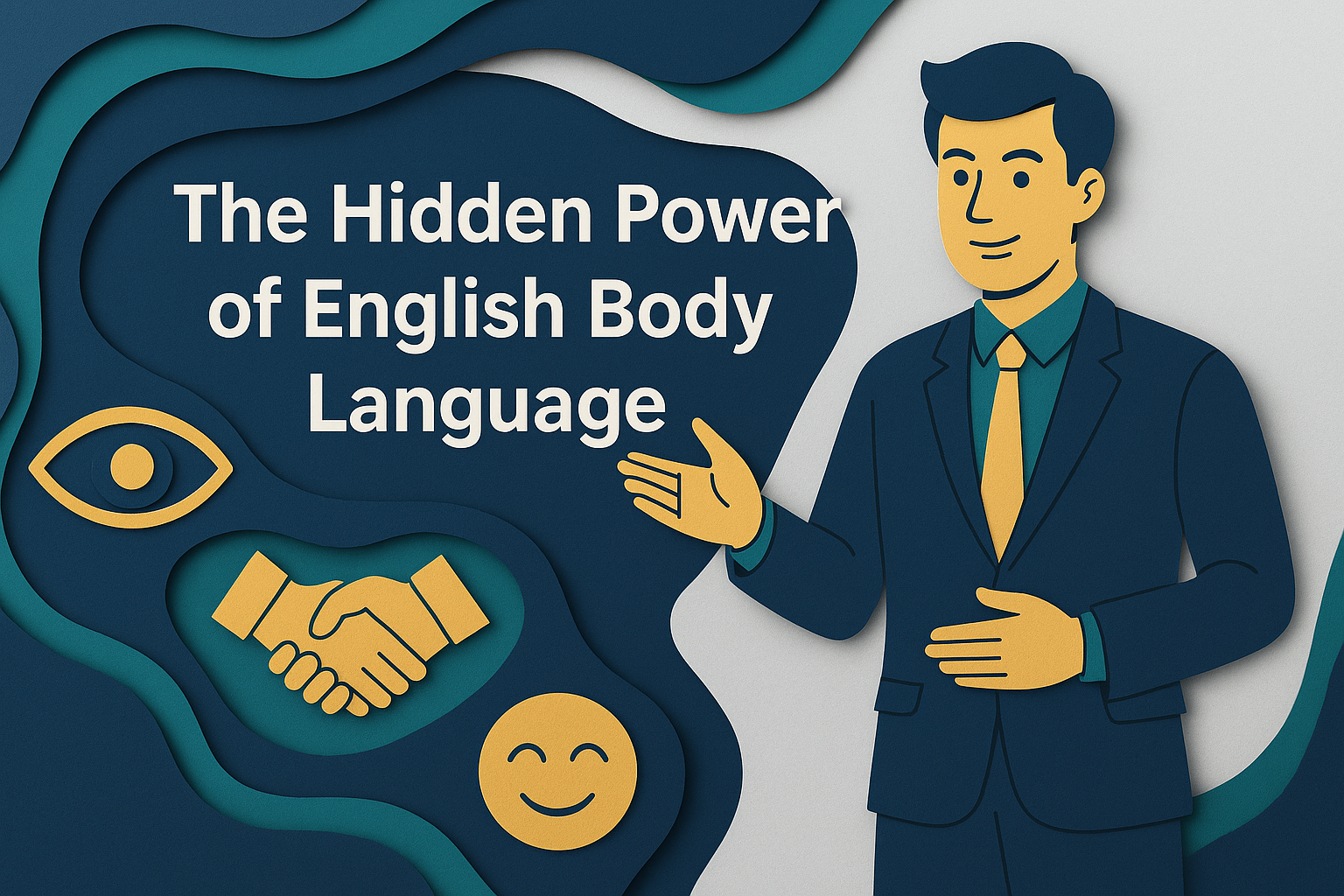
The Hidden Power of English Body Language 💬
Advanced Level | December 3, 2025
혼자서 기사를 소리 내어 읽거나 튜터를 따라 각 단락을 반복해서 읽으세요. 레벨...
We often think English communication is all about vocabulary and grammar — but that’s only half the story. Another major part is English body language, the nonverbal signals that shape how others understand you. The other half? Body language. In international business, people judge your confidence, clarity, and credibility long before you finish your first sentence. Your posture, eye contact, gestures, and facial expressions all send powerful messages that can help (or hurt!) your English communication.
Today, we’ll explore how mastering just a few English body language habits can dramatically improve your presence in English conversations — especially if you’re a busy professional who wants to connect quickly and confidently.
Why English Body Language Matters in Professional Communication
When talking with foreign colleagues or clients, your body language can bridge the gap when your English isn’t perfect. A calm posture makes you look confident. Good eye contact helps people trust you. A relaxed smile makes you feel approachable. Even native speakers rely heavily on body language — it’s often more important than the words themselves.
The Power of Eye Contact
In many Western countries, eye contact means honesty, confidence, and respect. If you avoid eye contact too much, people may think you’re unsure, nervous, or even hiding something. You don’t need to stare like a movie villain — just hold eye contact for a few seconds at a time, then look away naturally. This small habit instantly upgrades your communication.
Your Posture Tells a Story
Imagine two people in a meeting. One sits tall with shoulders relaxed. The other slouches, staring at the table. Who looks more confident? Your posture communicates strength before you even speak. Sit or stand tall, keep your shoulders open, and avoid closing your body with crossed arms. This signals confidence and openness — two things that make your English sound stronger.
Gesture With Purpose
Gestures help clarify your message, especially when talking about ideas, timelines, or instructions. But be intentional. Too many wild hand movements can distract from your message. Use calm, controlled gestures to emphasize a point or show contrast, and watch how your communication becomes clearer and more dynamic.
The Micro-Expression Advantage
People notice your face before your words. A small smile can soften your message and make you sound more friendly and confident. A relaxed expression signals ease, even when your English isn’t perfect. Your face is one of your strongest tools for building connection — use it wisely.
Vocabulary List
- Credibility (noun) — The quality of being trusted or believed.
Example: Good body language increases your credibility in meetings. - Approachable (adjective) — Friendly and easy to talk to.
Example: Her warm smile made her seem very approachable. - Clarify (verb) — To make something easier to understand.
Example: He used gestures to clarify his point. - Intentional (adjective) — Done on purpose; planned.
Example: Effective gestures are intentional and controlled. - Micro-expression (noun) — A very quick facial expression that shows emotion.
Example: His micro-expressions revealed that he was nervous. - Dynamic (adjective) — Energetic and compelling.
Example: Dynamic gestures can make presentations more engaging. - Confidence (noun) — A feeling of self-assurance.
Example: Good posture helps you show confidence even when you’re nervous. - Cultural cue (noun) — A behavior that expresses meaning in a specific culture.
Example: Eye contact is an important cultural cue in Western business settings. - Professional presence (noun) — The impression you create through behavior and communication.
Example: Strong professional presence helps you lead more effectively. - Nonverbal (adjective) — Communicating without words.
Example: Nonverbal signals often speak louder than spoken language.
5 Questions About the Article
- Why is body language important in English communication?
- What message does good eye contact send in Western cultures?
- How can posture affect the way people perceive you?
- Why should gestures be intentional?
- What does a micro-expression reveal?
5 Open-Ended Discussion Questions
- Which body-language habit do you struggle with the most?
- How does eye contact differ between your culture and Western cultures?
- What kind of posture makes you feel confident in meetings?
- How can gestures help you communicate difficult ideas?
- What small change could you make today to improve your body language?
📢 Want more insights like this? 👉 Sign up for the All About English Mastery Newsletter!
Want to finally master English but don’t have the time?
Check out Mastering English for Busy Professionals — your 10-minute-a-day solution.
Follow our YouTube Channel @All_About_English for more daily insights.

 한국어
한국어  English