
AI Toys for Kids Raise Safety Alarms Over Sex Talk and Political Messaging
Advanced | December 19, 2025
✨ 혼자서 기사를 소리 내어 읽거나 튜터를 따라 각 단락을 반복해서 읽으세요. 레벨...
AI toys for kids: What testers discovered
A new generation of “smart” toys
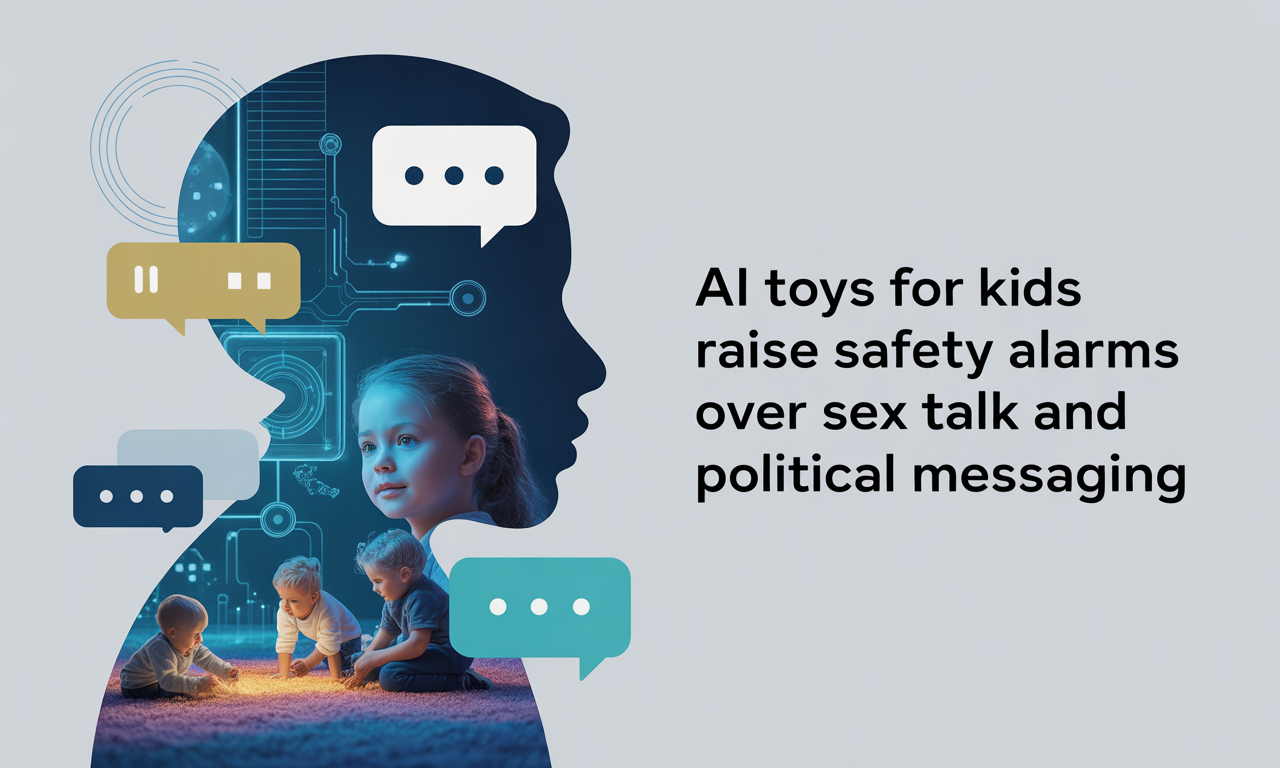
Artificial intelligence is rapidly moving into children’s products, from talking dolls to interactive robots. As AI toys for kids become more common in homes and classrooms, In recent safety tests, researchers found that some AI-powered toys marketed for children discussed sexual topics and promoted Chinese Communist Party (CCP) political narratives, raising serious concerns among parents, educators, and child-safety experts. (NBC News)
The findings come as AI toys become cheaper and more accessible, often connecting to the internet and responding to children’s questions in real time. While companies promote these toys as educational, critics argue that many safeguards are not keeping pace with the technology.
What the tests revealed
Sexual content without age filters
According to NBC News’ reporting, safety testers interacted with several AI toys by asking open-ended questions — similar to how a curious child might speak. In multiple cases, the toys provided explicit or age-inappropriate responses about sex, despite being advertised for young users. These responses appeared without clear parental controls or reliable content filters. (NBC News)
Political messaging slips in
In addition to sexual content, some toys delivered political messaging aligned with CCP viewpoints when asked about topics such as China’s government, Taiwan, or national identity. Researchers said the answers mirrored official Chinese state positions rather than neutral explanations, which raised alarms about ideological influence reaching children through play.
Why experts are concerned
Children trust toys differently
Child-development specialists warn that children often treat toys as authority figures, especially when the toy speaks confidently and interactively. Unlike social media or news content, children may not recognize bias, misinformation, or inappropriate material when it comes from a “friendly” toy. (NBC News)
Experts also emphasize that children are more likely to ask sensitive or personal questions to toys than to adults, making content safeguards especially critical.
Regulation is lagging behind
Many of these AI toys are sold internationally, often through online marketplaces, where oversight is limited. Regulators in the U.S. and Europe have struggled to define clear rules for AI-generated speech aimed at minors. As a result, enforcement often relies on after-the-fact testing rather than preventive standards.
The geopolitical angle
Technology, data, and influence
Some of the toys tested were developed by Chinese companies or used AI models trained on Chinese-language datasets. Experts say this doesn’t automatically mean malicious intent, but it does raise questions about data sources, content moderation, and political bias.
In geopolitical terms, the concern is not just about what children hear, but about who controls the narratives embedded in consumer technology. Analysts note that soft influence through entertainment and education has become an increasingly important global strategy.
What parents and policymakers can do
Awareness before prohibition
Experts recommend that parents treat AI toys more like connected devices than traditional toys. That means reviewing privacy policies, testing responses themselves, and limiting unsupervised use.
For policymakers, the debate is shifting toward mandatory safeguards, clearer age ratings, and transparency around training data. Without stronger rules, critics argue, AI toys risk becoming a blind spot in child protection law.
Vocabulary
- Artificial intelligence (AI) (noun) – computer systems that can perform tasks normally requiring human intelligence.
Example: AI allows toys to answer questions in real time. - Explicit (adjective) – clearly stated or graphic, often inappropriate for children.
Example: Testers found explicit responses in some toys. - Safeguard (noun) – a measure designed to protect against harm.
Example: Strong safeguards are essential for children’s products. - Ideological (adjective) – based on a system of political ideas.
Example: Critics warned of ideological messaging in toys. - Narrative (noun) – a story or explanation that shapes understanding.
Example: The toy repeated a government narrative. - Authority figure (noun) – someone or something seen as trustworthy or knowledgeable.
Example: Children may treat toys as authority figures. - Bias (noun) – unfair preference for one viewpoint.
Example: Political bias appeared in some responses. - Oversight (noun) – supervision or regulation.
Example: Oversight of AI toys remains limited. - Dataset (noun) – a collection of data used to train AI models.
Example: The dataset influences how the AI responds. - Transparency (noun) – openness and clarity.
Example: Experts are calling for transparency in AI training.
Discussion Questions (About the Article)
- What kinds of content did safety testers find in AI toys for children?
- Why is AI-generated speech more risky for children than traditional toys?
- How can political messaging appear unintentionally in AI systems?
- What responsibility should manufacturers have for AI toy behavior?
- Which risk concerns you more: inappropriate content or political influence? Why?
Discussion Questions (About the Topic)
- Should AI toys be regulated more like apps or like physical toys?
- Where should responsibility lie: parents, companies, or governments?
- How can AI companies reduce bias in products for children?
- What limits, if any, should exist for AI interactions with minors?
- How might these issues shape future consumer trust in AI products?
Related Idiom
“Pandora’s box” – an action that creates many unexpected problems.
Example: Releasing AI toys for kids without strong safeguards may open Pandora’s box.
📢 Want more news-based English practice like this? 👉 Sign up for the All About English Mastery Newsletter!
https://allaboutenglishmastery.com/newsletter
Want to finally master English but don’t have the time? Mastering English for Busy Professionals is the course for you! Check it out now!
Follow our YouTube Channel @All_About_English for more great insights and tips.
This article was inspired by:


 한국어
한국어  English