

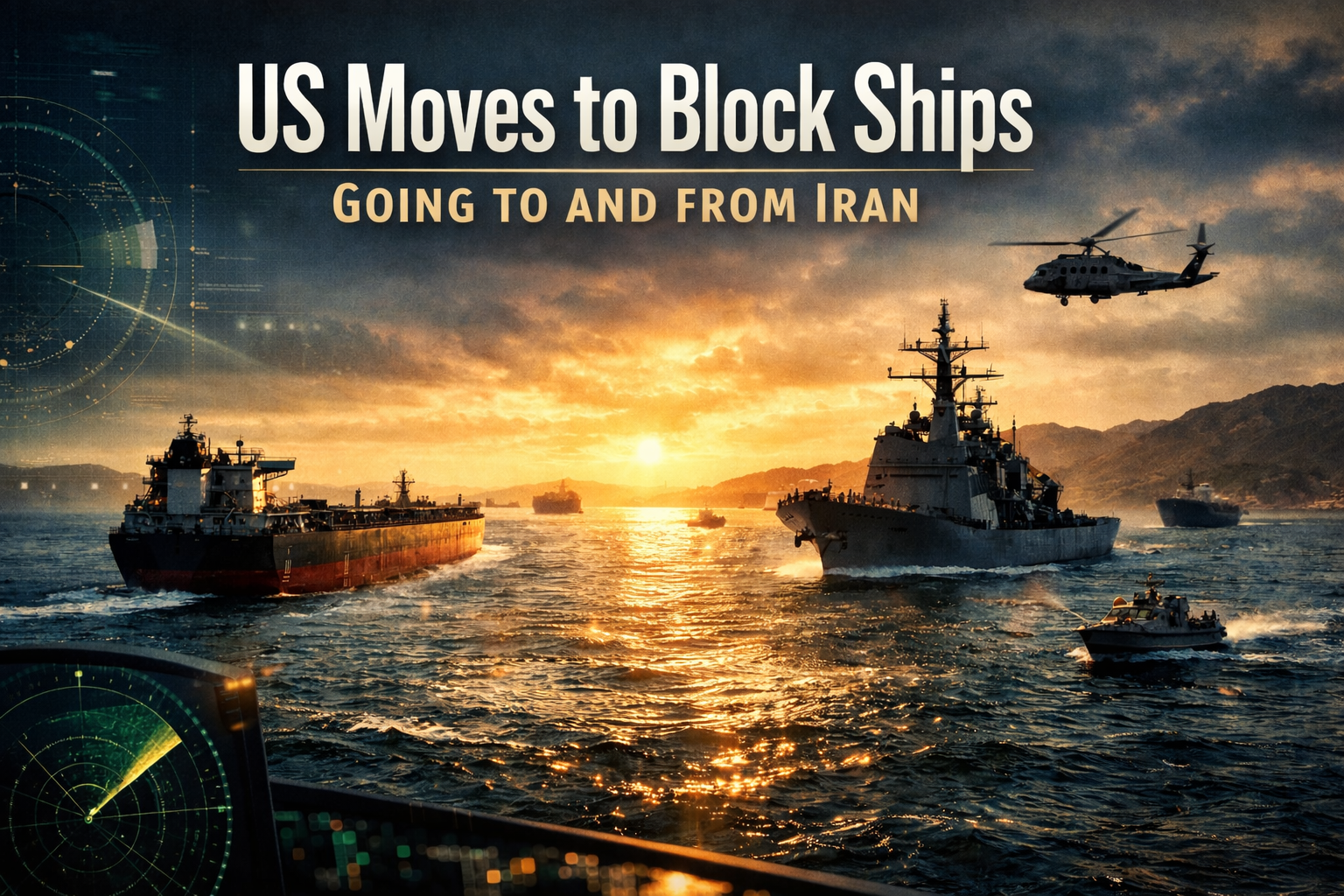
US Moves to Block Ships Going to and from Iran
Advanced | April 15, 2026
✨ 혼자서 기사를 소리 내어 읽거나 튜터를 따라 각 단락을 반복해서 읽으세요. 레벨...
Iran Port Blockade Raises the Stakes in a Global Chokepoint
The Iran port blockade has sharply raised tensions in one of the world’s most important shipping routes. The United States says it has started a naval blockade on ships going to and from Iranian ports. U.S. Central Command said the blockade would begin on April 13 at 10 a.m. ET and would apply to vessels of any nationality traveling to or from Iranian ports on the Arabian Gulf and Gulf of Oman. At the same time, the U.S. said ships heading to non-Iranian destinations would still be allowed to pass through the Strait of Hormuz. (Reuters)
Why This Waterway Matters So Much
This is not just a regional story. The Strait of Hormuz is one of the most important energy routes in the world. In normal times, nearly 20% of the world’s traded oil passes through this narrow waterway. That means any military action, shipping restriction, or political standoff in the area can quickly affect energy prices, trade, and inflation far beyond the Middle East. In other words, when something big happens here, the whole world feels it. (AP News)
What Happened After the Blockade Started
Early reports show that the blockade is already changing shipping behavior. At least two ships turned around as the new restrictions began. At the same time, some Iran-linked vessels were still able to move through the strait because they were not heading to Iranian ports, so they were not technically covered by the blockade. One report said the tanker Rich Starry became one of the first sanctioned vessels to make it through the area after the blockade began, while another vessel, Peace Gulf, was heading to the UAE rather than Iran. (Reuters)
Oil Prices, Risk, and Market Nerves
Naturally, the markets took notice. The Iran port blockade quickly became a global market story, not just a regional security story. Oil prices had jumped above $100 a barrel after the blockade news, though prices later eased a bit on hopes that talks between the U.S. and Iran might resume. Still, analysts warned that the physical loss of oil supply remains serious. Reuters also cited the International Energy Agency, which said the region has suffered a record disruption of 10.1 million barrels per day. That is the kind of number that makes governments, companies, and ordinary drivers all start sweating a little. (Reuters)
Can the U.S. Really Enforce It?
That is the big question. Enforcing a blockade like this would require a sustained effort from the U.S. Navy and could raise legal and practical questions. One challenge is simple math: there is a huge amount of shipping traffic in the area. Another is international law, including whether humanitarian cargo must still be allowed through and whether the blockade is being enforced impartially. U.S. officials said there are 16 warships in the Middle East, but experts still questioned whether even that would be enough to fully police such a busy maritime zone. (AP News)
What Could Come Next
The next few days will matter a lot. U.S. and Iranian negotiators may return to Islamabad for more talks, which could calm the situation if progress is made. But if diplomacy fails, the risks grow fast. Experts have warned that Iran could respond with naval mines, missiles, or fast-attack boats, which could push the conflict into an even more dangerous phase. For now, the blockade looks like both a pressure tactic and a gamble. And like many gambles in the Gulf, the stakes are sky-high. (Reuters) (AP News)
Vocabulary
- Blockade (noun) – an effort to stop ships, goods, or traffic from entering or leaving a place.
Example: The U.S. said the blockade would apply to ships going to and from Iranian ports. - Port (noun) – a place on the coast where ships load, unload, or stop.
Example: Several vessels changed course before reaching an Iranian port. - Chokepoint (noun) – a narrow route that is very important for movement or trade.
Example: The Strait of Hormuz is a major chokepoint for global energy shipments. - Impartial (adjective) – fair and not favoring one side over another.
Example: The U.S. said the blockade would be enforced in an impartial way. - Disruption (noun) – a problem that interrupts normal activity.
Example: Energy traders are worried about further disruption in oil supply. - Transit (verb/noun) – to pass through an area during a journey.
Example: Some ships were still allowed to transit the strait because they were not going to Iran. - Sanctioned (adjective) – officially penalized by a government, often through trade or financial restrictions.
Example: A sanctioned tanker was reported moving through the area after the blockade began. - Escalate (verb) – to become more serious or intense.
Example: Many countries worry that the blockade could escalate the conflict. - Diplomacy (noun) – the process of managing international relations through talks and negotiation.
Example: Diplomacy may still offer a way to reduce tensions. - Humanitarian (adjective) – related to helping people in need.
Example: Officials may have to decide whether humanitarian cargo can still reach Iranian ports.
Discussion Questions (About the Article)
- What exactly did the U.S. say the blockade would cover?
- Why is the Strait of Hormuz so important to the global economy?
- Why were some ships still allowed to pass through the area?
- What impact did the blockade have on oil prices and market confidence?
- Why do experts question whether the blockade can be fully enforced?
Discussion Questions (About the Topic)
- Do you think a naval blockade is an effective tool in international politics? Why or why not?
- How can conflicts in one region affect consumers in faraway countries?
- Should global shipping routes be protected by international coalitions instead of one country alone?
- What are the risks of using military pressure to solve economic or political disputes?
- How should countries balance national security with freedom of trade?
Related Idiom
“Walking a tightrope”
This idiom means trying to stay balanced in a very risky situation where one mistake could cause serious problems.
Example: The U.S. is walking a tightrope by trying to pressure Iran without triggering a wider regional war.
📢 Want more useful English practice with real-world international news? Sign up for the All About English Mastery Newsletter! Click here to join us.
Want to finally Master English but don’t have the time? Mastering English for Busy Professionals is built for busy learners. Check it out now.
Follow our YouTube Channel @All_About_English for more English tips and real-world practice.
This article was inspired by: Reuters, Reuters, Reuters, and AP News.


 한국어
한국어  English