

U.S. Seizes Hundreds of Drones Near World Cup Sites
Advanced | June 29, 2026
✨ 혼자서 기사를 소리 내어 읽거나 튜터를 따라 각 단락을 반복해서 읽으세요. 레벨...
World Cup Drone Seizures Raise Security Concerns
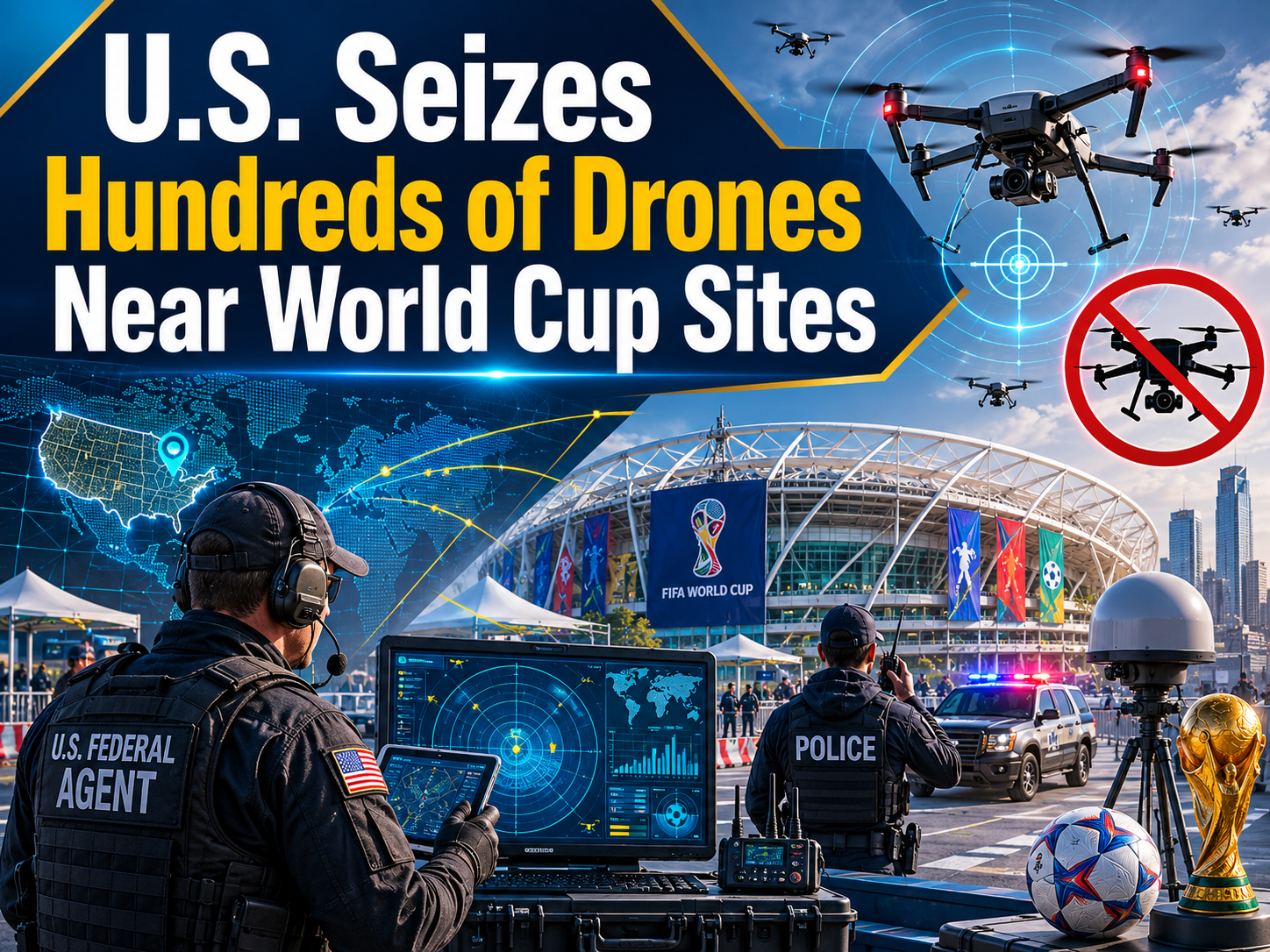
U.S. agencies have seized more than 300 drones near FIFA World Cup sites since the tournament began on June 11, 2026, according to Reuters. The Transportation Security Administration, or TSA, said the drones were found near tournament venues where strict airspace rules are now in place. For fans, this may sound like a small technical issue. For security teams, it is a big red flag flying through the sky with propellers.
Why the World Cup Drone Seizures Matter
The World Cup drone seizures show how much security has changed at major sports events. In the past, officials mainly worried about crowds, traffic, tickets, and stadium entrances. Now, they also have to watch the air above the stadium. Drones can be useful for photography, delivery, and inspections, but near a crowded stadium, an unauthorized drone can create serious safety risks. It could crash, interfere with aircraft, distract security teams, or in the worst case, carry something dangerous.
No Drone Zones Around Stadiums
The Federal Aviation Administration created “No Drone Zones” for FIFA World Cup 2026 stadiums, fan events, and team base camps. On match days, drones and other aircraft are banned within a three-nautical-mile radius of stadiums and up to 3,000 feet above ground level, unless air traffic controllers specifically approve the flight. Fan events also have restrictions, usually within one nautical mile and up to 1,000 feet. In plain English: if you brought your drone to get a cool video of the match, congratulations—you may have also brought yourself a very expensive legal problem.
Penalties Can Be Serious
The FAA says drone operators who fly into restricted airspace without permission can face fines of up to $100,000, drone confiscation, and possible federal criminal charges. Federal law enforcement can identify operators, seize drones, and support prosecution. That means these rules are not polite suggestions. They are active security measures. The goal is not to ruin someone’s vacation video. The goal is to protect fans, players, workers, aircraft, and nearby infrastructure.
Local Cases Show the Scale of the Problem
Reuters reported that in Florida, the FBI issued citations to 49 drone operators and confiscated 54 drones. Other local reports showed similar enforcement in host cities. Axios Philadelphia reported that authorities in Philadelphia had seized 42 drones since the tournament began. Axios Kansas City reported that Kansas City received federal support for drone defense and had detected drones in restricted areas. These numbers show that the problem is not limited to one city or one careless pilot.
Why Security Teams Are Taking This Seriously
The FBI Boston office warned drone operators that unsafe or improper drone use during World Cup events could create physical hazards for other aircraft and people on the ground. The agency also said temporary flight restrictions are meant to protect fans, players, and critical infrastructure such as power lines and cell phone towers. In business terms, this is risk management. You do not wait until something crashes into the conference room before creating a safety policy.
The Bigger Picture for Public Safety
The World Cup drone seizures are part of a wider security challenge. Drones are becoming cheaper, easier to use, and more powerful. That creates opportunities for businesses and hobbyists, but it also creates new risks for major public events. For English learners, this story is useful because it includes vocabulary connected to technology, law enforcement, public safety, and event planning. It also shows an important workplace lesson: when technology moves fast, rules and security systems have to move fast too.
Vocabulary
- Seize (verb) – to officially take something, often because it broke a law or rule.
Example: “Authorities seized more than 300 drones near World Cup sites.” - Drone (noun) – a small unmanned aircraft controlled remotely.
Example: “The drone flew near the stadium without permission.” - Venue (noun) – a place where an event happens.
Example: “The World Cup venue had strict security rules.” - Airspace (noun) – the area of sky above a place or country.
Example: “The FAA restricted airspace around stadiums.” - No Drone Zone (noun) – an area where unauthorized drone flights are not allowed.
Example: “The stadium became a No Drone Zone on match day.” - Confiscation (noun) – the act of officially taking something away.
Example: “Drone confiscation is one possible penalty.” - Citation (noun) – an official notice that someone broke a law or rule.
Example: “The FBI issued citations to drone operators in Florida.” - Infrastructure (noun) – important systems and structures, such as power lines, roads, and communication networks.
Example: “Security rules help protect critical infrastructure.” - Unauthorized (adjective) – not officially allowed or approved.
Example: “Unauthorized drone flights are banned near stadiums.” - Risk management (noun) – the process of identifying and reducing possible dangers.
Example: “World Cup security teams use risk management to protect fans.”
Discussion Questions (About the Article)
- How many drones have U.S. agencies seized near World Cup sites?
- What is a “No Drone Zone,” and why does it matter?
- What are the drone restrictions around stadiums on match days?
- What penalties can drone operators face if they break the rules?
- Why are drones a serious concern at large public events?
Discussion Questions (About the Topic)
- Should drone rules be stricter near stadiums and airports? Why?
- How can governments balance public safety with personal freedom?
- What are some positive uses of drones in business or society?
- What risks do new technologies create for event planners?
- How should companies prepare for security problems caused by new technology?
Related Idiom
“A fly in the ointment” – a small problem that creates trouble in an otherwise good situation.
Example: “Unauthorized drones became a fly in the ointment for World Cup security teams trying to keep the tournament safe.”
📢 Want more practical English through real news stories? Sign up for the All About English Mastery Newsletter here: allaboutenglishmastery.com/newsletter
Want to build stronger English in less time? Check out Mastering English for Busy Professionals.
Follow our YouTube channel @All_About_English for more English tips and practice.
This article was inspired by: Reuters, FAA, FBI Boston, Axios Philadelphia, and Axios Kansas City


 한국어
한국어  English