

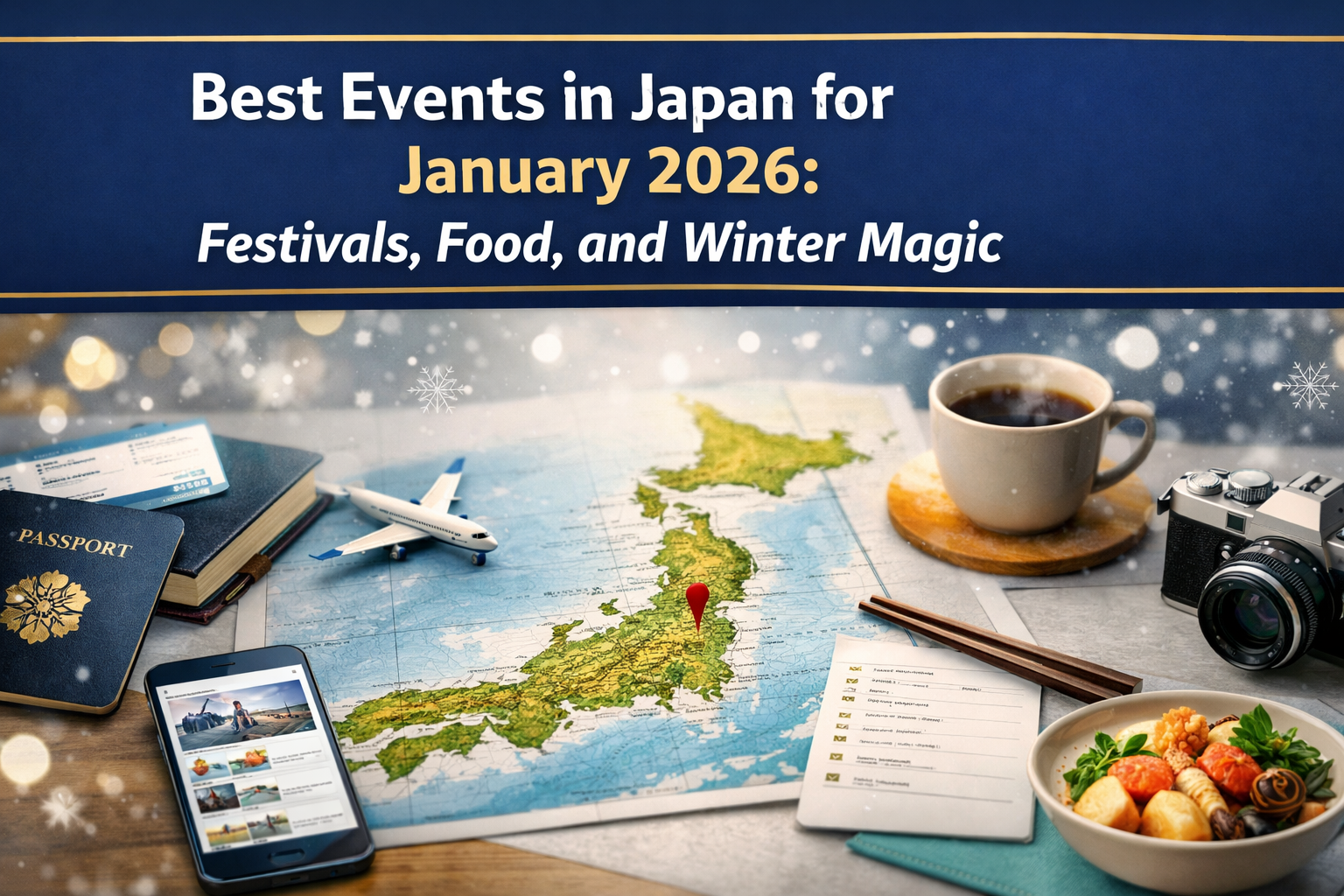
Best Events in Japan for January 2026: Festivals, Food, and Winter Magic
Beginner | January 8, 2026
✨ 혼자서 기사를 소리 내어 읽거나 튜터를 따라 각 단락을 반복해서 읽으세요. 레벨...
Japan January events 2026: Why They’re Worth Planning For
If you’re dreaming about a winter trip, Japan January events 2026 give you a fun mix of culture, food, and beautiful winter scenery. Japan’s New Year season feels special—people visit shrines, eat seasonal food, and enjoy festivals that bring whole communities together. (Voyapon)
Tokyo: Ballet, Opera, Museums, and Winter “Promotions”
Tokyo kicks off 2026 with big cultural events. You can catch The Nutcracker at the New National Theatre Tokyo (a classic winter ballet), and later in the month enjoy Die Fledermaus, a famous operetta that’s light, funny, and perfect for the New Year season. (Voyapon)
Tokyo also has great winter “promotions” at luxury hotels—think seasonal menus, special spa packages, and limited-time experiences. And if you’re more into art, the Mori Art Museum has major exhibitions running through winter. (Voyapon)
Outside Tokyo: New Year Traditions You Can Actually Feel
Japan’s January events aren’t only in big cities. In Gunma, the Maebashi Hatsuichi Daruma Festival is like a lively New Year market. People buy daruma dolls (a symbol of perseverance and good luck) and snack on street food while the town feels like one giant celebration. (Voyapon)
In Miyagi, the Dontosai Festival includes a large bonfire where people bring old New Year decorations to burn. It’s symbolic—like saying goodbye to last year and making a fresh start. (Voyapon)
Food and Winter Atmosphere: Lanterns, Lights, and Cozy Energy
If you want a calm, cozy winter vibe, some regions hold lantern festivals and winter light displays. In Kanagawa, the Enoshima winter illumination (also called “Jewel of Shonan”) turns the island into a glowing night scene—very photogenic and very “wow.” (Voyapon)
And yes—winter is a great time to eat well in Japan. Even when an event isn’t “about food,” you’ll often find seasonal snacks, local specialties, and warm street foods nearby.
Quick Planning Tip: Don’t Just Wander—Build a Simple Itinerary
Here’s a practical way to plan: pick one “big” event (like the opera), one local festival (like the daruma market), and one chill night activity (like an illumination). That gives your trip a clear structure without feeling over-scheduled.
If you want to avoid stress, book the things that can sell out first (popular performances and hotels). Then keep the rest flexible.
Final Thought
The Japan January events 2026 aren’t only famous tourist spots—they’re local traditions, winter culture, and little seasonal experiences that make a trip feel memorable. If you like travel that feels “alive,” January in Japan delivers. (Voyapon)
Vocabulary
- Event (noun) – a planned activity or happening.
Example: “The daruma festival is a popular event in January.” - Festival (noun) – a celebration with special activities.
Example: “Many towns hold a festival to welcome the New Year.” - Highlight (noun) – the best or most exciting part.
Example: “The ballet was the highlight of their Tokyo trip.” - Tradition (noun) – a custom people repeat over time.
Example: “Visiting a shrine is a New Year tradition in Japan.” - Shrine (noun) – a religious place for prayer.
Example: “They went to a shrine to pray for a good year.” - Bonfire (noun) – a large outdoor fire.
Example: “The festival ends with a bonfire and prayers.” - Lantern (noun) – a light in a container, often decorative.
Example: “The street looked beautiful with lanterns at night.” - Illumination (noun) – decorative lighting, usually for festivals.
Example: “The winter illumination made the island glow.” - Promotion (noun) – a special offer for a limited time.
Example: “The hotel had a winter promotion for spa treatments.” - Itinerary (noun) – a travel plan with places and times.
Example: “Her itinerary included one festival and one museum.”
Discussion Questions (About the Article)
- Which Japan event in the article sounds most interesting to you, and why?
- What are two different kinds of January events mentioned here?
- How are Tokyo events different from regional festivals?
- Why do you think winter illuminations are so popular?
- What is one simple way to plan a balanced trip?
Discussion Questions (About the Topic)
- Do you prefer trips with a strict schedule or a flexible plan? Why?
- What is the best “season” to travel in your opinion?
- What local festivals exist in your country or city?
- How does food affect your travel experience?
- What makes an event feel “authentic” to you?
Related Idiom / Phrase
“Kick off” – to begin something.
Example: “Tokyo kicks off the year with ballet, opera, and winter exhibitions.”
📢 Want more real news made simple for English practice? 👉 Sign up for the All About English Mastery Newsletter! Join here: Join the newsletter
Want to finally master English but don’t have the time? Mastering English for Busy Professionals is built for you: Explore the course
Follow our YouTube Channel @All_About_English for more: Subscribe on YouTube
This article was inspired by: Voyapon — Best Events Japan January 2026

 한국어
한국어  English