

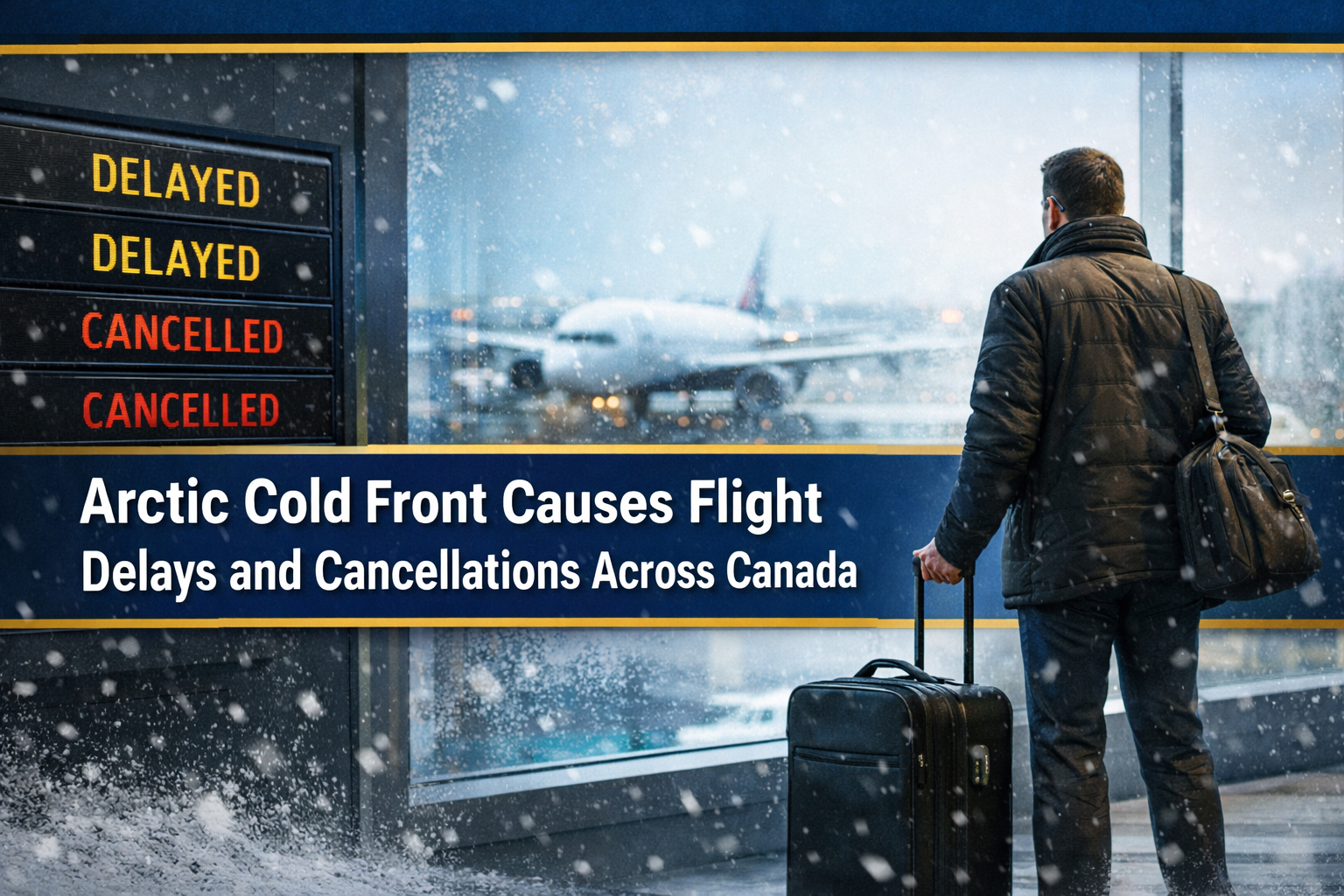
Arctic Cold Front Causes Flight Delays and Cancellations Across Canada
Beginner | January 28, 2026
✨ 혼자서 기사를 소리 내어 읽거나 튜터를 따라 각 단락을 반복해서 읽으세요. 레벨...
When Weather Becomes a Business Problem
If you’ve ever tried to travel for work in January, you know the feeling: your calendar says “client meeting,” but the airport says “good luck.” And when Canada flight delays spike, business trips can fall apart fast. Over the past week, a hard Arctic cold front pushed across Canada and turned normal travel into a domino effect of delays, cancellations, and last-minute changes.
Canada Flight Delays: What Happened at Canada’s Biggest Airports
A Canadian Press report published on January 24 said bitter cold affected most major airports. At Toronto Pearson, more than 20% of over 900 arriving and departing flights were cancelled between Friday and Saturday, and another 20% were delayed. Travelers interviewed at Pearson described long waits and missed connections while trying to get home—or catch flights for family plans. (CityNews / The Canadian Press)
The Cold Was No Joke
Environment Canada warned that large areas of Ontario were facing a major freeze. In Toronto and Ottawa, wind chills dropped below -30°C. Forecasters also warned that Sunday could bring 15–30 cm of snow in Toronto and southern Ontario, and strong gusts—up to 50 km/h—could reduce visibility and complicate airport operations. In the Prairies, some areas were expected to hit wind chills as low as -55°C, which is the kind of cold where even short outdoor work becomes risky. (CityNews / The Canadian Press)
Airlines Tried to Reduce the Damage
The Epoch Times reported that flights across Canada were delayed or cancelled while much of the country was under cold-weather warnings. The report also noted that Air Canada said severe winter conditions in Toronto and Montréal were causing delays, and passengers could cancel or rebook at no cost. (The Epoch Times)
To get specific, Air Canada posted a winter-conditions notice for Toronto Pearson (YYZ) and Montréal-Trudeau (YUL). For Toronto Pearson, Air Canada said travelers who bought tickets no later than January 21, 2026, for travel between January 23–26, could make voluntary changes. In many cases, they could switch flights free of charge, including changing to a non-stop flight or connecting through a different airport. Air Canada also allowed rebooking to dates between January 27 and February 3 (subject to availability). (Air Canada travel update)
A Simple Lesson for Busy Travelers
Here’s the practical takeaway: extreme weather doesn’t just “delay flights”—it disrupts meetings, deadlines, family plans, and entire business trips. If you’re traveling during winter, check your flight status early, keep your schedule flexible, and build in a buffer day when the trip really matters. In business terms, this is basic risk management.
Vocabulary
- Cold front (noun) – a mass of cold air that moves into an area and changes the weather.
Example: “The cold front arrived quickly and temperatures dropped overnight.” - Delay (noun/verb) – a situation where something happens later than planned.
Example: “Our flight was delayed, so we missed the meeting.” - Cancel (verb) – to stop something from happening.
Example: “The airline cancelled several flights because of the storm.” - Disruption (noun) – a break in normal plans or operations.
Example: “The weather caused major disruptions across the travel system.” - Wind chill (noun) – how cold it feels because of wind.
Example: “The temperature was -20°C, but the wind chill felt much colder.” - Visibility (noun) – how well you can see.
Example: “Snow and wind reduced visibility on the roads and runways.” - Advisory (noun) – an official warning or notice.
Example: “The airline posted an advisory for travelers.” - Rebook (verb) – to change a reservation to a new time or date.
Example: “We rebooked our flight for the next morning.” - Itinerary (noun) – your travel plan, including dates and flights.
Example: “She changed her itinerary to avoid a risky connection.” - Buffer (noun) – extra time or space added for safety.
Example: “I always add a buffer day for important winter trips.”
Discussion Questions (About the Article)
- What caused the flight delays and cancellations across Canada?
- What happened at Toronto Pearson, according to the report?
- How cold did it feel in Toronto and Ottawa during the freeze?
- What kind of travel changes did Air Canada allow during the affected dates?
- If you were traveling for work, what would you do differently after reading this?
Discussion Questions (About the Topic)
- How does extreme weather affect businesses and workers in your country?
- Do you think airlines handle winter disruptions well? Why or why not?
- What are your personal “rules” for traveling in winter?
- What should companies do when employees can’t travel for meetings?
- Have you ever been stuck during a trip? What happened, and how did you solve it?
Related Idiom
“At the mercy of” – having no control because something else is controlling the situation.
Example: “When the cold front hit, thousands of travelers were at the mercy of the weather and the flight schedule.”
📢 Want more practical English for real work situations? 👉 Sign up for the All About English Mastery Newsletter! Click here to join us!
Want to finally Master English but don’t have the time? Mastering English for Busy Professionals is the course for you! Check it out now!
Follow our YouTube Channel @All_About_English for more great insights and tips
This article was inspired by: The Epoch Times, CityNews / The Canadian Press, and Air Canada Travel News & Updates


 한국어
한국어  English