

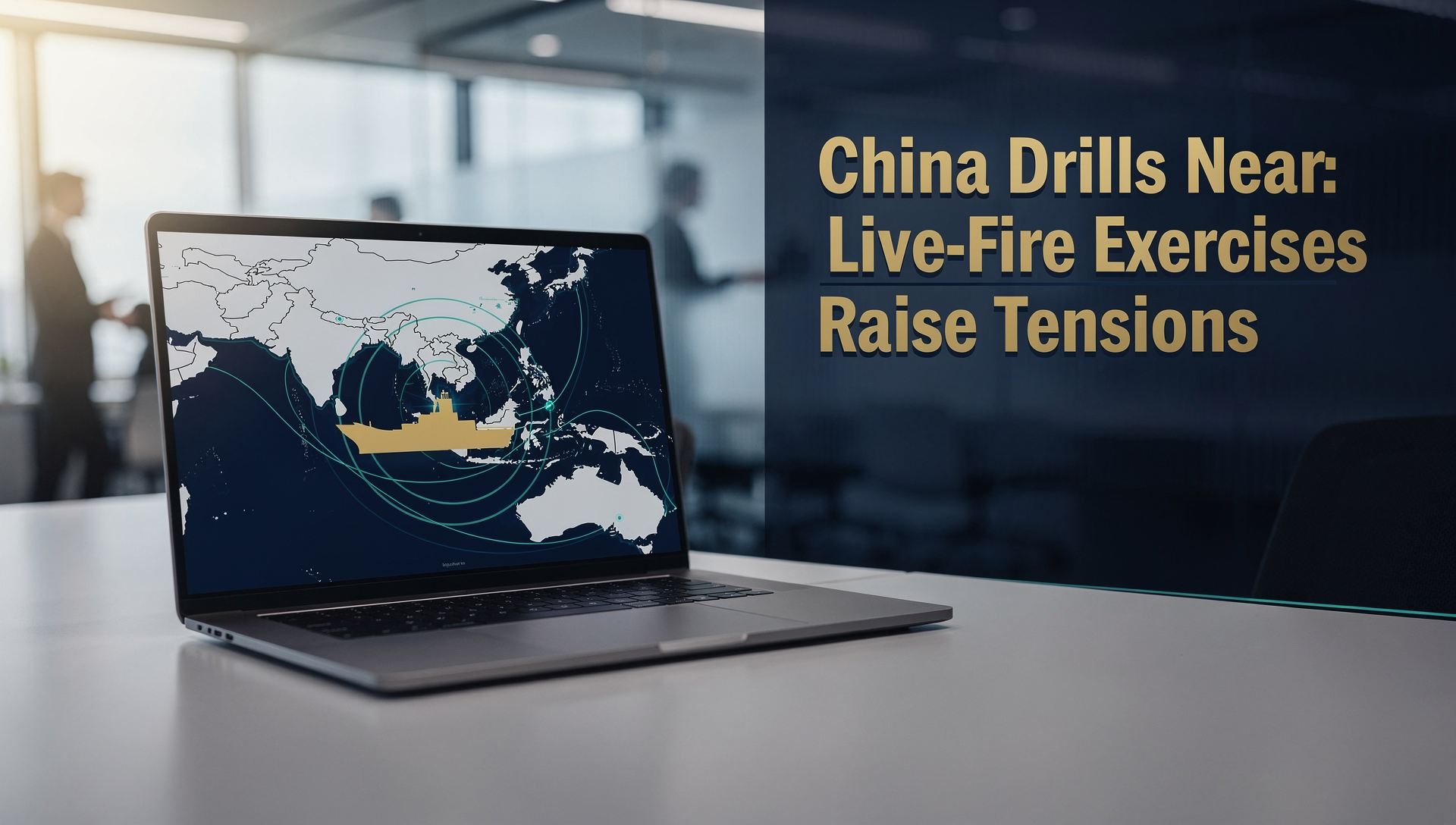
China Drills Near Taiwan: Live-Fire Exercises Raise Tensions
Intermediate | January 5, 2026
✨ 혼자서 기사를 소리 내어 읽거나 튜터를 따라 각 단락을 반복해서 읽으세요. 레벨...
China drills near Taiwan — and the scale is hard to ignore
This week, China drills near Taiwan grabbed global attention after China’s military launched large-scale exercises that included live-fire rocket launches and operations by aircraft and warships. The drills were described by multiple reports as one of the most extensive Taiwan-focused military displays in recent months. (Fox News)
What actually happened in the drills
According to Taiwan’s defense ministry, Chinese rockets landed inside Taiwan’s 24-nautical-mile line, and by early Tuesday morning officials said 130 PLA aircraft, 14 naval vessels, and eight official ships were operating around the island. Taiwan also reported that 90 of 130 sorties crossed the median line and entered Taiwan’s air defense identification zone (ADIZ). (Fox News)
“Justice Mission 2025” and a blockade rehearsal
Reuters reported the drills—named “Justice Mission 2025”—included 10 hours of live-firing, with rockets launched into waters north and south of Taiwan as part of a rehearsal for a blockade scenario. The news agency also noted the drills began 11 days after the U.S. announced a record $11.1 billion arms package for Taiwan. (Reuters)
Taiwan’s response: monitoring, flights, and a clear message
Taiwan’s leadership condemned the drills as a threat to regional security. Reuters reported that the exercises were the largest by area and the closest yet to Taiwan, forcing the island to cancel dozens of domestic commercial flights while it dispatched jets and warships to monitor the situation. (Reuters)
International reaction: “restraint,” not escalation
The U.S. also weighed in. Al Jazeera reported that the U.S. State Department called on China to exercise “restraint” and said the drills were increasing tensions unnecessarily, urging Beijing to end military pressure and engage in meaningful dialogue. (Al Jazeera)
Why this matters beyond politics
Even if you don’t follow geopolitics closely, this story matters because Taiwan sits on major shipping routes and plays a big role in the global tech supply chain. When China drills near Taiwan, businesses think about risk: shipping delays, higher insurance costs, and market uncertainty. The takeaway for professionals is simple: when tensions rise, smart people plan for disruption—before it shows up on the invoice.
Vocabulary
- Encirclement (noun) – surrounding an area from all sides.
Example: The report described an encirclement of Taiwan by ships and aircraft. - Live-fire (adjective) – involving real weapons and real ammunition.
Example: Live-fire drills are more serious than practice simulations. - Blockade (noun) – stopping ships or supplies from entering or leaving.
Example: The drills were described as rehearsal for a blockade scenario. - Sortie (noun) – one flight mission by an aircraft.
Example: Taiwan said many sorties crossed the median line. - Median line (noun) – an unofficial boundary line in the Taiwan Strait.
Example: Crossing the median line is seen as a major escalation. - ADIZ (noun) – Air Defense Identification Zone, an area monitored for security.
Example: Aircraft entered Taiwan’s ADIZ during the drills. - Escalate (verb) – to increase in intensity or seriousness.
Example: Officials warned that military activity could escalate tensions. - Sovereignty (noun) – the right to govern yourself.
Example: Taiwan said it would defend its sovereignty. - Restraint (noun) – self-control; not taking aggressive action.
Example: The U.S. called for restraint to avoid unnecessary tensions. - Disruption (noun) – an interruption that causes problems.
Example: Businesses worry about supply chain disruption during crises.
Discussion Questions (About the Article)
- What makes these drills feel more serious than “normal” military training?
- Which detail stood out most to you: rockets, aircraft numbers, or flight cancellations?
- Why do you think Reuters described the drills as a blockade rehearsal?
- How did Taiwan respond, and what message was it trying to send?
- Why did the U.S. call for “restraint,” and what does that word suggest?
Discussion Questions (About the Topic)
- How can military tension affect regular people who live far away from the conflict?
- Should countries conduct live-fire drills near disputed areas? Why or why not?
- What do businesses usually do when they expect disruptions?
- Why do shipping routes and supply chains matter in international politics?
- If you were advising a company, what “risk plan” would you recommend during regional tension?
Related Idiom
“On thin ice” – in a risky situation where one wrong move can cause serious trouble.
Example: When tensions rise and live-fire drills happen, everyone is walking on thin ice in the region.
📢 Want more news-based English practice like this? 👉 Sign up for the All About English Mastery Newsletter! https://allaboutenglishmastery.com/newsletter
Want to finally master English but don’t have the time? Mastering English for Busy Professionals is the course for you!
Follow our YouTube Channel @All_About_English for more great insights and tips.
Sources (for reference and deeper reading):
- Fox News (rockets, aircraft count, 24-nautical-mile line)
- Reuters (10 hours live-firing, blockade rehearsal, arms package timing)
- Reuters (flight cancellations, drill scale, Taiwan response)
- Al Jazeera (U.S. response and “restraint” quote)
This article was inspired by Fox News and Reuters.


 한국어
한국어  English