

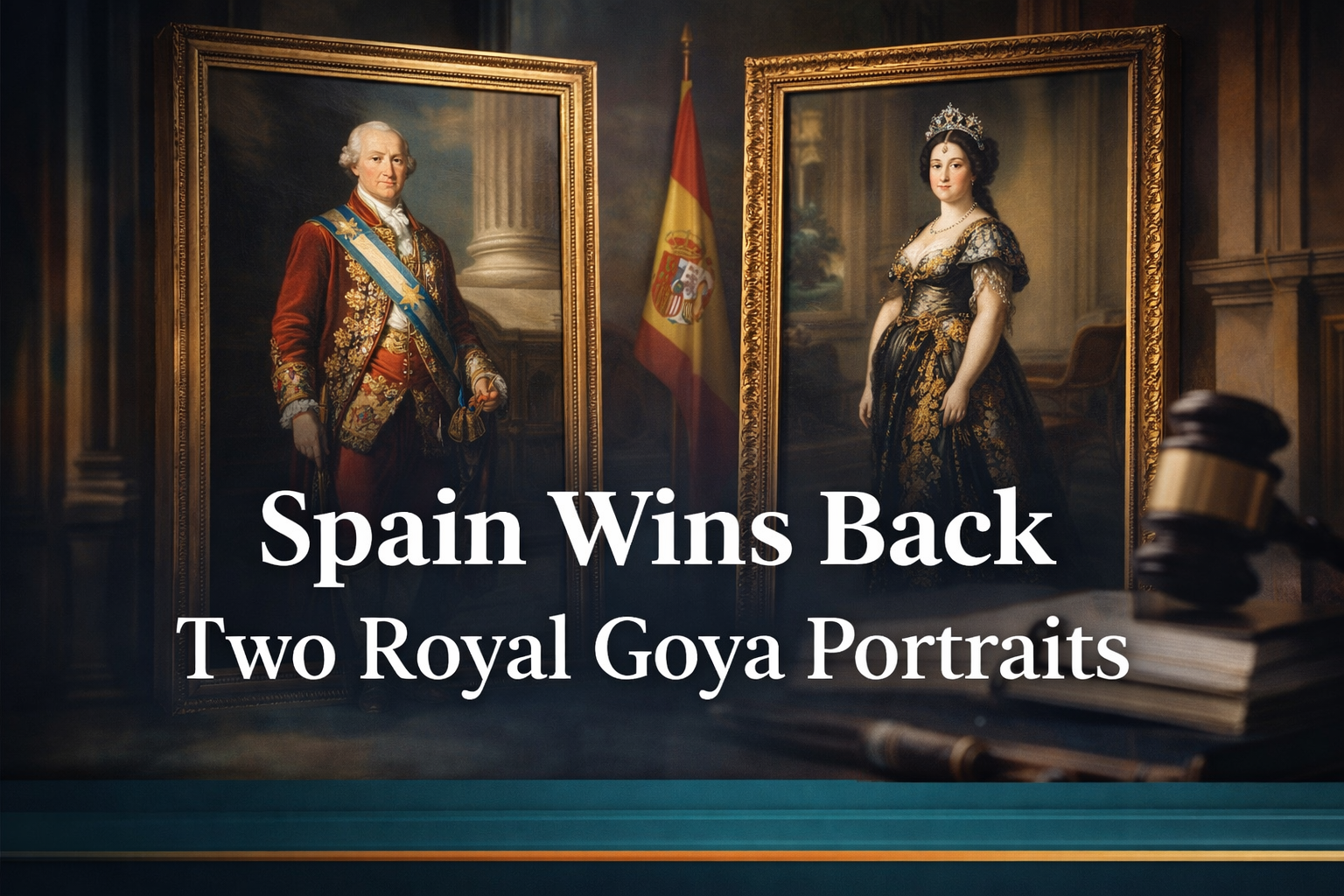
Spain Wins Back Two Royal Goya Portraits
Beginner | April 12, 2026
✨ 혼자서 기사를 소리 내어 읽거나 튜터를 따라 각 단락을 반복해서 읽으세요. 레벨...
Goya Portraits Belong to Spain After a Court Fight
Spain’s Supreme Court has ruled that two royal portraits painted by Francisco Goya belong to the Spanish state, not to cigarette company Altadis. In other words, Goya portraits belong to Spain after years of legal argument. The paintings show King Charles IV and Maria Luisa of Parma, and Goya painted them in 1789. The ruling was published on March 27, 2026, ending a long legal fight. (Reuters)
Why Were These Paintings Connected to a Cigarette Company?
That sounds strange, right? Here’s the story. The portraits were originally commissioned by the Royal Tobacco Factory of Seville. They were meant to be shown during celebrations for the beginning of King Charles IV’s reign. Over the years, the tobacco business passed through different companies, including Tabacalera, which later became Altadis in 1999. Because of that history, the paintings were displayed for many years in company buildings and offices. (Reuters)
What the Court Decided
The big question was simple: who really owned the paintings? Altadis argued that it had kept the portraits for many years and should be recognized as the owner. But the Supreme Court disagreed. The court said the paintings were part of the Crown’s patrimony in 1789 and later passed to the modern Spanish state. It also said the company had only been allowed to keep them for decoration, not as private property. (Reuters)
A Long Story Behind the Final Decision
This was not a quick fight. According to reports in Spain, the case went through the courts for years after Altadis filed its lawsuit in 2017. EL PAÍS also reported that legal opinions from the state had already said in 1985 and 1986 that the paintings belonged to the state. Later, a 1999 loan agreement even showed that the government and Tabacalera were discussing making the works officially state property because of their cultural value. (EL PAÍS)
Why This Story Matters
This story matters because it is about more than two paintings. The ruling that Goya portraits belong to Spain is also about history, culture, and national heritage. It is also about history, culture, and national heritage. Spain sees Goya as one of its most important artists, so ownership of these works carries real meaning. In the end, Altadis said it did not agree with the ruling, but it also said it would accept the final judgment. There is no further appeal. (Reuters)
A Good Reminder for English Learners
This article is a great reminder that objects can carry a long history with them. A painting is not just paint on canvas. It can also be a symbol of power, memory, and identity. And sometimes, even after more than 230 years, people still argue over who it truly belongs to. Not exactly small talk at the coffee machine.
Vocabulary
- Portrait (noun) – a painting or picture of a person.
Example: The museum showed a royal portrait by Goya. - Rule (verb) – to make an official legal decision.
Example: The court ruled that the paintings belong to Spain. - Belong (verb) – to be owned by someone or something.
Example: The portraits belong to the Spanish state now. - Commission (verb) – to officially ask an artist to create something.
Example: The tobacco factory commissioned the paintings in 1789. - Celebrate (verb) – to do something special for an important event.
Example: The city celebrated the beginning of a new reign. - Custodian (noun) – a person or group that keeps or protects something.
Example: Altadis said it had been the custodian of the paintings for many years. - Patrimony (noun) – property or heritage passed down through history.
Example: The court said the works were part of the Crown’s patrimony. - Ownership (noun) – the legal right to possess something.
Example: The case was really about ownership of the paintings. - Heritage (noun) – the history, art, and traditions of a country or group.
Example: Many people believe the portraits are part of Spain’s heritage. - Appeal (noun) – a request to a higher court to change a decision.
Example: After the ruling, there was no further appeal available.
Discussion Questions (About the Article)
- Who painted the two royal portraits in this story?
- Why were the paintings connected to a tobacco company?
- What did the Spanish Supreme Court decide?
- Why did Altadis think the paintings should belong to the company?
- Why do you think this case lasted so many years?
Discussion Questions (About the Topic)
- Should important artworks always belong to the state? Why or why not?
- What kinds of cultural objects are most important for a country to protect?
- Can a private company be a good protector of historical art?
- Why do old paintings still matter in modern life?
- Have you ever visited a museum and felt connected to a country’s history?
Related Idiom
“Claim to fame” – the thing that makes a person or place famous.
Example: One claim to fame for this case is that it involved two royal Goya portraits with a very unusual ownership story.
📢 Want more practical English practice with real-world stories? Sign up for the All About English Mastery Newsletter! Click here to join us.
Want to finally master English but don’t have the time? Mastering English for Busy Professionals is built for busy people like you.
Follow our YouTube Channel @All_About_English for more useful English tips and real-world practice.
This article was inspired by: Reuters and EL PAÍS


 한국어
한국어  English