

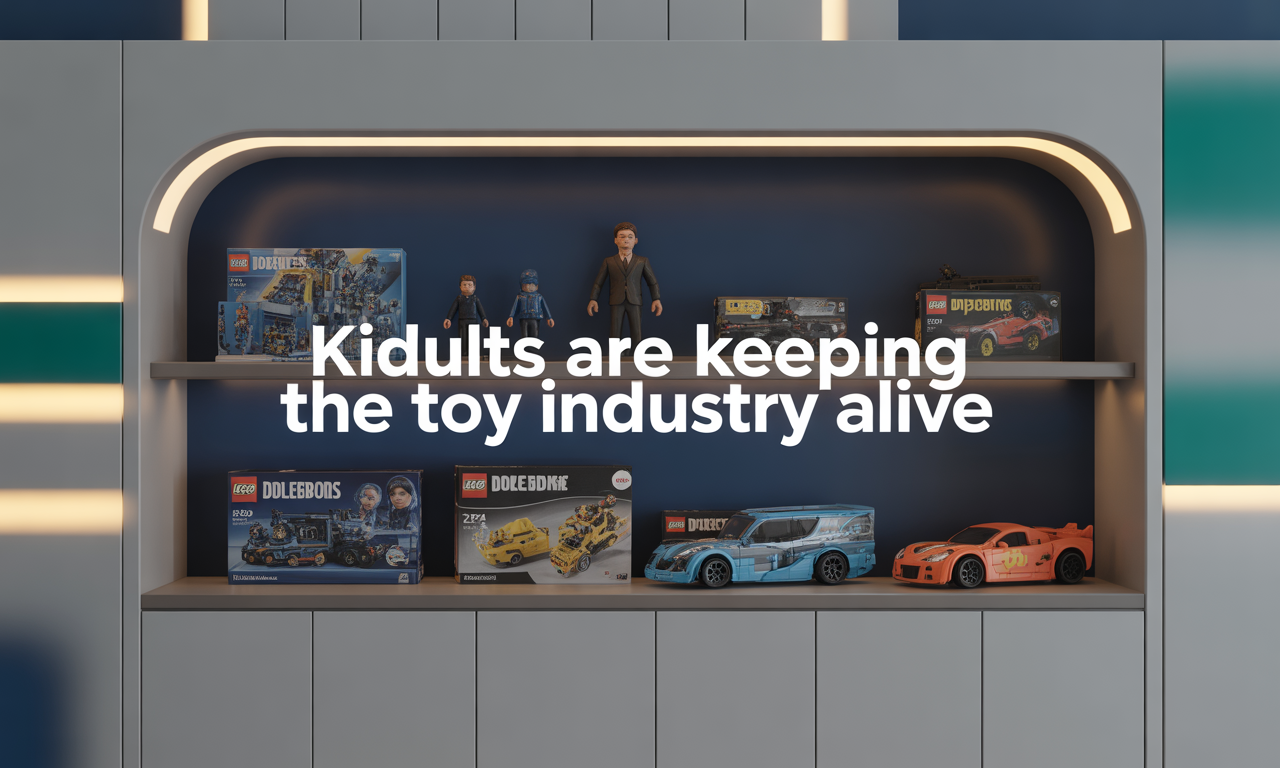
Kidults Are Keeping the Toy Industry Alive
Beginner | December 9, 2025
✨ 혼자서 기사를 소리 내어 읽거나 튜터를 따라 각 단락을 반복해서 읽으세요. 레벨...
Why kidults driving toy sales matters
Turns out — toys aren’t just for kids anymore. According to a recent report by Circana, adults (18 and older) spent roughly $1.5 billion on toys in the last three months of 2024 — more than any traditional age group, including toddlers. (Morning Brew)
Even though overall toy sales dipped slightly in 2024 across many markets, kidults driving toy sales became a key stabilizing force. slightly in 2024 across many markets, “kidult” purchases bucked the trend and went up instead. Adults now account for about 28% of global toy sales, a jump of 2.5% since 2022. (Morning Brew)
What Adults Are Buying — And Why
Some toys are clearly crossing over from kid favorites to grown-up must-haves. For example:
- Pop Mart’s “Labubu” collectible toys — little monsters that cost around $30 each — proved wildly successful. Labubu helped generate $670 million in revenue in just the first half of 2025. (Morning Brew)
- Lego has leaned into the trend by offering adult‑targeted sets. As of 2024, the company had around 142 sets designed specifically for adults. (Morning Brew)
- Classic lines like Hot Wheels remain strong with grown-up collectors; Hot Wheels’ “Collector” series has tripled in sales since 2017. (Morning Brew)
Why the shift? Many adults say toys are a way to de-stress, indulge in nostalgia, or simply enjoy a bit of playfulness again. Some view collectibles as long-term investments — hoping their items might appreciate in value over time. (Morning Brew)
Industry Response — Toys for Grown-Ups
The “kidult” wave isn’t just a fad — the industry is leaning into it. Toy companies are designing, marketing, and even re‑positioning products specifically for adult buyers. Collectibles, nostalgia-driven toys, and designer‑style items are growing fast in popularity. (Marketing Brew)
Some market analysts suggest adult toy sales could become a stable backbone for the industry — helping offset lower birth rates and declining demand for traditional children’s toys. (Circana)
What This Means for You
If you’re thinking economics, marketing, or just human behavior: the rise of kidults shows people crave more than just practical spending. Even adults — with bills, jobs, and responsibilities — want space to play, unwind, and reconnect with childhood.
For toy brands, this isn’t just good — it’s smart. They now recognize kidults driving toy sales as one of the strongest growth engines in the industry. They’ve found a consumer base with both spending power and emotional attachment.
For us, it’s a reminder: sometimes the best self‑care is a little childhood nostalgia — and there’s no reason to feel strange about it.
Vocabulary
- Trend (noun) – a general direction in which something is developing or changing.
Example: “The kidult trend has helped stabilize toy sales.” - Demographic (noun) – a specific group of people in a population defined by age, income, etc.
Example: “Adults became the most important demographic for toy buyers in 2024.” - Collectible (noun/adj) – an item valued and kept by collectors; having value because it is rare or desirable.
Example: “Adults are buying collectible toys hoping they increase in value.” - Nostalgia (noun) – a sentimental longing for the past.
Example: “Many adults buy toys out of nostalgia for childhood.” - Revenue (noun) – income generated from sales or business.
Example: “Labubu generated $670 million in revenue in six months.” - Segment (noun) – a part of a larger group or market.
Example: “The adult toy segment is growing fastest.” - Stability (noun) – the state of being steady and not changing suddenly.
Example: “Kidult sales add stability to a volatile toy market.” - Offset (verb) – to counterbalance or compensate for something.
Example: “Adult sales help offset declining demand from parents.” - Fandom (noun) – a group of fans with a strong interest in a particular topic.
Example: “Fandom around collectibles keeps demand high.” - Market (noun) – a group of consumers for a particular product.
Example: “Toy companies are expanding their adult market strategy.”
Discussion Questions (About the Article)
- Why did adult toy sales grow even as overall toy sales struggled?
- What kinds of toys are most popular among adult buyers?
- How have toy companies changed their strategies to appeal to “kidults”?
- Why might some adults consider toys as investments rather than just fun items?
- Do you think the “kidult” trend will continue to grow? Why or why not?
Discussion Questions (About the Topic)
- Do you or people you know enjoy childhood toys now that you’re older? Why?
- Is there social stigma around adults buying toys? Does that matter?
- Can nostalgia be a good motivator for spending money? When is it harmful?
- Should companies target adults for products traditionally meant for children?
- What other industries might benefit from nostalgia‑driven demand?
Related Phrase
“Play with your inner child.” – letting yourself enjoy simple, youthful pleasures even as an adult.
Example: Many adults buy toys to “play with their inner child” and de-stress.
📢 Want more tips like this? 👉 Sign up for the All About English Mastery Newsletter! Click here to join us!
Want to finally master English but don’t have the time? Mastering English for Busy Professionals is the course for you!
Follow our YouTube Channel @All_About_English for more great insights and tips.
This article was inspired by Morning Brew: morningbrew.com


 한국어
한국어  English