

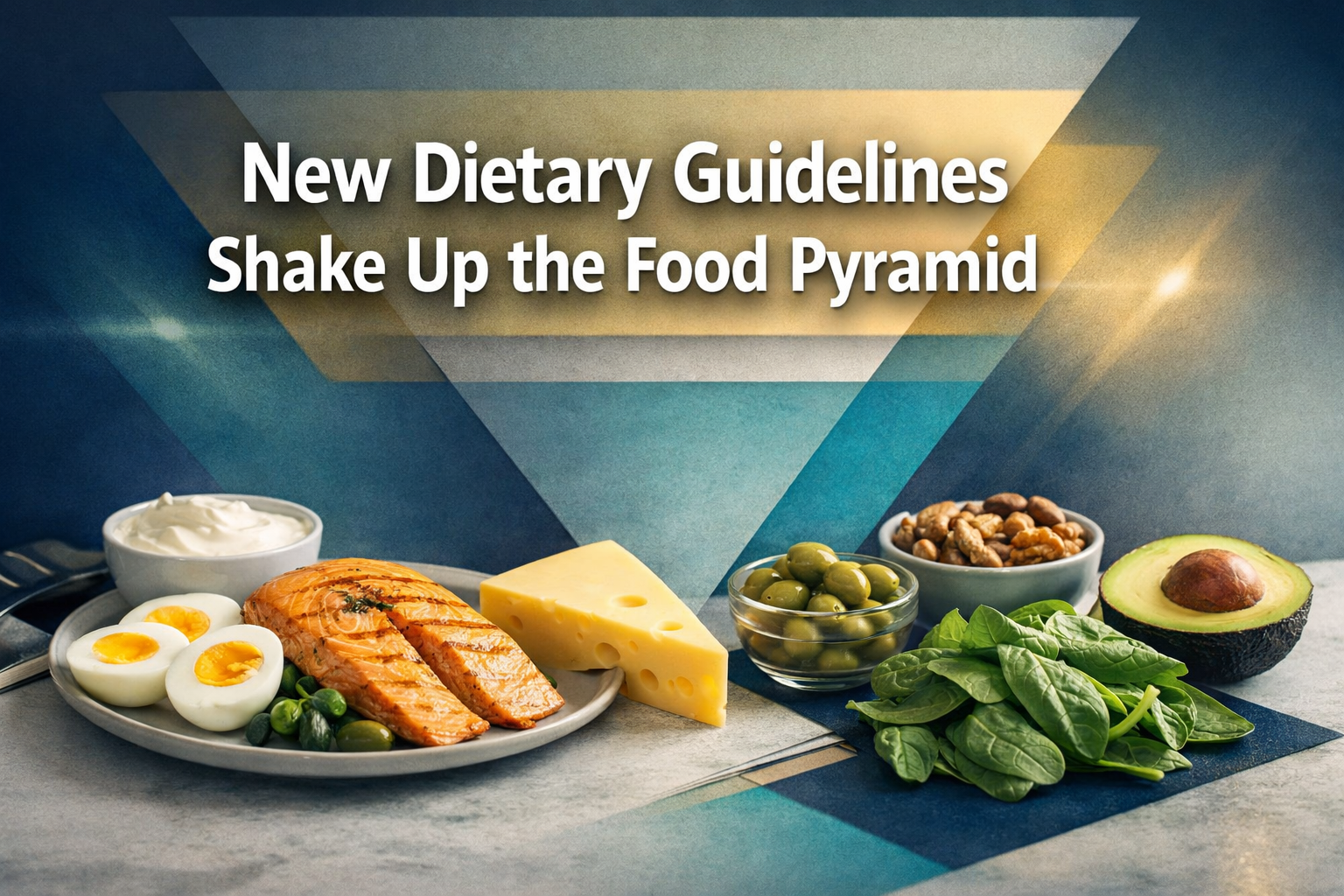
New Dietary Guidelines Shake Up the Food Pyramid
Beginner | January 16, 2026
✨ 혼자서 기사를 소리 내어 읽거나 튜터를 따라 각 단락을 반복해서 읽으세요. 레벨...
What Changed in the New Dietary Guidelines?
On January 7, 2026, the U.S. government released the Dietary Guidelines for Americans (2025–2030). The message is pretty bold: “eat real food.” The new plan puts protein and healthy fats at the top, and makes whole grains a smaller part of the picture than before. (Medical News Today, USDA)
New dietary guidelines: 4 Key Changes (Simple Version)
Medical News Today highlighted the four big changes:
- More protein and healthy fat, less focus on whole grains (the food pyramid is “flipped”).
- Full-fat dairy is back (but saturated fat should still be limited).
- Minimize highly processed foods like packaged snacks and ready-to-eat meals.
- Limit added sugars (the report says added sugars and non-nutritive sweeteners are not part of a healthy diet). (Medical News Today)
The “Business” Message: Focus on Inputs That Matter
Here’s a business-casual way to think about it: the government is trying to improve results (public health) by changing the “inputs” people choose every day. The USDA summary says to prioritize protein at every meal, choose full-fat dairy with no added sugars, eat vegetables and fruits in whole forms, and use healthy fats from whole foods like eggs, seafood, nuts, seeds, olives, and avocados. (USDA, HHS Fact Sheet)
Full-Fat Dairy Comes With a Warning Label
One detail that surprised many people: the new dietary guidelines encourage full-fat dairy instead of low-fat dairy. Medical News Today reports that the guidelines still say saturated fat should be no more than 10% of daily calories, and experts warn the “source matters.” Some people may also need more personalized advice depending on health conditions and lactose tolerance. (Medical News Today, HHS Fact Sheet)
Not Everyone Agrees on the Details
The American Heart Association welcomed parts of the new guidance—like eating more fruits and vegetables and cutting added sugar—but it said it still encourages low-fat or fat-free dairy. The AHA also warned that some recommendations could lead people to eat too much sodium or saturated fat if they aren’t careful. (American Heart Association)
Final Takeaway: Use This as a Roadmap, Not a Rulebook
If you’re trying to eat better, these changes may feel like a big shift. A practical approach is to start small: cut back on highly processed snacks, watch added sugar, and build meals around whole foods. Think of the guidelines as a roadmap—not a perfect rulebook for every person. (Medical News Today)
Vocabulary
- guidelines (noun) – official advice about what to do.
Example: “The new guidelines change how people think about healthy eating.” - prioritize (verb) – to treat something as most important.
Example: “The report says to prioritize protein at every meal.” - processed (adjective) – changed a lot from its natural form (often packaged).
Example: “Many processed foods contain extra sugar and salt.” - minimize (verb) – to reduce as much as possible.
Example: “The guidelines say to minimize highly processed foods.” - added sugars (noun) – sugar put into food during making or cooking.
Example: “Soda has a lot of added sugars.” - saturated fat (noun) – a type of fat found in foods like butter and some meats.
Example: “The report says saturated fat should stay limited.” - satiating (adjective) – making you feel full.
Example: “Some experts say full-fat dairy can be more satiating.” - nutrient-dense (adjective) – high in vitamins and minerals for the calories.
Example: “Eggs can be a nutrient-dense food choice.” - whole foods (noun) – foods close to their natural form.
Example: “Vegetables, fruit, and nuts are common whole foods.” - overwhelming (adjective) – feeling like something is too much to handle.
Example: “Nutrition advice can feel overwhelming, so start with small steps.”
Discussion Questions (About the Article)
- When did the government release the 2025–2030 dietary guidelines?
- What are the four key changes mentioned in the article?
- Why do you think the food pyramid was “flipped”?
- What is the recommendation about processed foods?
- What concern did the American Heart Association raise?
Discussion Questions (About the Topic)
- Do you usually eat more protein or more carbohydrates? Why?
- What is one processed food you could reduce this week?
- Do you prefer full-fat dairy or low-fat dairy? Why?
- What does “eat real food” mean to you?
- How can companies and schools help people eat healthier?
Related Idiom / Phrase
“Food for thought” – something that makes you think carefully.
Example: “The new dietary guidelines are food for thought if you’re trying to improve your health.”
📢 Want more learner-friendly news like this? 👉 Sign up for the All About English Mastery Newsletter! Click here
Want to finally master English but don’t have the time? Mastering English for Busy Professionals is built for you.
Follow our YouTube Channel @All_About_English for more tips.
This article was inspired by Medical News Today (with supporting context from USDA, HHS, and the American Heart Association). (Medical News Today)


 한국어
한국어  English