

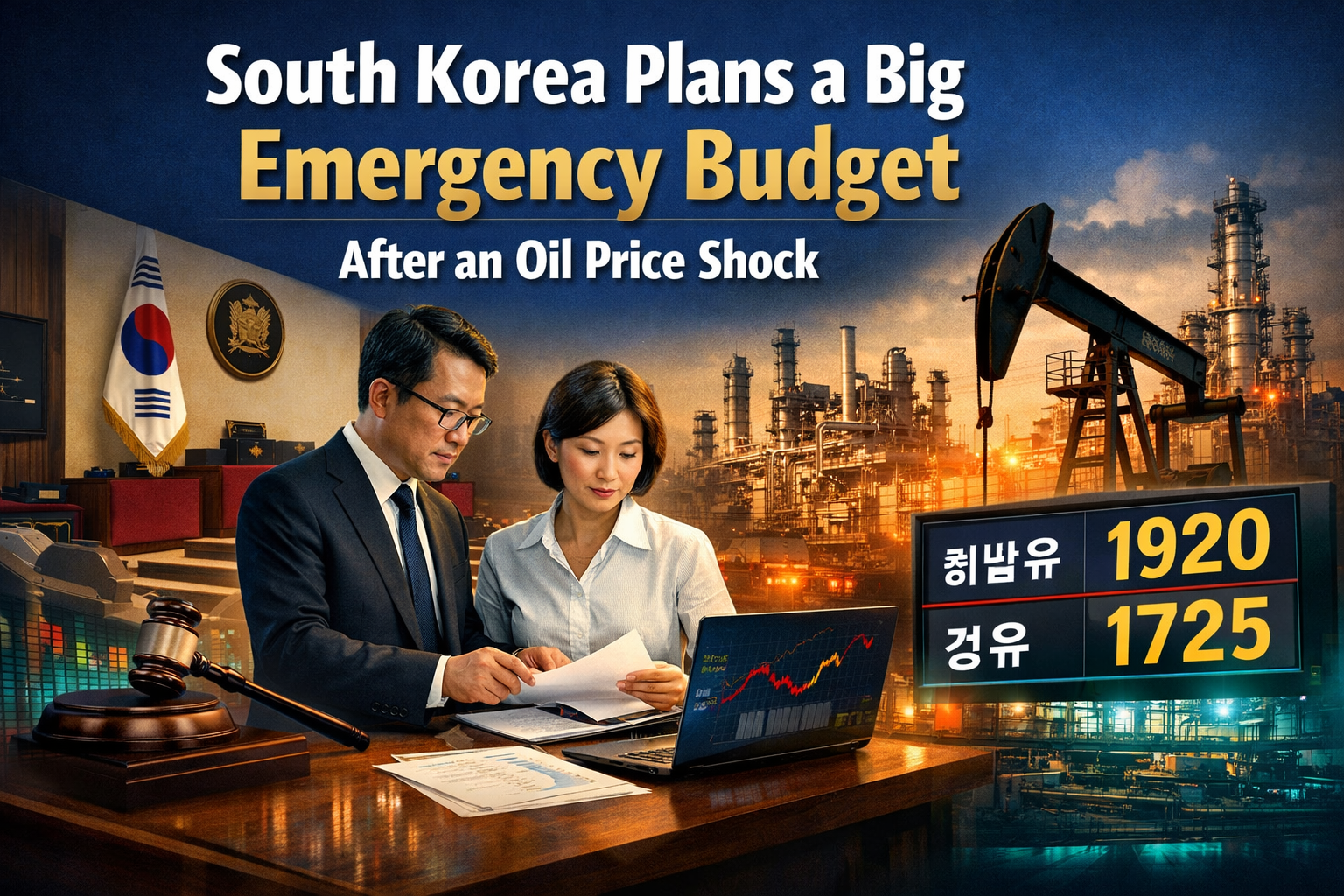
South Korea Plans a Big Emergency Budget After an Oil Price Shock
Intermediate | April 3, 2026
✨ 혼자서 기사를 소리 내어 읽거나 튜터를 따라 각 단락을 반복해서 읽으세요. 레벨...
South Korea Tries to Protect Its Economy
South Korea is planning a large emergency budget after the war in the Middle East pushed oil prices higher. This South Korea extra budget plan is meant to protect households and businesses from a sudden energy shock. On March 31, 2026, the government proposed an extra budget worth 26.2 trillion won, or about $17.3 billion. The goal is to reduce pressure on families, support businesses, and help the economy stay steady during a difficult moment. (Reuters)
Why the South Korea Extra Budget Matters Now
South Korea is especially sensitive to energy trouble in the Middle East. Reuters reported that the country is the world’s fourth-largest oil importer, and about 70% of its oil imports come from the Middle East. That means when conflict pushes oil prices up, South Korea feels the shock quickly through fuel prices, inflation, and business costs. (Reuters)
Where the Money Would Go
A big part of the new budget would go to easing the pain from higher energy costs. According to Reuters, about 10.1 trillion won is meant for measures connected to rising oil prices, including around 5 trillion won to support oil refiners affected by a new fuel price cap. The proposal also includes 2.8 trillion won for support aimed at low-income people and young people, and 2.6 trillion won for companies hit by the crisis. (Reuters)
Consumer Vouchers and Business Support
The government also plans to give consumer vouchers worth 100,000 to 600,000 won, depending on income level, while excluding the top 30% of earners. In other words, Seoul is trying to keep ordinary people from taking the full hit all at once. It is also trying to help businesses manage rising costs before the situation snowballs into slower hiring, weaker exports, or less spending. (Reuters)
President Lee Pushes for Fast Approval
On April 2, President Lee Jae Myung urged parliament to pass the budget quickly. Reuters reported that he called the current situation the worst energy security threat in recent history. He warned that even if the fighting stopped immediately, damaged energy infrastructure in the region would still take time to recover. Parliament was expected to vote by April 10, and the government said it wanted to act right away if lawmakers approved the plan. (Reuters)
A Sign of Bigger Economic Worries
This story is not only about one budget bill. The South Korea extra budget also shows how quickly governments may need to respond when global conflict starts pushing up daily costs. It also shows how global conflict can hit everyday life far from the battlefield. Higher oil prices can raise transport costs, increase food prices, and hurt business confidence. For English learners, this is a useful example of how governments try to cushion a sudden economic shock before things get out of hand.
Vocabulary
- supplementary budget (noun) – an extra government spending plan added after the main budget is already set.
Example: The government proposed a supplementary budget to deal with the energy crisis. - mitigate (verb) – to make something less severe or less painful.
Example: The new plan aims to mitigate the impact of rising oil prices. - shock (noun) – a sudden, strong negative event that affects the economy or society.
Example: The economy was hit by an energy shock from overseas. - inflation (noun) – a general rise in prices over time.
Example: High fuel costs can increase inflation. - refiner (noun) – a company that processes crude oil into products like gasoline or diesel.
Example: Oil refiners may receive support under the new plan. - voucher (noun) – a document or credit that can be used like money for a specific purpose.
Example: Some households may receive consumer vouchers. - vulnerable (adjective) – more likely to be harmed or affected.
Example: Vulnerable families often need help first during a crisis. - fiscal deficit (noun) – the amount by which government spending is greater than government income.
Example: Analysts are watching whether the fiscal deficit will grow. - security threat (noun) – a danger that could affect safety, stability, or key supplies.
Example: Leaders described the energy crisis as a security threat. - parliament (noun) – the national lawmaking body in some countries.
Example: Parliament still needs to approve the extra budget.
Discussion Questions (About the Article)
- Why did South Korea decide to propose an extra budget?
- Why is South Korea especially sensitive to energy problems in the Middle East?
- What kinds of people and businesses would receive support under the plan?
- Why did President Lee want parliament to move quickly?
- What details in this article show that the government is worried about a wider economic slowdown?
Discussion Questions (About the Topic)
- Should governments step in quickly when global events cause sudden price increases? Why or why not?
- What are the pros and cons of giving consumer vouchers during a crisis?
- How can countries reduce their dependence on unstable energy sources?
- In your opinion, which is harder to manage: inflation, slow growth, or energy shortages?
- How do international conflicts affect ordinary workers and families in countries far away?
Related Idiom or Phrase
“Take the edge off” – to reduce the strength or pain of something.
Example: The extra budget is meant to take the edge off rising fuel and living costs.
📢 Want more practical English through real news? Sign up for the All About English Mastery Newsletter! Click here to join us.
Want to build stronger English in just a few minutes a day? Mastering English for Busy Professionals is designed to help busy people improve without wasting time.
Follow our YouTube Channel @All_About_English for more English tips, practice, and discussion.
This article was inspired by: Reuters, Reuters, and Reuters


 한국어
한국어  English