

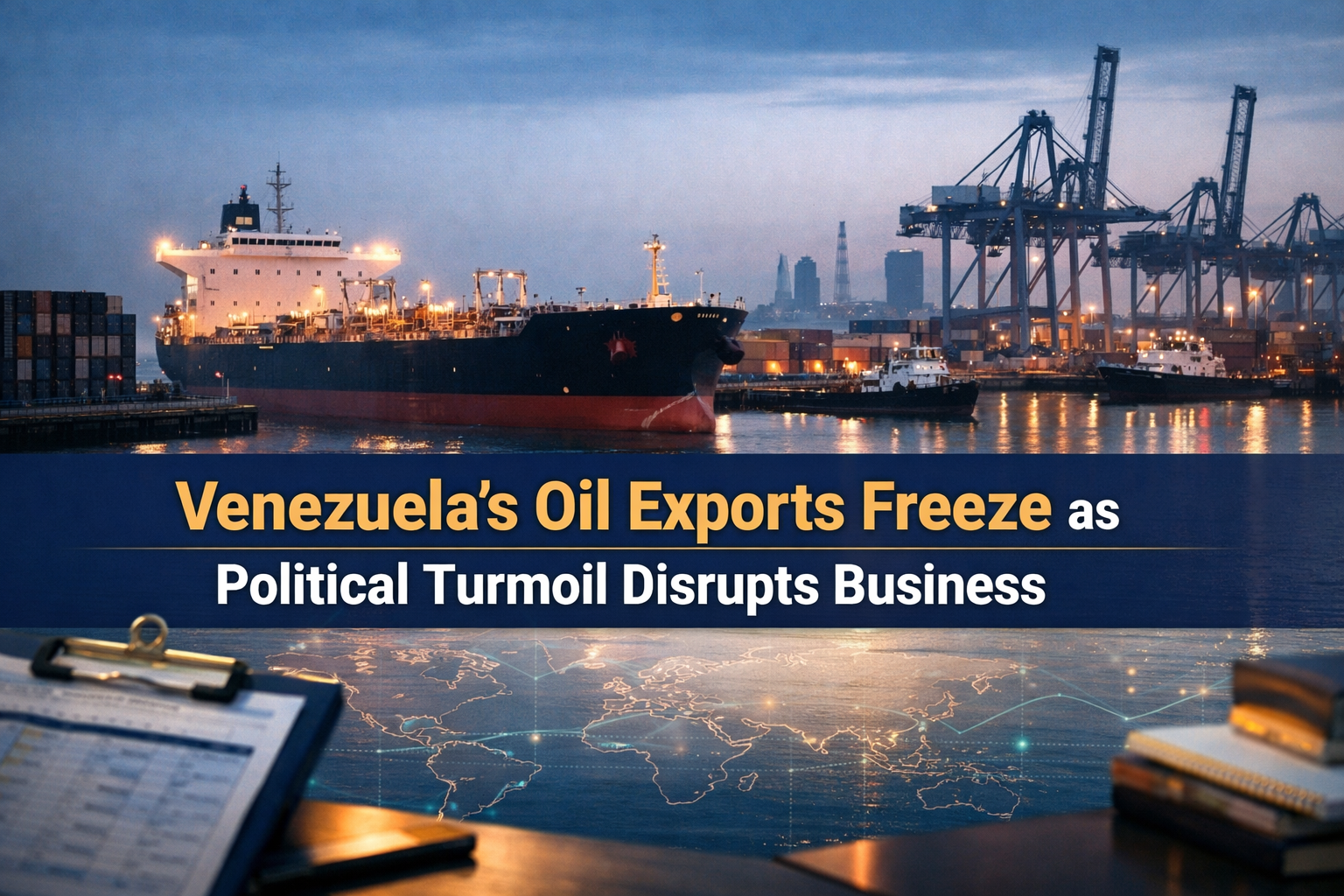
Venezuela’s Oil Exports Freeze as Political Turmoil Disrupts Business
Intermediate | January 7, 2026
✨ 혼자서 기사를 소리 내어 읽거나 튜터를 따라 각 단락을 반복해서 읽으세요. 레벨...
Venezuela’s oil exports paralyzed at the docks
If you run a business, you know this feeling: everything looks normal… until one key part of the system stops moving. That’s what happened in Venezuela’s oil industry—Venezuela’s oil exports paralyzed almost overnight. On January 3, 2026, multiple sources told Reuters that Venezuela’s oil exports effectively came to a complete halt, with loaded tankers sitting in port and no new departures being approved. (Reuters)
What Reuters Reported
According to Reuters, exports had already dropped sharply after the U.S. announced a blockade of sanctioned tankers going in and out of Venezuelan waters. But the key operational detail is this: port captains reportedly have not received requests to authorize loaded ships to leave—so even fully loaded tankers are stuck. (Reuters)
At the same time, the U.S. said it had extracted President Nicolás Maduro and his wife from Caracas and would oversee a political transition. U.S. President Donald Trump also said an “oil embargo” on Venezuela was fully in effect. (Reuters)
Ships Loaded… But Not Leaving
Reuters noted that several vessels recently loaded with crude oil and fuel—headed for destinations including the U.S. and Asia—did not set sail. Meanwhile, other ships that were waiting to load reportedly left empty, which is a brutal sign that normal trade routines have broken down. (Reuters)
And here’s the detail that matters for logistics: a tanker tracking service, TankerTrackers.com, said no tankers were loading at Venezuela’s main oil port, José, on January 3. (Reuters)
Why This Creates a “Storage Problem”
When exports stop, it’s not just a political headline—it becomes an operational nightmare. Venezuela’s state oil company PDVSA and its key partner Chevron are impacted because oil that can’t be shipped has to be stored somewhere, and storage space isn’t infinite. (Reuters)
Reuters reported that storage tanks—and even ships being used as floating storage—have been filling quickly in recent weeks. If there’s no place left to put the oil, producers may have to cut output, even if the wells and facilities are still technically capable of producing. (Reuters)
The Bigger Lesson for Business
For English learners who work in business or tech, this story is a clean example of how political risk can hit real operations: shipping schedules, contracts, and cash flow can all change fast. One day you’re exporting. The next day, you’re stuck with inventory you can’t move—and every day it sits there, the costs stack up. (Reuters)
In short: when uncertainty rises, even big industries can get “frozen” overnight—and this is exactly how Venezuela’s oil exports paralyzed operations can ripple through real business.
Vocabulary
- Export (noun) – goods sold to another country.
Example: Venezuela depends heavily on oil exports for national income. - Embargo (noun) – an official ban on trade with a country.
Example: The oil embargo made shipments much harder to complete. - Blockade (noun) – an action that prevents ships or goods from moving in or out.
Example: The blockade stopped many tankers from operating normally. - Authorize (verb) – to give official permission.
Example: Port officials did not authorize the tankers to depart. - Crude oil (noun) – raw oil that must be refined.
Example: Several ships loaded crude oil but did not leave port. - Disrupt (verb) – to interrupt normal activity.
Example: Political events disrupted regular shipping schedules. - Storage capacity (noun) – the amount that can be stored.
Example: Limited storage capacity can force companies to cut production. - Floating storage (noun) – storing oil on ships instead of on land.
Example: Companies used floating storage when tanks filled up. - Output (noun) – the amount produced.
Example: If exports remain blocked, oil output could drop. - Turmoil (noun) – serious confusion or conflict.
Example: Political turmoil can scare off buyers and delay shipments.
Discussion Questions (About the Article)
- What exactly stopped Venezuela’s oil exports, according to the report?
- Why is “storage capacity” such a big issue when exports freeze?
- What is the difference between an embargo and a blockade?
- Why would ships leave empty instead of waiting to load?
- How could this situation affect PDVSA and Chevron’s business plans?
Discussion Questions (About the Topic)
- How does political risk affect international business?
- If you were a foreign buyer, what would make you pause or continue buying oil from Venezuela?
- What should companies do to prepare for sudden disruptions like this?
- How do sanctions change the “rules of the game” in global trade?
- What other industries (besides oil) can be impacted by political instability?
Related Idiom or Phrase
“Stuck in limbo” – waiting in an uncertain situation with no clear next step.
Example: With loaded ships unable to depart, Venezuela’s oil exports were stuck in limbo.
📢 Want more short, practical English lessons like this? 👉 Sign up for the All About English Mastery Newsletter!
Join here: Join the newsletter
Want to finally master English but don’t have the time? Mastering English for Busy Professionals is built for you: Explore the course
Follow our YouTube Channel @All_About_English for more: Subscribe on YouTube
Sources (for reference)
- Reuters: Venezuela’s oil exports paralyzed amid political turmoil, sources say (Reuters)
This article was inspired by Reuters.


 한국어
한국어  English