

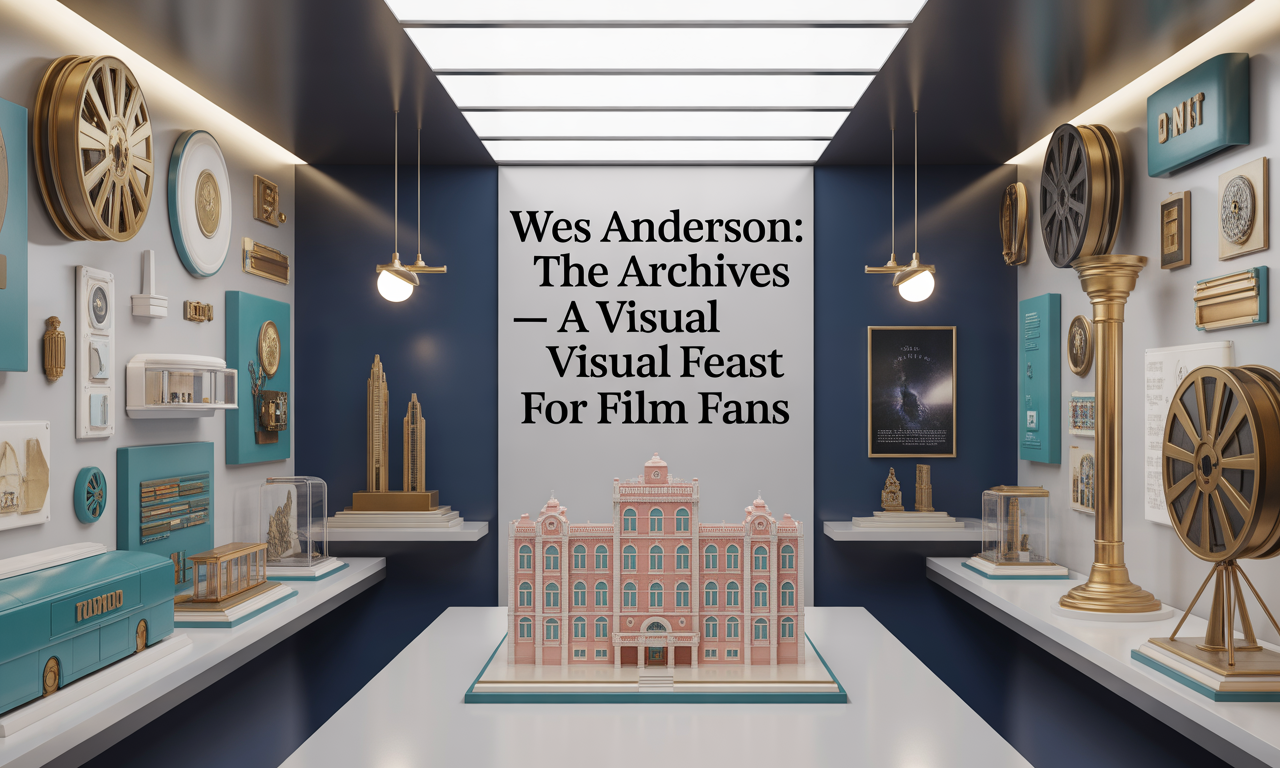
Wes Anderson: The Archives — A Visual Feast for Film Fans
Beginner | December 1, 2025
✨ Read the article aloud on your own or repeat each paragraph after your tutor.
A Walk Through Wes Anderson’s World
If you love movies, design, or just quirky, perfectly-styled art — you’ll want to check out Wes Anderson: The Archives. On November 21, 2025, the Wes Anderson The Archives exhibition opened at the Design Museum in London, showcasing more than 700 objects from Wes Anderson’s nearly 30‑year career as a filmmaker.
From the very beginning — when he first tested the waters with short films in the 1990s — all the way to his most recent films, the exhibition traces his artistic journey. (Design Museum)
From the very beginning — when he first tested the waters with short films in the 1990s — all the way to his most recent films, the exhibition traces his artistic journey. (designmuseum.org)
What You’ll See: Props, Puppets, Costumes & More
Inside the exhibition, you’ll find a treasure trove of original items: storyboards, polaroids, hand‑drawn sketches, paintings, handwritten notebooks, miniature models, puppets, and dozens of costumes worn by characters from his films. (Design Museum)
Stand‑out pieces include a three‑meter‑wide candy‑pink model of The Grand Budapest Hotel — the actual model used in the 2014 film. (Design Museum)
You’ll also see iconic items like the vending machines from Asteroid City, the fur coat worn by Margot Tenenbaum in The Royal Tenenbaums, and the original stop‑motion puppets used to create the sea creatures in The Life Aquatic with Steve Zissou. (The Guardian)
Why the Wes Anderson The Archives Exhibition Matters
This isn’t just a movie “greatest hits” display. The exhibition shows how deeply involved Anderson is in every small detail — design, colour, texture, props, costumes, character identity. It emphasizes filmmaking as design + storytelling + craftsmanship. (Wallpaper)
By walking through scenes from different films, visitors can see how Anderson’s style evolved, and how certain motifs and aesthetics carried through decades of work. (DesignBoom)
Who Should Go — And What to Expect
If you love movies, art, animation, design — or want to explore the world of the Wes Anderson The Archives exhibition — or just enjoy diving deep into creative worlds — this exhibition is for you. It’s especially great for people who appreciate handmade artistry, set design, vintage‑style props, puppetry, and the magical realism that film can offer.
Just note — since most of the pieces are static (models, costumes, puppets), the show won’t convey the same “motion + emotion” you get from watching the films. Some viewers find it a little “object‑heavy” or nostalgic in a bittersweet way. (The Guardian)
Vocabulary
- Archive (noun) – a collection of historical documents or items.
Example: “The museum opened Wes Anderson’s archive for public viewing.” - Costume (noun) – clothes worn by actors to represent a character.
Example: “You can see the costume worn by Margot Tenenbaum on display.” - Prop (noun) – an object used on stage or in film.
Example: “The vending machine prop from Asteroid City looks straight out of the movie.” - Meticulous (adjective) – showing great attention to detail.
Example: “The exhibition displays Wes Anderson’s meticulous craftsmanship.” - Puppet (noun) – a figure of a person or animal moved by hand or strings.
Example: “There are stop‑motion puppets used in The Life Aquatic.” - Miniature (adjective) – smaller than normal size; scaled down.
Example: “The miniature model of the hotel is over three meters wide.” - Retrospective (noun) – a show that looks back at an artist’s past work.
Example: “The exhibition is a retrospective of three decades of film.” - Vignette (noun) – a small scene or portrait.
Example: “Each movie is shown with its props and set vignettes.” - Nostalgia (noun) – a longing for the past.
Example: “Fans might feel a wave of nostalgia walking through the exhibit.” - Collaborator (noun) – someone who works together with others on a project.
Example: “The exhibition credits many of Anderson’s longtime collaborators.”
Discussion Questions (About the Article)
- Which object from the exhibition would you most like to see, and why?
- Why do you think Wes Anderson keeps so many of his props and items after making a film?
- Do you prefer watching films or seeing their props and sets in person? What are the differences?
- What does it mean to treat a movie prop or puppet like a piece of art?
- Do you think this kind of exhibition helps people appreciate movies differently? How?
Discussion Questions (About the Topic)
- Is physical craftsmanship more impressive than digital effects? Why or why not?
- How can design and aesthetics contribute to storytelling in films?
- What traits make someone a good filmmaker or artist?
- Do you think future movies will keep physical props, or will everything become digital?
- How does nostalgia affect our enjoyment of art or movies?
Related Idiom
“Beauty is in the details.”
This exhibition shows that in Anderson’s films, tiny props, colours, and textures bring the story to life.
📢 Want more simple, daily English lessons like this?
👉 Sign up for the All About English Mastery Newsletter!
Want to learn English fast—even with a busy schedule?
Check out Mastering English for Busy Professionals
Follow our YouTube Channel @All_About_English for more great insights and tips.
This article was inspired by: The Guardian, Design Museum, Wallpaper, DesignBoom.

 English
  한국어
한국어