

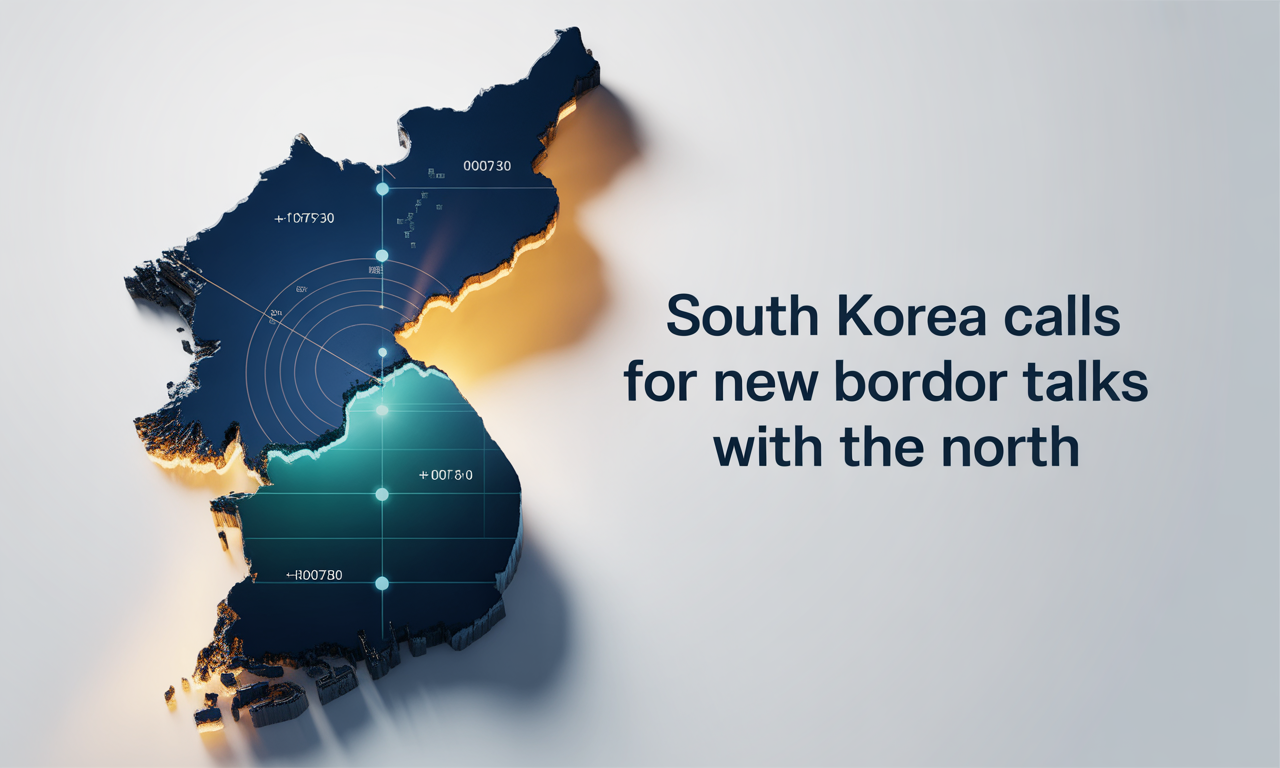
South Korea Calls for Talks to Reduce Border Tensions
Intermediate | December 2, 2025
✨ Read the article aloud on your own or repeat each paragraph after your tutor.
South Korea Proposes Korea Border Talks With North Korea — A Move to Prevent Border Clashes
On November 18, 2025, South Korea proposed holding military talks with North Korea to reduce tensions after several dangerous clashes along the border in recent weeks. The Ministry of National Defense said the goal was to restore communication channels and prevent accidental escalation. (Reuters)
What Sparked the Latest Tensions?
The proposal came after a series of incidents, and officials said Korea border talks were urgently needed, including North Korean artillery fire near the Northern Limit Line (NLL) and reports that both sides had scrambled jets during a border alert. South Korea described the situation as “increasingly unstable” and urged immediate dialogue. (Reuters)
The Border Has a Long, Violent History
The maritime border between the two Koreas has been one of the most volatile flashpoints for decades. The NLL, drawn after the Korean War, has never been recognized by Pyongyang. Past clashes include the 1999 First Battle of Yeonpyeong, the 2010 sinking of the Cheonan, and the shelling of Yeonpyeong Island. These incidents shape public fear whenever new tensions flare. (BBC)
Why Seoul Wants Dialogue Now
South Korea’s government emphasized that reopening communication through Korea border talks is essential to stop misunderstandings from turning into violence. Officials said renewed talks could help stabilize both the land and sea borders, especially as North Korea has been increasing missile launches and refusing previous communication attempts. (Reuters)
Vocabulary
- Tensions (noun) – strained relations between groups, often leading to conflict.
Example: “Border tensions have increased after several incidents.” - Clash (noun/verb) – a conflict or violent encounter.
Example: “There were clashes near the maritime border.” - Escalation (noun) – an increase in intensity or danger.
Example: “Talks were proposed to prevent further escalation.” - Artillery (noun) – large guns used in warfare.
Example: “North Korea fired artillery near the NLL.” - Volatile (adjective) – likely to change suddenly or become dangerous.
Example: “The border remains one of the most volatile areas in Asia.” - Recognize (verb) – to accept something as valid or official.
Example: “North Korea does not recognize the NLL.” - Stabilize (verb) – to make something steady or less likely to change.
Example: “Talks could help stabilize the border region.” - Misunderstanding (noun) – a failure to understand correctly.
Example: “Misunderstandings can quickly lead to conflict.” - Launch (verb) – to send something into the air, like a missile.
Example: “North Korea launched several missiles this month.” - Communication Channel (noun) – a system that allows groups to exchange information.
Example: “South Korea wants to restore communication channels with the North.”
Discussion Questions (About the Article)
- What recent events caused South Korea to call for talks with the North?
- Why is the NLL such a sensitive border area?
- What past incidents contribute to fear when tensions rise?
- How could communication channels reduce future clashes?
- Why might North Korea ignore earlier attempts at dialogue?
Discussion Questions (About the Topic)
- Should countries prioritize dialogue even when tensions are high? Why or why not?
- What strategies help prevent accidental military escalation?
- How important is transparency in military communication?
- What role do historical conflicts play in modern diplomacy?
- How can neighboring countries reduce risks at contested borders?
Related Idiom
“On thin ice” – in a risky or dangerous situation.
Example: “Both Koreas were on thin ice as border clashes increased.”
📢 Want more tips like this? 👉 Sign up for the All About English Mastery Newsletter! Click here to join us!
Want to finally Master English but don’t have the time? Mastering English for Busy Professionals is the course for you! Check it out now!
Follow our YouTube Channel @All_About_English for more great insights and tips
This article was inspired by: Reuters, BBC.


 English
  한국어
한국어