

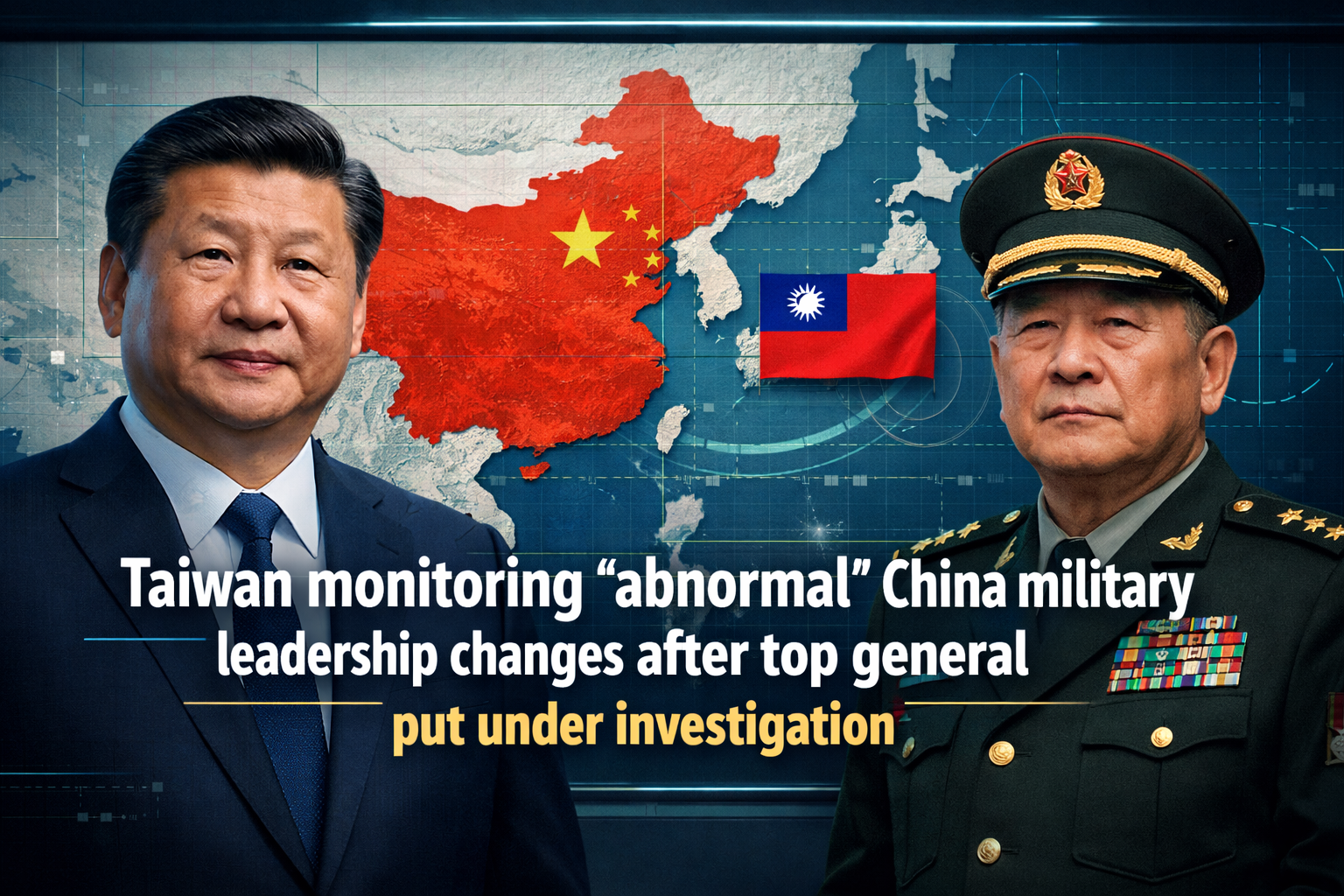
Taiwan Watches China’s military leadership changes after a Top General Is Put Under Investigation
Intermediate | January 31, 2026
✨ Read the article aloud on your own or repeat each paragraph after your tutor.
What Happened in China’s Military Leadership?
Taiwan says it is closely watching China’s military leadership changes after Beijing announced an investigation into General Zhang Youxia, one of the most senior leaders in China’s armed forces, for alleged “serious violations of discipline and law.” Taiwan’s defense minister, Wellington Koo, called the situation “abnormal” and said Taiwan will keep monitoring what’s happening at the top of China’s party, government, and military. (Reuters; CNA)
Why Taiwan Says It Won’t Lower Its Guard
Koo’s message was simple: even if Beijing is dealing with internal leadership trouble, the threat level remains high. He said Taiwan will not let the downfall of any single leader reduce its readiness, especially because China has never renounced the use of force toward Taiwan. (Reuters; The Straits Times)
Who Is Zhang Youxia—and Why This Feels Like a Big Deal
In public reporting, Zhang has long been described as one of Xi Jinping’s closest military allies and as a rare senior officer with combat experience, including fighting in China’s 1979 border conflict with Vietnam. That history makes the investigation feel more serious than a routine reshuffle. And it also raises the question Taiwan cares most about: does this signal instability—or simply a tougher political clean-up inside China’s system? (Reuters; The Straits Times)
How Taiwan Plans to Track China’s military leadership changes
Koo said Taiwan will evaluate the situation through intelligence and surveillance, including international information-sharing with partners. He also stressed that Taiwan looks at early-warning indicators not only on the military side (like aircraft and naval activity), but also on the non-military side—signals that might reveal Beijing’s intentions over time. (Reuters; Taipei Times)
Why This Story Matters for Business
Even if you’re not following military news every day, leadership shocks can change the “risk temperature” in the region. When headlines suggest internal churn at the top, markets start asking: will policy become more cautious—or more unpredictable? For companies tied to East Asia supply chains, that uncertainty can affect shipping plans, insurance costs, investment decisions, and contingency planning. In that sense, China’s military leadership changes aren’t just political drama—they’re a signal global businesses pay attention to.
Vocabulary
- monitor (verb) – to watch something carefully over time.
Example: “Taiwan said it will monitor the situation closely.” - abnormal (adjective) – unusual; not typical.
Example: “The minister described the leadership shifts as abnormal.” - leadership (noun) – the group of people who lead an organization.
Example: “Changes in leadership can affect decisions and strategy.” - investigation (noun) – a formal process to find out what happened.
Example: “China announced an investigation into a top general.” - alleged (adjective) – claimed to be true, but not yet proven.
Example: “He faced alleged violations of discipline and law.” - discipline (noun) – rules and order, especially in an organization.
Example: “The military has strict discipline for its members.” - readiness (noun) – being prepared to act.
Example: “Taiwan said its readiness level will stay high.” - renounce (verb) – to formally give up or reject something.
Example: “Officials say China has not renounced the use of force.” - indicator (noun) – a sign that helps you understand what is happening.
Example: “They watch economic and military indicators for early warning.” - unpredictable (adjective) – hard to guess or control.
Example: “Unpredictable policy shifts can worry businesses and investors.”
Discussion Questions (About the Article)
- What did Taiwan mean by calling the situation “abnormal”?
- Why did Taiwan say it would not lower its guard?
- Why is the investigation into Zhang Youxia seen as especially significant?
- What are “early-warning indicators,” and why do they matter?
- How can leadership changes in one country affect another country’s security planning?
Discussion Questions (About the Topic)
- Should Taiwan respond differently to internal instability in China? Why or why not?
- What kinds of information should governments share with allies—and what should they keep private?
- How do leadership changes affect trust in a country’s institutions?
- How should businesses prepare for geopolitical uncertainty in East Asia?
- What’s the right balance between staying calm and staying ready?
Related Idiom or Phrase
“Read the room” – understand the situation before you act.
Example: “Taiwan is trying to read the room by watching both military and non-military signals before making any big decisions.”
📢 Want more practical English like this? 👉 Sign up for the All About English Mastery Newsletter! Click here to join us!
Want to finally Master English but don’t have the time? Mastering English for Busy Professionals is the course for you! Check it out now!
Follow our YouTube Channel @All_About_English for more great insights and tips.
This article was inspired by: Reuters, Channel NewsAsia, The Straits Times, and Taipei Times.


 English
  한국어
한국어