

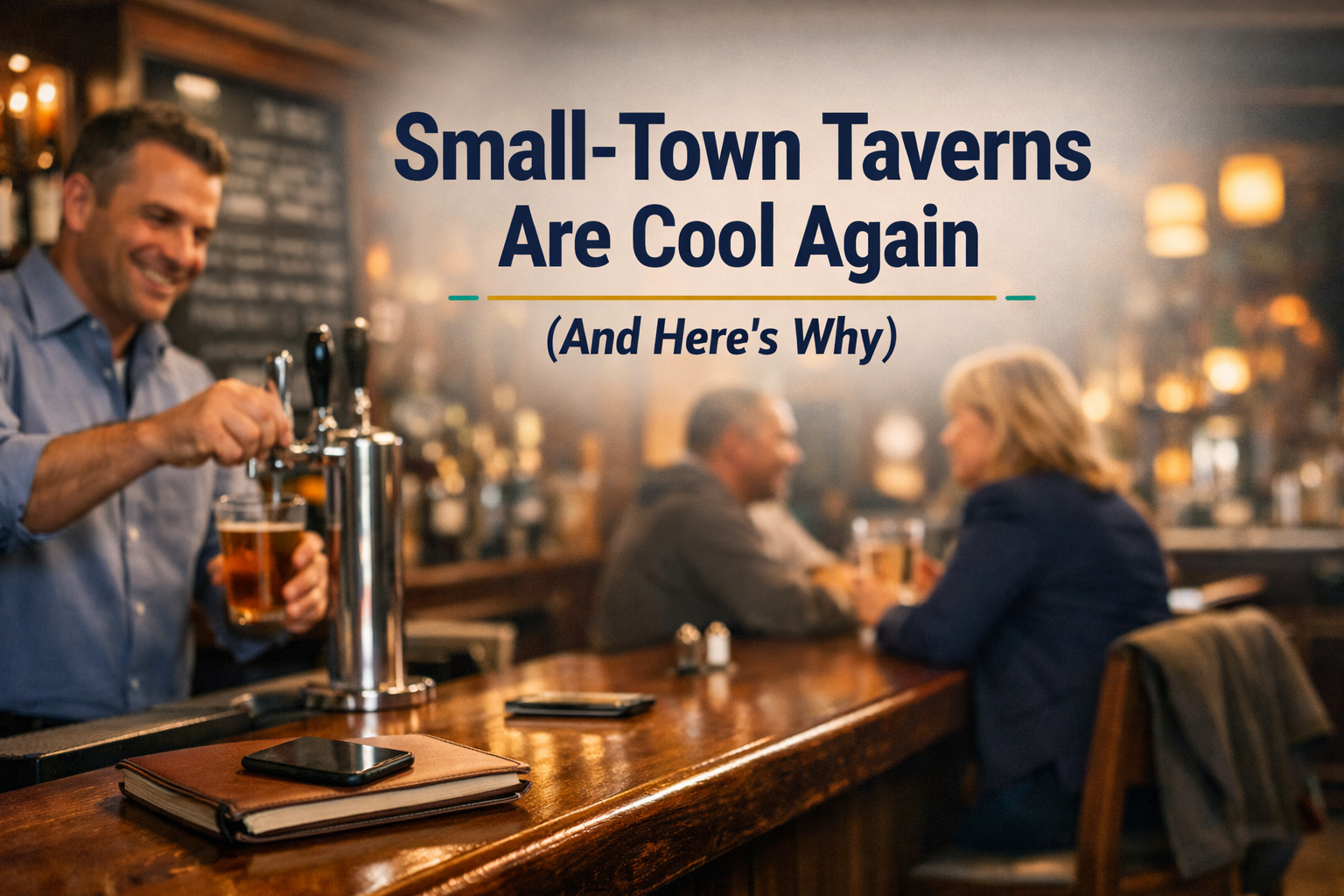
Small-Town Taverns Are Cool Again (And Here’s Why)
Beginner | March 5, 2026
✨ Read the article aloud on your own or repeat each paragraph after your tutor.
Small-town tavern comeback: The Comeback of the Neighborhood Tavern
For a while, it looked like the classic American tavern was fading away. People moved, small towns changed, and lots of local hangout spots struggled to survive. But lately, something interesting is happening: Small-town tavern comeback stories are popping up again—and the trend looks real.
A Wall Street Journal story (summarized by Baton Rouge Business Report) says chefs are leaving big-city kitchens and choosing smaller communities instead—trading big-city acclaim for community connection. (Baton Rouge Business Report)
A Real Example: Sergeantsville, New Jersey
One example comes from Sergeantsville, New Jersey. A former chef from Momofuku Ko is now cooking roast chicken and burgers for local neighbors at the town’s inn. The summary also notes that locals helped rebuild the inn after a fire, and now it’s a welcoming spot again. (Baton Rouge Business Report)
That’s the heart of the comeback: it’s not just about food. It’s about people feeling like they belong.
“Third Places” and Why People Want Them
Many of these taverns are being rebuilt as “third places”—a social space that is not home and not work. Sociologist Ray Oldenburg used this idea to describe informal public gathering spots where people can relax, talk, and build community—like cafes, bars, bookstores… and yes, taverns. (Third place background)
After years of isolation, online life, and busy schedules, it makes sense that people miss real face-to-face places. A good tavern gives you a simple option: walk in, order something, and feel like you’re part of the town—even if it’s your first time there.
What These New Taverns Feel Like
In different places—like upstate New York, Wisconsin, and rural Tennessee—restaurateurs are reviving historic buildings and even old laundromats. The menu might include schnitzel, duck, or just a simple drink.
But the real “product” is the vibe: friendly, casual, and built for people who live nearby. And unlike tourist-heavy city hotspots, these taverns often focus on regulars and walk-ins. Some even reserve tables for locals or offer small rewards to repeat guests. (Baton Rouge Business Report)
Why This Trend Matters (Even If You Don’t Drink)
Here’s the big point: this Small-town tavern comeback isn’t just a food trend. It’s about community. People want places where they can show up without a plan, run into familiar faces, and talk for a few minutes. A good tavern is like a social “battery charger.” You leave feeling more human.
And as the summary puts it, the formula is straightforward: approachable food, an easy bar, and space to gather. (Baton Rouge Business Report)
Vocabulary
- Tavern (noun) – a casual place where people eat, drink, and socialize.
Example: “The tavern became the town’s favorite place to relax after work.” - Comeback (noun) – a return to popularity or success.
Example: “Small-town taverns are making a big comeback.” - Relic (noun) – something old that feels left from the past.
Example: “Some people thought taverns were relics of another time.” - Revive (verb) – to bring something back to life or popularity.
Example: “New owners revived the old building and made it welcoming again.” - Regulars (noun) – people who visit the same place often.
Example: “The regulars knew the staff by name.” - Walk-in (noun) – a customer who arrives without a reservation.
Example: “They always keep tables open for walk-ins.” - Community (noun) – a group of people living in the same place.
Example: “The inn became a strong part of the community.” - Third place (noun) – a social place that is not home or work.
Example: “For many locals, the tavern is a third place.” - Familiarity (noun) – the feeling of knowing something well.
Example: “Familiarity is what turns strangers into friendly faces.” - Approachable (adjective) – easy to enjoy, understand, or feel comfortable with.
Example: “The menu is simple and approachable, not intimidating.”
Discussion Questions (About the Article)
- Why do you think small-town taverns are becoming popular again?
- What details stood out to you in the Sergeantsville Inn example?
- How is a small-town tavern different from a big-city “hot” restaurant?
- Why do you think regulars matter so much in these places?
- What kind of place in your area feels like a third place for you?
Discussion Questions (About the Topic)
- Do you think people today feel more lonely than in the past? Why or why not?
- What places do you go to relax outside of home and work?
- Why do you think communities need casual gathering spaces?
- If you opened a small-town tavern, what would your signature food or drink be?
- Are third places easier or harder to find in Korea than in the U.S.? Why?
Related Idiom
“Everybody knows your name” – a place where people recognize you and you feel like you belong.
Example: “A good tavern feels like a place where everybody knows your name—even if you’re new.”
📢 Want more practical English using real news? 👉 Sign up for the All About English Mastery Newsletter! Click here to join us!
Want to finally Master English but don’t have the time? Mastering English for Busy Professionals is the course for you! Check it out now!
Follow our YouTube Channel @All_About_English for more great insights and tips.
This article took inspiration from: The Wall Street Journal (via Baton Rouge Business Report) and “third places” background.

 English
  한국어
한국어