

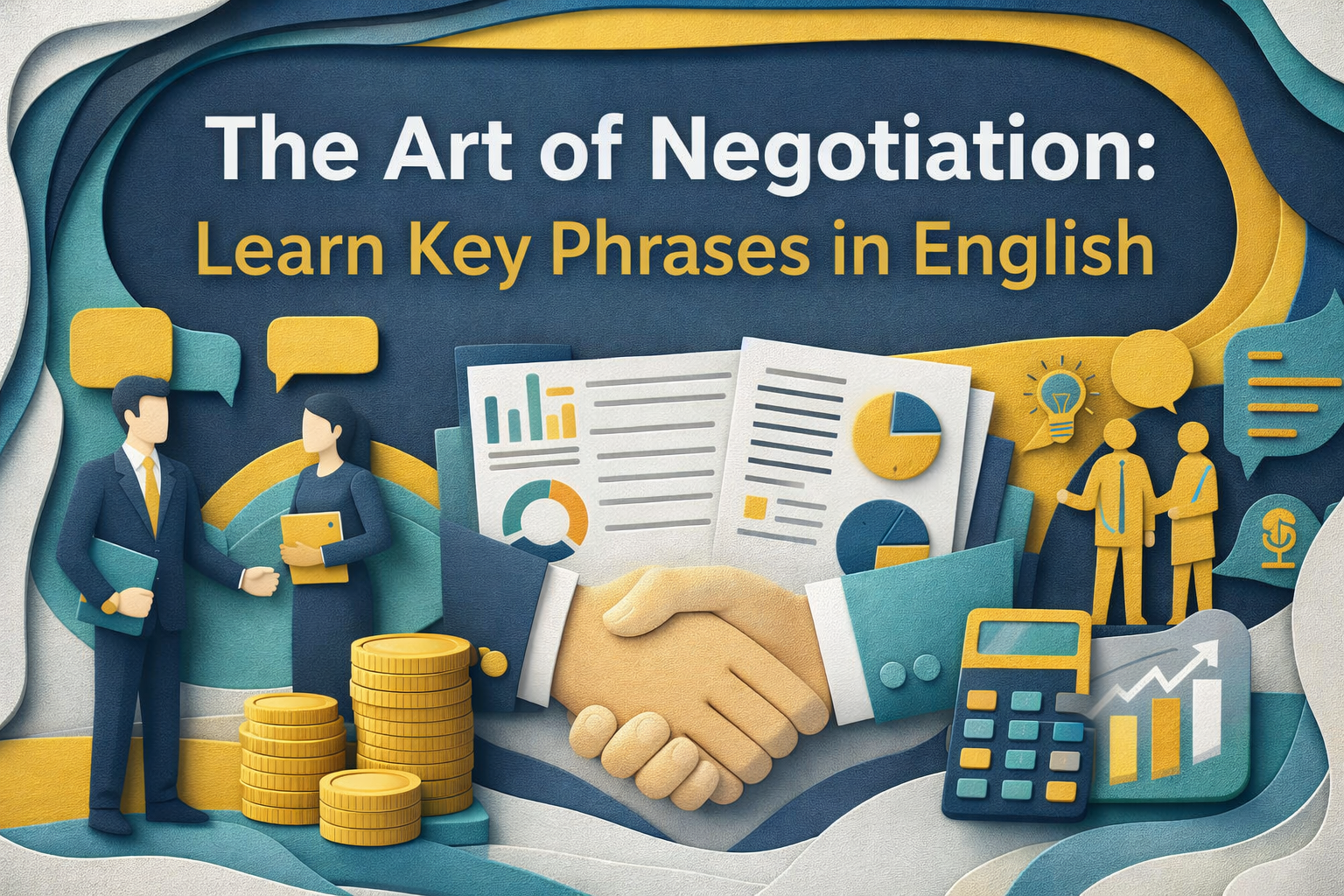
The Art of Negotiation: Learn Key Phrases from Real English Dialogues 🤝
Advanced Level | March 11, 2026
Read the article aloud on your own or repeat each paragraph after your tutor.
Why Negotiation Matters at Work
Negotiation is everywhere in professional life. You negotiate deadlines, budgets, prices, project scope, and even meeting times. But strong negotiation in English is not only about knowing the right grammar. It is also about knowing how to sound calm, clear, and cooperative while still protecting your interests.
Many English learners think negotiation means arguing or trying to “win.” In reality, good negotiation is usually more like problem-solving. The best negotiators know how to explain their position, ask thoughtful questions, and guide the conversation toward a practical agreement. That is why learning negotiation phrases in English can make such a big difference in your daily work.
How Real English Dialogues Help
Imagine you are speaking with a client who says, “We need this finished by Friday.” A weak response might be, “Okay, we will try.” A stronger and more professional response could be, “We understand the urgency, but to deliver quality work, we may need until Monday. Would that timeline work for you?” That kind of response shows respect, clarity, and confidence.
When you study real English dialogues, you begin to notice patterns. You see how professionals soften difficult messages, ask better questions, and avoid sounding emotional or defensive. This kind of language is practical because you can use it right away in meetings, calls, and email discussions. The more you practice negotiation phrases in English, the easier it becomes to stay calm and professional under pressure.
Useful Negotiation Phrases in English to Practice
Explain Your Position Clearly
One useful negotiation phrase is, “From our side, the main concern is…” This expression helps you explain your position without sounding aggressive. For example, you might say, “From our side, the main concern is the limited testing time before launch.” It sounds professional and keeps the focus on the issue, not the person.
Make Suggestions Without Sounding Pushy
Another key phrase is, “Would you be open to…” This is a softer and more effective way to make a suggestion. Instead of saying, “We need to change the price,” you could say, “Would you be open to discussing a revised pricing structure?” This phrasing invites cooperation instead of resistance.
Buy Time and Stay Calm
You should also learn how to buy time during a negotiation. Sometimes you need a moment to think or discuss something with your team. In that case, phrases like “Let me think that through for a moment” or “Could we take a step back and review the options?” are extremely useful. They help you stay calm and avoid giving a rushed answer.
Keep the Conversation Moving Forward
Real negotiation also requires flexibility. If you cannot fully agree, you can still move the conversation forward with phrases like, “We may not be able to do that exactly, but here is what we can offer.” This is powerful because it keeps the door open. It shows that you are not simply rejecting the idea. You are working toward a solution.
The more you practice these expressions, the more natural they will feel. Read them aloud. Use them in role-plays. Try them in meetings when small negotiation moments appear. Over time, you will sound more confident, more professional, and more persuasive. In business, that kind of language skill is worth a great deal.
Vocabulary List
- Urgency (noun) — The need for something to happen quickly.
Example: We understand the urgency of the client’s request. - Timeline (noun) — A schedule showing when things will happen.
Example: We proposed a more realistic timeline for the project. - Concern (noun) — A problem or issue that causes worry.
Example: Our main concern is the lack of time for testing. - Revised (adjective) — Changed or updated.
Example: They asked us to send a revised proposal by tomorrow. - Structure (noun) — The way something is organized.
Example: We discussed a new pricing structure during the meeting. - Resistance (noun) — Opposition to an idea or suggestion.
Example: Softer language can reduce resistance in negotiation. - Flexible (adjective) — Willing to change or adapt.
Example: Good negotiators stay flexible when problems come up. - Reject (verb) — To refuse to accept something.
Example: We did not reject the offer completely. - Persuasive (adjective) — Good at making someone agree with you.
Example: Her calm tone made her argument more persuasive. - Practical (adjective) — Sensible and useful in real situations.
Example: We found a practical solution that worked for both sides.
5 Questions About the Article
- Why is negotiation important in professional life?
- What is a stronger response to a tight deadline request?
- How does the phrase “From our side, the main concern is…” help in negotiation?
- Why is “Would you be open to…” a useful phrase?
- What can you say if you cannot fully agree with the other side?
5 Open-Ended Discussion Questions
- What kinds of things do you usually negotiate at work?
- Do you prefer a direct or softer style when negotiating in English? Why?
- What negotiation phrase from this article would be most useful for you?
- How can negotiation language help you sound more professional?
- Can you describe a time when a calm response helped solve a problem?
📢 Want more tips like this? 👉 Sign up for the All About English Mastery Newsletter! Click here to join us!
Want to finally master English but do not have the time? Mastering English for Busy Professionals is built for busy learners who want real results.
Follow our YouTube Channel @All_About_English for more great insights and tips.

 English
  한국어
한국어