

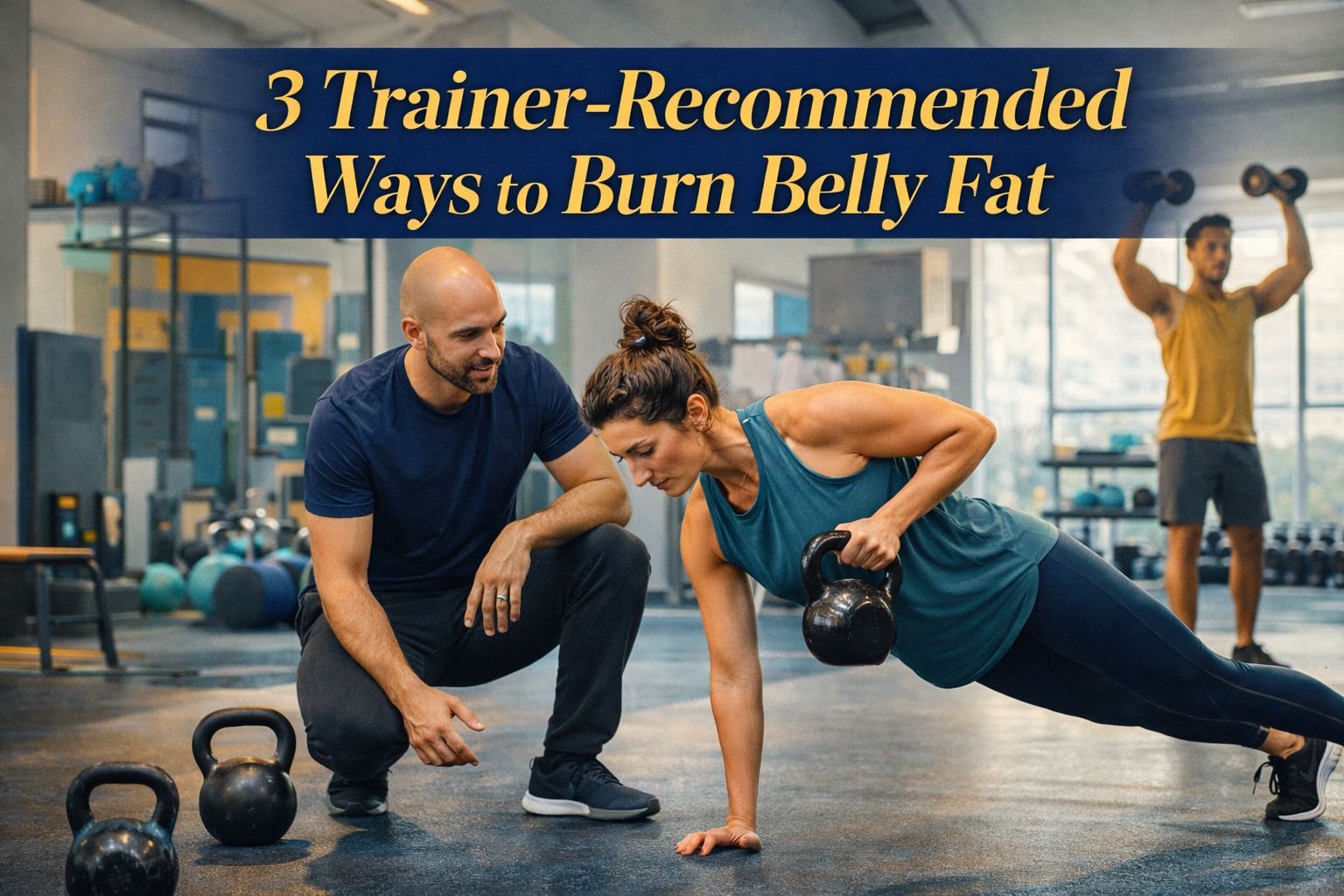
3 Trainer-Recommended Ways to Burn Belly Fat
Beginner | March 13, 2026
✨ Read the article aloud on your own or repeat each paragraph after your tutor.
A Popular Fitness Question Gets a Simple Answer
Many people want to know how to lose belly fat, but the answer is usually less dramatic than social media makes it sound. A recent Health.com article says trainers often recommend three main approaches: high-intensity interval training (HIIT), strength training, and staying in a calorie deficit (Health.com). In other words, there is no magic trick. The goal is to burn energy, build muscle, and stay consistent.
HIIT Can Raise the Intensity Quickly
The article explains that HIIT uses short bursts of hard exercise followed by short rest periods (Health.com). One trainer-recommended sample includes kettlebell swings, push-ups, jump squats, mountain climbers, and burpees, done for 30 seconds each with 30 seconds of rest, repeated for three to four rounds (Health.com). This kind of workout can help people burn more calories in a short amount of time.
Strength Training Matters Too
Health.com also says strength training is important because muscle helps your body burn more energy over time (Health.com). The article highlights full-body resistance exercises such as dumbbell rows, lat pull-downs, dumbbell bench press, dumbbell overhead press, kettlebell deadlifts, and kettlebell squats (Health.com). So even though people often focus only on their stomach, trainers say the smarter plan is to work the whole body.
Belly Fat Is About More Than Looks
Another reason this topic matters is health. Health.com explains that belly fat includes subcutaneous fat, which sits under the skin, and visceral fat, which surrounds internal organs (Health.com). Visceral fat is linked to serious health problems, which is why experts take this issue seriously. That means the goal is not just a smaller waistline. It is also better long-term health.
Consistency Beats Shortcuts
The article also makes an important point: exercise alone is usually not enough if eating habits do not support fat loss. Trainers note that a calorie deficit is necessary if someone wants to reduce belly fat (Health.com). The CDC also recommends that adults get at least 150 minutes of moderate-intensity activity each week and do muscle-strengthening activities on 2 days a week (CDC). So the big picture is simple, even if it is not always easy: move often, build strength, and stick with a realistic routine.
A Better Way to Think About Fitness
This story is a good reminder that real fitness advice usually sounds boring compared with miracle promises online. But boring often works. The best plan is not a secret ab move or a flashy gadget. It is a mix of hard work, smart training, and patience. For many learners, this topic is also useful because it teaches everyday English for health, exercise, and goal setting.
Vocabulary
- Interval (noun) – a short period of time between activities.
Example: “HIIT uses short intervals of hard exercise and rest.” - Deficit (noun) – a lack or shortage of something.
Example: “A calorie deficit means using more energy than you eat.” - Strength training (noun) – exercise that builds muscle.
Example: “Strength training helps the body burn more calories over time.” - Resistance (noun) – force that muscles work against.
Example: “Resistance exercises can include weights or machines.” - Consistent (adjective) – happening regularly and steadily.
Example: “Consistent exercise usually works better than quick fixes.” - Subcutaneous (adjective) – under the skin.
Example: “Subcutaneous fat is found just below the skin.” - Visceral (adjective) – around the internal organs.
Example: “Visceral fat can be more dangerous for health.” - Routine (noun) – a regular way of doing something.
Example: “She made walking part of her daily routine.” - Moderate-intensity (adjective) – exercise that is active but not extreme.
Example: “Brisk walking is a moderate-intensity activity.” - Shortcuts (noun) – faster but often less effective ways to reach a goal.
Example: “Many fitness shortcuts sound exciting but do not last.”
Discussion Questions (About the Article)
- What three main strategies did trainers recommend for burning belly fat?
- What exercises were included in the sample HIIT routine?
- Why does strength training help with fat loss?
- What is the difference between subcutaneous fat and visceral fat?
- Why does the article say consistency matters more than shortcuts?
Discussion Questions (About the Topic)
- What kinds of exercise do you enjoy most?
- Why do you think many people look for quick fitness solutions?
- Is it harder to stay consistent with exercise or diet? Why?
- What simple fitness habits could busy professionals start this week?
- How can people talk about health goals in a realistic way instead of a dramatic way?
Related Idiom
“Slow and steady wins the race” – patient, consistent effort often leads to success.
Example: “When it comes to fitness, slow and steady wins the race better than extreme plans.”
📢 Want more practical English using real news? 👉 Sign up for the All About English Mastery Newsletter! Click here to join us!
Want to finally Master English but don’t have the time? Mastering English for Busy Professionals is the course for you! Check it out now!
Follow our YouTube Channel @All_About_English for more great insights and tips.
This article was inspired by Health.com: 3 Exercises Trainers Recommend for Burning Belly Fat, Health.com: 6 Exercises That Help Burn Belly Fat and Strengthen Your Core, and CDC Physical Activity Basics.


 English
  한국어
한국어