

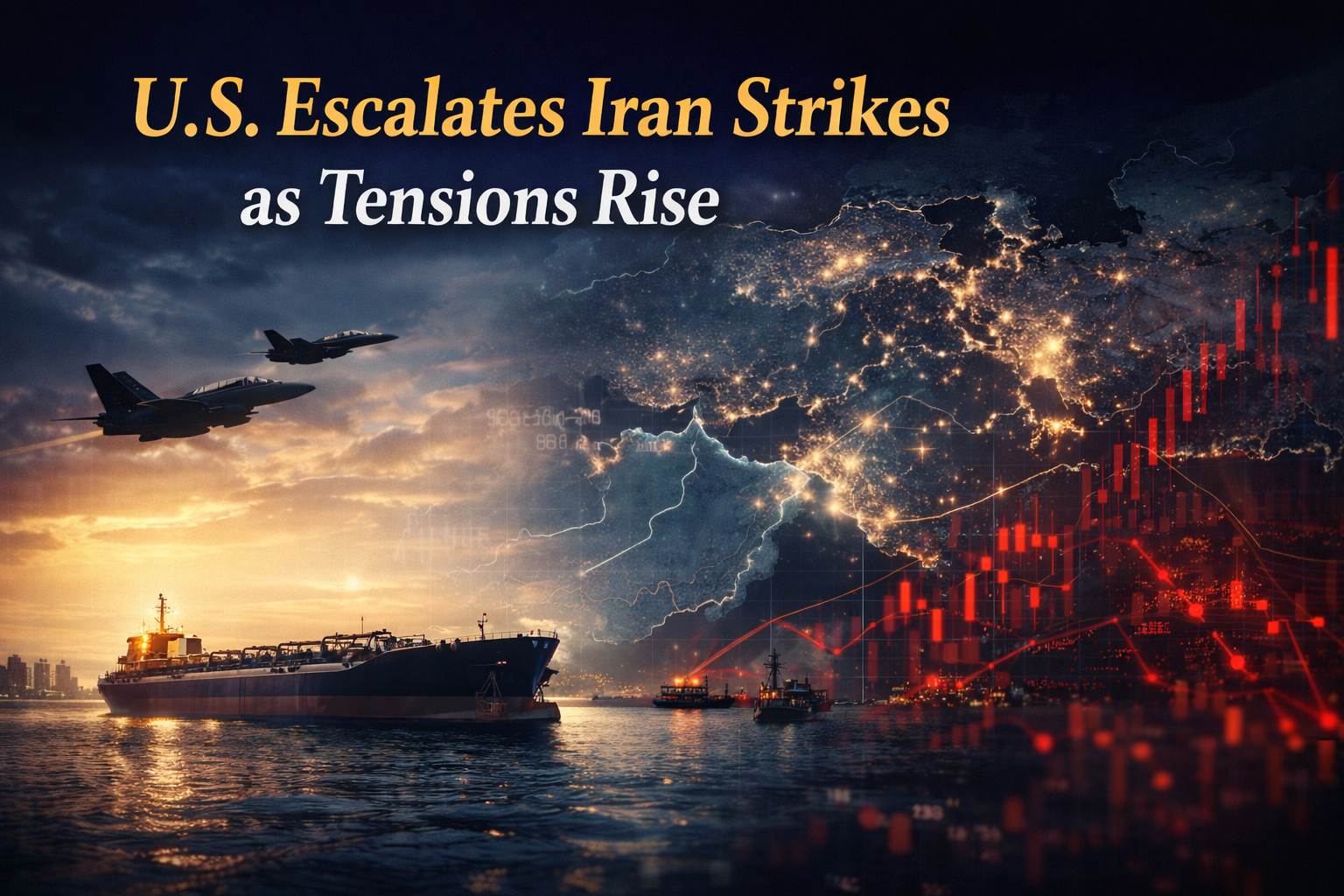
U.S. Escalates Iran Strikes as Tensions Rise
Intermediate | March 14, 2026
✨ Read the article aloud on your own or repeat each paragraph after your tutor.
U.S. Strikes on Iran Reach a New Level
The war between the United States, Israel, and Iran took another serious turn this week. U.S. Defense Secretary Pete Hegseth said Tuesday would be the “most intense day” of strikes against Iran so far, with the largest number of fighter jets and bombers used in the campaign (Reuters). That comment signaled a major escalation and showed that Washington was not backing away from military pressure.
The Conflict Is Still Expanding
By the next day, it was clear the fighting was still spreading. Reuters reported that the joint U.S.-Israeli campaign had already killed around 2,000 people, mostly Iranians and Lebanese, and had created one of the worst oil shocks seen in decades (Reuters). Iran also showed it could still hit back. According to Reuters, Iranian forces fired at Israel and targets across the Middle East, while three vessels were reported hit in Gulf waters (Reuters).
Oil and Shipping Are Now Part of the Story
This conflict is no longer only about military targets. It is also about global trade, energy, and shipping. Reuters said Iran warned the world to prepare for oil at $200 a barrel, while the International Energy Agency proposed releasing 400 million barrels from strategic reserves to calm the market (Reuters). The Strait of Hormuz, one of the world’s most important shipping routes, has become a major focus because around one-fifth of the world’s traded oil normally passes through it.
Regional Pressure Keeps Growing
The danger is not limited to Iran itself. AP reported that Iran targeted the world’s busiest international airport and attacked commercial ships, while oil facilities and ports across the region also came under pressure (AP News). The report said the conflict has disrupted trade routes, fuel supplies, and air traffic in one of the world’s busiest regions. In short, this is not just a local fight anymore. It is starting to affect the wider global economy.
Why the Most Intense Day of Strikes Matters
The phrase most intense day of strikes matters because it suggests the war may be entering a more dangerous phase. Even after the escalation, there were no clear signs that the conflict was cooling down (Reuters). U.S. intelligence also reportedly assessed that Iran’s government was still largely intact and not close to collapse, which suggests the conflict could continue rather than end quickly (Reuters).
A Crisis With No Easy Exit
At this point, the situation looks dangerous, expensive, and hard to control. The military action may be intense, but the political result is still uncertain. When wars begin to affect shipping lanes, oil prices, airports, and nearby countries, the risks get much bigger very fast. For English learners, this is also a useful story because it connects military vocabulary, business vocabulary, and world news all in one place.
Vocabulary
- Escalation (noun) – a situation becoming more serious or intense.
Example: Hegseth’s statement signaled an escalation in the conflict. - Campaign (noun) – a series of military actions or organized efforts.
Example: The bombing campaign has continued for nearly two weeks. - Pressure (noun) – force used to make someone change or respond.
Example: The U.S. said it would keep military pressure on Iran. - Strategic (adjective) – important to a plan, especially in war or business.
Example: The Strait of Hormuz is a strategic shipping route. - Reserve (noun) – a supply kept for emergencies.
Example: Countries discussed using oil reserves to calm the market. - Disrupt (verb) – to interrupt or disturb normal activity.
Example: The conflict disrupted trade routes and oil supplies. - Vessel (noun) – a ship or large boat.
Example: Three vessels were reportedly hit in Gulf waters. - Intact (adjective) – still whole and not badly damaged.
Example: U.S. intelligence said Iran’s government remained largely intact. - Collapse (noun/verb) – a sudden failure or breakdown.
Example: Officials said the Iranian government was not near collapse. - Uncertain (adjective) – not clear or not known yet.
Example: The political outcome of the conflict remains uncertain.
Discussion Questions (About the Article)
- What did Pete Hegseth mean by the “most intense day” of strikes?
- How did Iran respond to the U.S.-Israeli attacks?
- Why is the Strait of Hormuz such an important part of this story?
- How is this conflict affecting countries outside Iran?
- Why do analysts think the war may not end quickly?
Discussion Questions (About the Topic)
- How do wars affect the global economy, even for countries far away?
- Why are oil prices so sensitive to conflict in the Middle East?
- Should countries rely heavily on military pressure to solve international disputes? Why or why not?
- How can people tell the difference between battlefield success and political success?
- Why is it important to understand both the human and economic cost of war?
Related Idiom
“Turn up the heat” – to increase pressure in order to force a result.
Example: “By launching its most intense day of strikes, Washington appeared to turn up the heat on Iran.”
📢 Want more practical English using real news? 👉 Sign up for the All About English Mastery Newsletter! Click here to join us!
Want to finally Master English but don’t have the time? Mastering English for Busy Professionals is the course for you! Check it out now!
Follow our YouTube Channel @All_About_English for more great insights and tips.
This article took inspiration from Reuters, Reuters, Reuters, and AP News.


 English
  한국어
한국어