

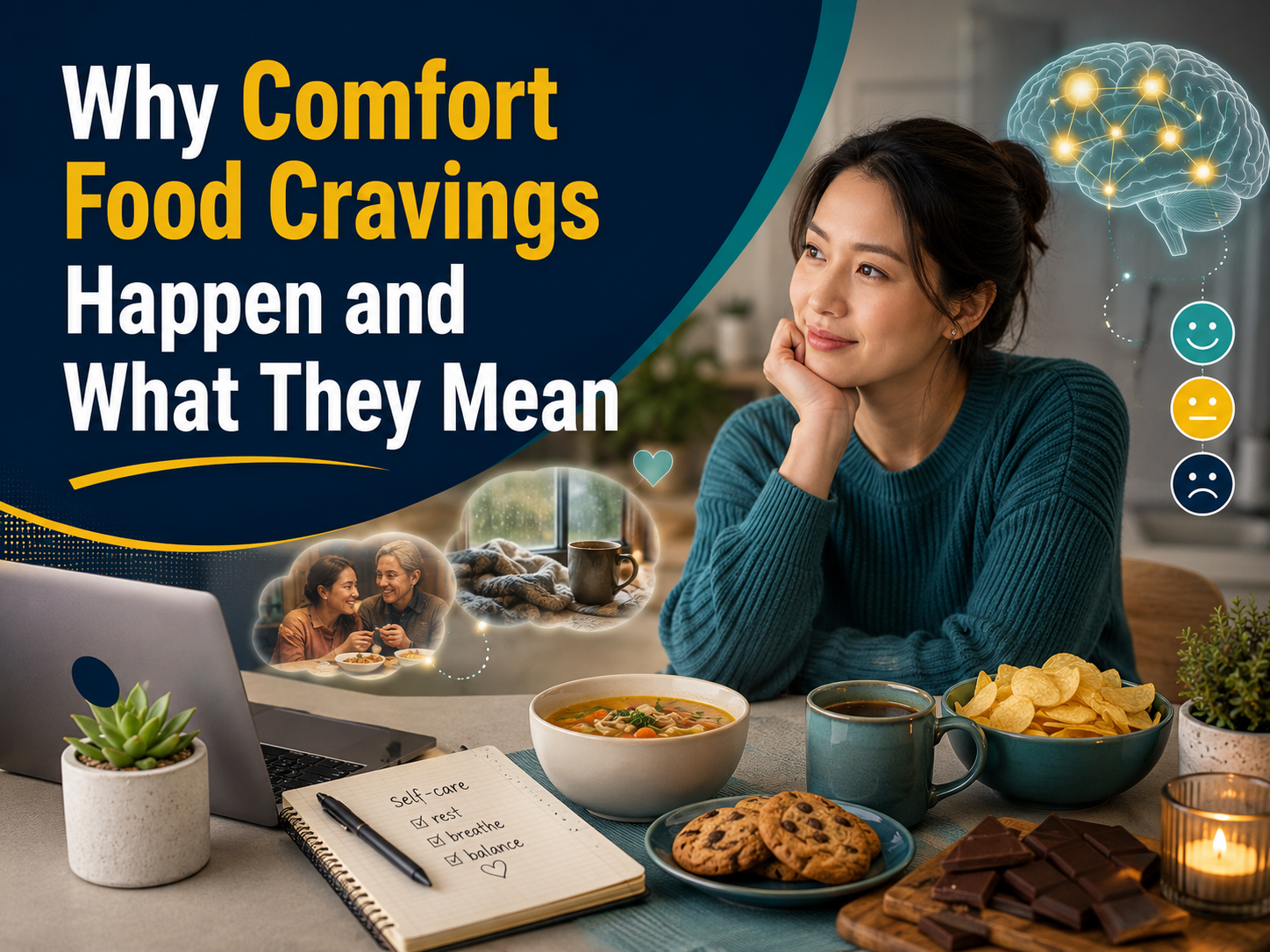
Why Comfort Food Cravings Happen and What They Mean
Beginner | July 1, 2026
✨ Read the article aloud on your own or repeat each paragraph after your tutor.
Why We Reach for Comfort Food
Many people reach for ice cream, chips, ramen, cookies, or other favorite foods when they feel tired, sad, stressed, or lonely. According to Yahoo Health, comfort food cravings may connect to stress hormones, dopamine, and memories from the past. In simple English, your brain may ask for food that feels safe, familiar, and rewarding.
Why Comfort Food Cravings Feel So Strong
The science behind comfort food cravings is not just about hunger. Real Simple explained that foods high in sugar, fat, or both can stimulate the brain’s pleasure centers through dopamine. Dopamine is a brain chemical connected to reward and good feelings. That is why a sweet snack or salty food can feel powerful after a hard day.
Stress Can Make Cravings Stronger
Stress can also make people want high-calorie food. Healthline reported that stress can affect the brain’s reward system and increase cravings for sweet, satisfying foods. The article also explained that these foods may give short-term relief, but they can create an unhealthy connection between stress and eating if people depend on them too often.
Memories Matter, Too
Comfort food is often connected to memory. Real Simple gave the example of chicken soup. If your mother made chicken soup when you were sick as a child, you may want that same food when you feel unwell as an adult. The food does not only fill your stomach. It also brings back a feeling of care, safety, and home.
Comfort Food Is Not Always Bad
Experts do not say people must stop eating comfort food forever. That would be a sad little food prison, and nobody wants that. The main idea is balance. Real Simple said comfort food can give temporary relief, but the benefit may not last long if people use food as their only way to handle emotions. A better approach is to enjoy comfort food mindfully and also find other ways to feel better.
What You Can Do About Cravings
One helpful idea is to pause and ask, “What do I really need right now?” Maybe you need food. But maybe you need sleep, a short walk, water, a break, or a talk with a friend. Real Simple also mentioned “urge surfing,” which means noticing a craving like a wave. The wave feels strong at first, but it usually becomes weaker if you wait and pay attention.
Choosing Better Comfort
Some comfort foods today are ultra-processed, which means companies make them with many refined ingredients, additives, or flavor enhancers. Knowable Magazine reported that many modern comfort foods are heavy in salt, fat, and sugar, and some can be easier to overeat. But comfort does not always have to come from food. A walk, music, prayer, a good conversation, or a few minutes away from your screen can also help you reset.
Vocabulary
- Craving (noun) – a strong desire for something.
Example: “She had a craving for chocolate after a stressful meeting.” - Comfort food (noun) – food that makes someone feel better emotionally.
Example: “Chicken soup is comfort food for many people.” - Stress hormone (noun) – a body chemical connected to stress.
Example: “Stress hormones can affect what food people want.” - Dopamine (noun) – a brain chemical connected to reward and pleasure.
Example: “Sweet foods can trigger dopamine in the brain.” - Reward system (noun) – the part of the brain that responds to pleasure.
Example: “Comfort food can activate the brain’s reward system.” - Nostalgia (noun) – a warm feeling about the past.
Example: “The smell of soup gave him nostalgia for childhood.” - Temporary (adjective) – lasting for only a short time.
Example: “Comfort food may give temporary relief.” - Mindfully (adverb) – with attention and awareness.
Example: “She ate the dessert mindfully and enjoyed each bite.” - Ultra-processed (adjective) – made with many industrial ingredients or additives.
Example: “Some snacks are ultra-processed and easy to overeat.” - Reset (verb) – to return to a calmer or better state.
Example: “A short walk helped him reset after a busy day.”
Discussion Questions — About the Article
- What kinds of feelings can lead to comfort food cravings?
- What is dopamine, and why is it important in this story?
- How can stress make cravings stronger?
- Why can childhood memories affect comfort food cravings?
- What does “urge surfing” mean?
Discussion Questions — About the Topic
- What is your favorite comfort food?
- Do you usually eat more when you feel stressed?
- What are healthy ways to feel better after a difficult day?
- Can comfort food be part of a balanced life? Why or why not?
- What food reminds you of home or childhood?
Related Idiom
“Take the edge off” – to make something feel less strong, painful, or stressful.
Example: “A bowl of soup may take the edge off after a long, stressful day, but it should not be your only way to handle stress.”
📢 Want more practical English through real news stories? Sign up for the All About English Mastery Newsletter here: allaboutenglishmastery.com/newsletter
Want to build stronger English in less time? Check out Mastering English for Busy Professionals.
Follow our YouTube channel @All_About_English for more English tips and practice.
This article was inspired by: Yahoo Health, Real Simple, Knowable Magazine, and Healthline.


 English
  한국어
한국어