

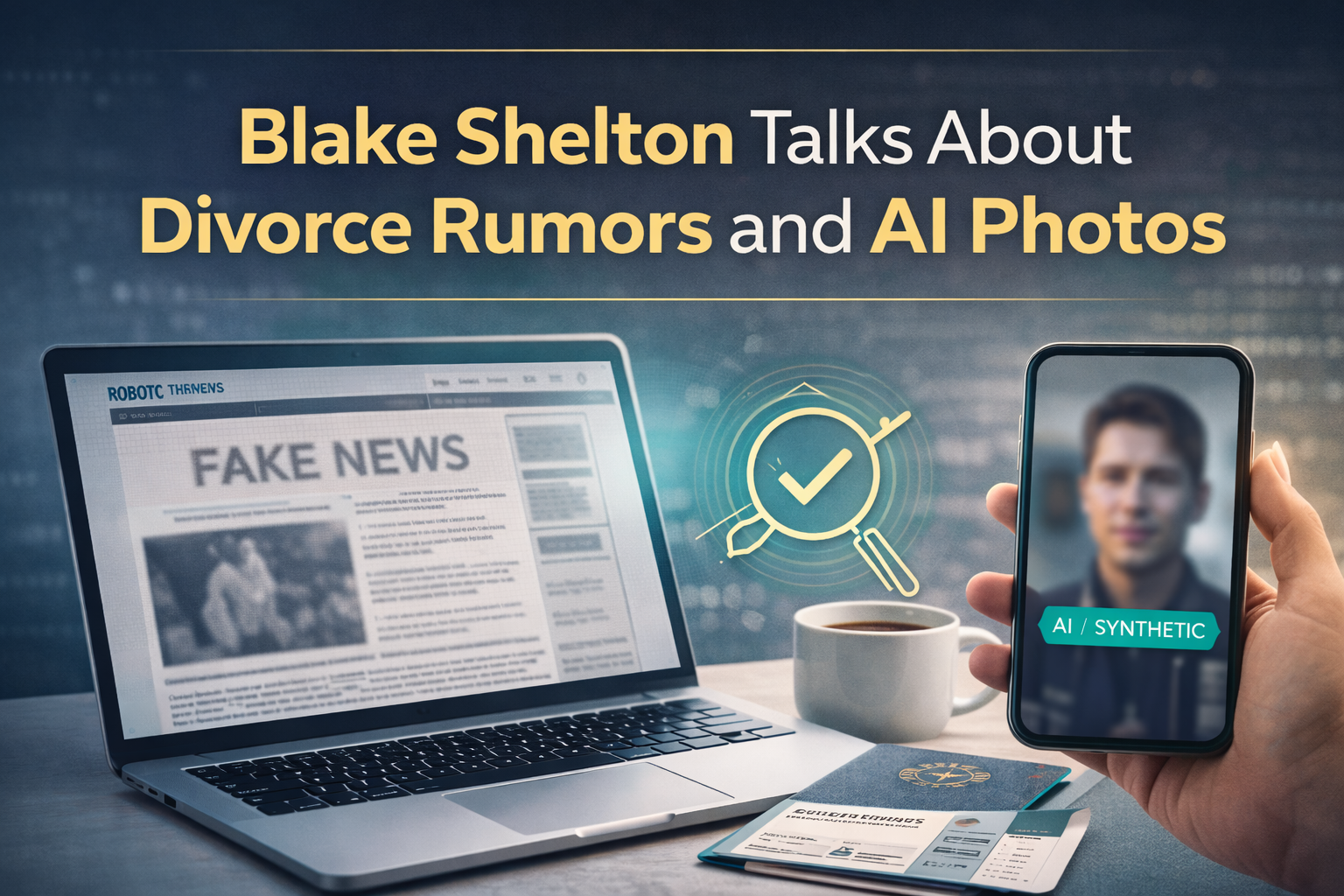
Blake Shelton Talks About Divorce Rumors and AI Photos
Beginner | January 24, 2026
✨ Read the article aloud on your own or repeat each paragraph after your tutor.
Blake Shelton Divorce Rumors: What He Actually Said
This week, country singer Blake Shelton spoke directly about Blake Shelton divorce rumors online—gossip claiming he and Gwen Stefani were getting divorced. He said the stories were not true—and he joked about how the internet keeps changing the “story” every week. He shared this during an appearance on the radio program Country Countdown USA. (Source: Fox News)
How the Rumors Started (And Why They Keep Coming Back)
Shelton said he started noticing these headlines around October or November. One week, the internet said they were “split up.” Then a photo appeared of them together, and suddenly the internet said they were “back together.” Then, if people didn’t see them in public for a while, the divorce talk returned. He basically said: the internet is filling in the blanks with drama. (Source: TV Insider)
The New Problem: AI Photos That Look Real
Shelton also said AI makes things worse. He described seeing pictures of himself and Stefani online that looked real—but he could tell they were fake because he didn’t own the clothes in the photo, or the car wasn’t his. When images look real, it gets harder to know what’s true. (Source: Fox News)
“I Don’t Believe Anything Anymore”
Because of the fake stories and fake images, Shelton said he has changed how he uses media. He said he doesn’t trust what he sees online the way he used to. That’s a big message for all of us: even if a headline looks official, we still need to slow down and check the source. (Source: KOMO News)
A Business Lesson: Reputation Moves Fast Online
Even though this is a celebrity story, the lesson is very “business.” Stories like Blake Shelton divorce rumors show how fast misinformation can move online. Online rumors can spread quickly, and once people believe them, they can be hard to stop. For professionals, this is a reminder to be careful when sharing posts, screenshots, or “viral” stories. If you share something false, it can hurt your credibility.
Vocabulary
- Rumor (noun) – a story people share that may not be true.
Example: A rumor can spread quickly online. - Speculation (noun) – guessing about something without proof.
Example: There was speculation, but no real evidence. - Headline (noun) – the title of a news story.
Example: The headline made people click immediately. - Fake (adjective) – not real; made to trick people.
Example: The photo looked real, but it was fake. - Artificial Intelligence (AI) (noun) – computer technology that can create images, text, or videos.
Example: AI can create pictures that look realistic. - Doctored (adjective) – changed or edited to mislead people.
Example: The image was doctored to look believable. - Distrust (verb) – to not trust.
Example: He began to distrust what he saw online. - Evidence (noun) – proof that something is true.
Example: Without evidence, it’s smart to be cautious. - Credibility (noun) – trust people have in you.
Example: Sharing false news can damage your credibility. - Verify (verb) – to check if something is true.
Example: Always verify the source before you share a story.
Discussion Questions (About the Article)
- What did Blake Shelton say about the divorce rumors?
- Why did the rumors keep coming back again and again?
- What kind of AI photos did Shelton describe?
- Why did he say he trusts the internet less now?
- What is the “business lesson” from this story?
Discussion Questions (About the Topic)
- Have you ever seen a fake story online that looked real?
- Why do you think people enjoy celebrity rumors?
- How can AI make misinformation worse?
- What are two ways you can verify a story before sharing it?
- Should social media platforms do more to label AI images? Why or why not?
Related Idiom or Phrase
“Don’t jump to conclusions.” – Don’t decide something is true before you have enough evidence.
Example: When you see a shocking headline, don’t jump to conclusions—check the source first.
📢 Want more English like this—short, useful, and easy to practice? 👉 Sign up for the All About English Mastery Newsletter! Click here to join us!
Want to finally Master English but don’t have the time? Mastering English for Busy Professionals is the course for you! Check it out now!
Follow our YouTube Channel @All_About_English for more great insights and tips.
This article was inspired by: Fox News, TV Insider, and KOMO News.

 English
  한국어
한국어