

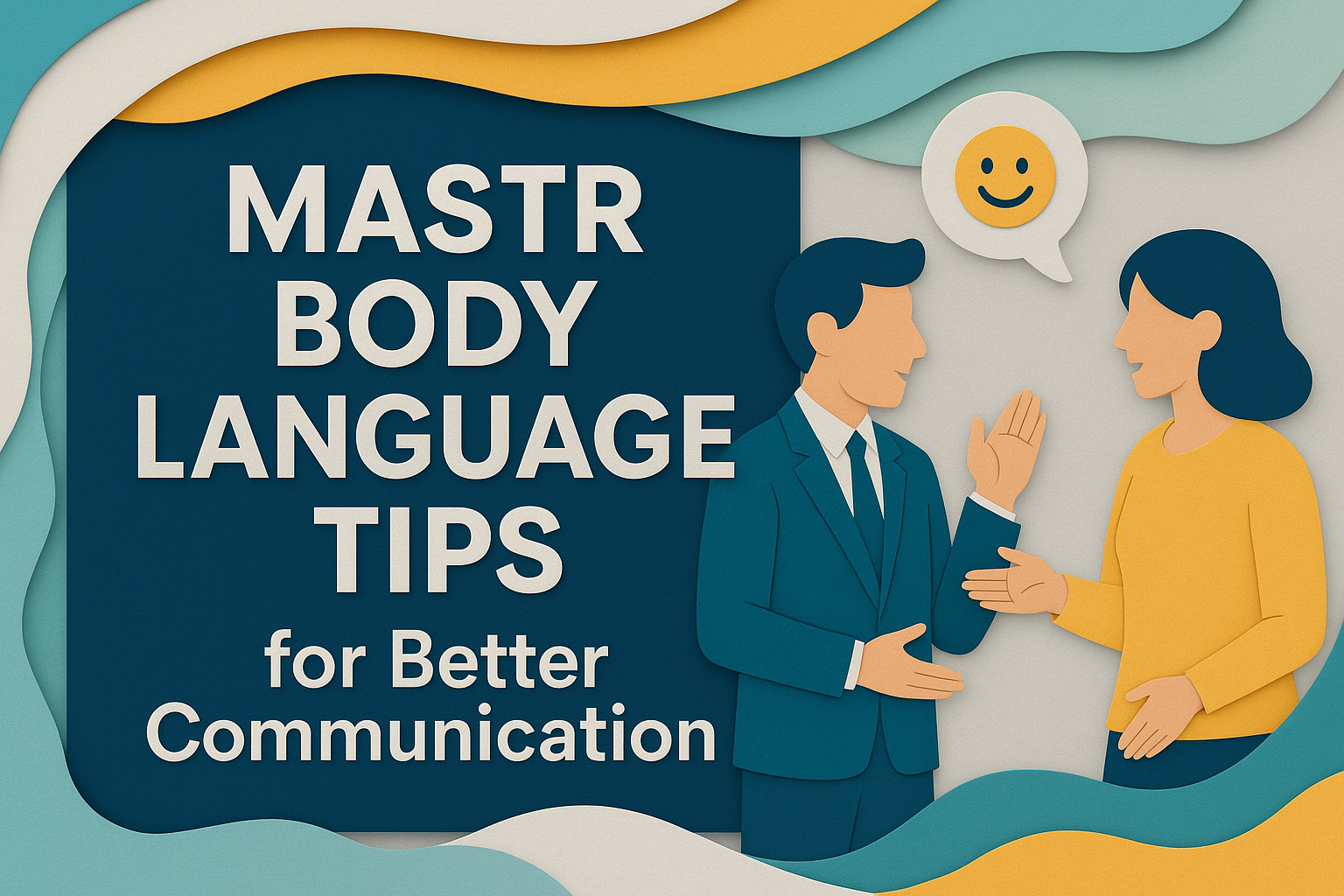
Master Body Language Tips for Better Communication 🤝
(A beginner guide to body language for better communication at work)
Beginner Level | December 17, 2025
Read the article aloud on your own or repeat each paragraph after your tutor.
Good communication is not only about the words you use. Your body speaks too—often louder than your voice. When you meet someone at work, they notice your posture, your face, and your gestures before they fully process your words. For busy professionals learning English, understanding body language for better communication can instantly improve how confident, friendly, and clear you appear.
Imagine walking into a meeting. You sit down, cross your arms, and look at the table. Even if your English is perfect, others may think you are nervous or not interested. Now imagine sitting up straight, making eye contact, and nodding while others speak. Without saying a word, you already look engaged and confident.
Why Body Language Matters: Body Language for Better Communication
Body language helps people understand your message faster. In international workplaces, clear body language is especially important because people may not share the same first language. Simple actions—like smiling, nodding, or facing the speaker—help others feel comfortable talking with you.
When your body language matches your words, people trust you more. If you say “I agree” while shaking your head, the message feels confusing. Good body language supports your English and makes communication smoother.
Tip 1: Maintain Comfortable Eye Contact
Eye contact shows interest and confidence. You do not need to stare. Simply look at the speaker for a few seconds at a time. In meetings, eye contact tells others that you are listening and following the conversation. If eye contact feels difficult, try looking at the speaker’s face or eyebrows instead—it still feels natural.
Tip 2: Use Open Posture
Open posture means keeping your arms relaxed and your body facing the person you are speaking to. Avoid crossing your arms or turning away. Open posture signals that you are approachable and ready to communicate. This is especially helpful when your English level is still developing.
Tip 3: Nod and Smile to Show Understanding
You do not need to interrupt to show that you understand. Small actions like nodding or smiling let the speaker know you are following along. This encourages them to continue and creates a positive rhythm in the conversation.
Tip 4: Be Aware of Personal Space
Different cultures have different ideas about personal space. In professional English-speaking environments, a comfortable arm’s-length distance is usually safe. Standing too close can feel uncomfortable, while standing too far away can feel distant.
Tip 5: Match Your Gestures to Your Message
Natural hand gestures can help explain ideas and make your speech clearer. Avoid overusing gestures, but do not hide your hands either. Simple, calm movements help your listener stay focused and relaxed.
Vocabulary List
- Posture (noun) — The way you hold your body.
Example: Good posture makes you look confident in meetings. - Gesture (noun) — A movement of the hands or body to express meaning.
Example: He used a small hand gesture to explain his idea. - Engaged (adjective) — Showing interest and attention.
Example: She looked engaged by nodding and smiling. - Approachable (adjective) — Easy to talk to.
Example: An open posture makes you more approachable. - Awareness (noun) — Knowing or noticing something.
Example: Body language awareness improves communication. - Confident (adjective) — Feeling sure about yourself.
Example: Eye contact helps you sound confident. - Signal (verb) — To show or communicate something.
Example: Smiling signals friendliness. - Interrupt (verb) — To stop someone while they are speaking.
Example: Try not to interrupt during meetings. - Distance (noun) — The space between people.
Example: Keep a comfortable distance when talking. - Support (verb) — To help or strengthen.
Example: Good body language supports your spoken English.
5 Questions About the Article
- Why is body language important in communication?
- How does eye contact help conversations?
- What is open posture?
- Why is nodding useful when listening?
- How can gestures support spoken English?
5 Open-Ended Discussion Questions
- Which body language habit do you want to improve?
- How is body language different in your culture?
- When do you feel most confident speaking English?
- How can body language help when you don’t know a word?
- What body language do you notice in good leaders?
📢 Want more tips like this? 👉 Sign up for the All About English Mastery Newsletter! Click here to join us!
Want to finally master English but don’t have the time? Mastering English for Busy Professionals is the course for you! Check it out now!
Follow our YouTube Channel @All_About_English for more great insights and tips.

 English
  한국어
한국어