

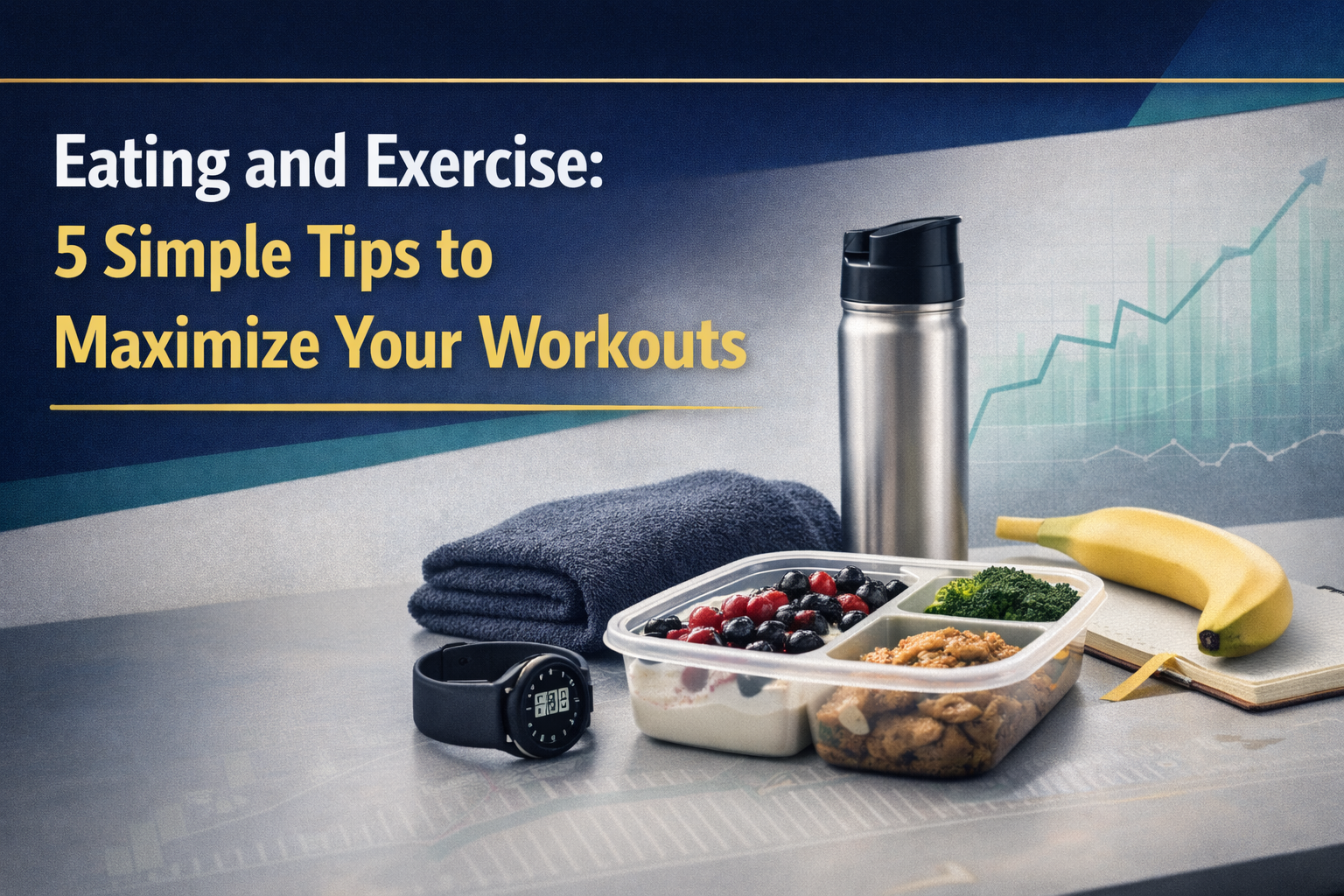
Eating and Exercise: 5 Simple Tips to Maximize Your Workouts
Beginner | February 1, 2026
✨ Read the article aloud on your own or repeat each paragraph after your tutor.
eating and exercise tips: Why food timing matters more than most people think
If you’ve ever started a workout feeling tired, dizzy, or strangely “heavy,” your food timing might be the reason. Mayo Clinic explains that when and what you eat can change how you feel and how well you perform—whether you’re doing a casual workout or training for something bigger. (Mayo Clinic)
Tip 1: Eat something smart—especially if you work out in the morning
Mayo Clinic suggests finishing breakfast at least one hour before a morning workout. If you’re exercising within that hour, keep it light and focus on carbohydrates for quick energy (a banana, yogurt, or whole-grain cereal are examples they mention). (Mayo Clinic)
Tip 2–3: Watch portion size and snack well
One of the easiest mistakes is eating too much right before you exercise. Mayo Clinic’s general timing guide is simple:
- Large meals: eat 3 to 4 hours before exercise
- Small meals/snacks: eat 1 to 3 hours before exercise
They also say most people can handle small snacks right before or during a workout. And if your workout lasts more than 60 minutes, a carbohydrate-rich food or drink during the workout may help. (Think fruit, an energy bar, or a sports drink.) (Mayo Clinic)
Tip 4: Eat after your workout—don’t “forget” the recovery step
After exercise, your body needs a refill. Mayo Clinic recommends eating a meal with carbohydrates and protein within two hours if possible. They give examples like yogurt and fruit, a peanut butter sandwich, or turkey on whole-grain bread with vegetables. (Mayo Clinic)
Tip 5: Hydrate with a plan, not a guess
Hydration is not just “drink some water when you remember.” Mayo Clinic shares specific hydration guidance from the American College of Sports Medicine:
- Drink about 2 to 3 cups of water in the 2 to 3 hours before your workout.
- During exercise, drink about 1/2 to 1 cup every 15 to 20 minutes (adjust for your body size and the weather).
- After exercise, drink 2 to 3 cups of water for every pound (0.5 kg) of weight you lost during the workout.
They also note that if you exercise for more than 60 minutes, a sports drink can help with electrolytes and energy because it contains carbohydrates. (Mayo Clinic)
Make it personal and keep it simple
The key message from Mayo Clinic is that everyone’s body is different—so pay attention to how you feel, then adjust. They even suggest keeping a journal to track what you ate and how your workout felt. Bottom line: good results usually come from boring consistency, not “secret hacks.” And yes… these eating and exercise tips are a great place to start. (Mayo Clinic)
Vocabulary
- Timing (noun) – choosing the right time to do something.
Example: Good timing can help you feel stronger during your workout. - Carbohydrates (noun) – a nutrient that gives your body energy.
Example: Carbohydrates can give quick energy before exercise. - Portion (noun) – the amount of food you eat at one time.
Example: A large portion right before exercise can make you feel slow. - Light meal (noun) – a small, easy-to-digest meal.
Example: I eat a light meal if I work out in the morning. - Snack (noun) – a small amount of food between meals.
Example: A snack can help you avoid feeling hungry during exercise. - Recover (verb) – to return to normal after effort.
Example: Your muscles recover faster when you eat after you exercise. - Glycogen (noun) – stored energy in your muscles (from carbs).
Example: After exercise, your body rebuilds glycogen stores. - Hydrate (verb) – to give your body enough water.
Example: It’s easier to hydrate when you have a simple plan. - Dehydration (noun) – not having enough water in your body.
Example: Dehydration can make you feel weak and tired. - Electrolytes (noun) – minerals that help your body balance fluids.
Example: Sports drinks can replace electrolytes during long workouts.
Discussion Questions (About the Article)
- Which tip feels easiest for you to follow right away?
- Have you ever felt “slow” or “lightheaded” during a workout? What do you think caused it?
- What is one smart pre-workout snack you could try this week?
- Why does Mayo Clinic recommend eating carbs and protein after exercise?
- Which hydration number surprised you the most: before, during, or after?
Discussion Questions (About the Topic)
- In your country, what do people usually eat before exercise?
- Do you prefer working out in the morning or at night? Why?
- What foods give you energy without upsetting your stomach?
- How do you build a healthy routine when you’re busy?
- Do you think most people underestimate hydration? Why or why not?
Related Idiom / Phrase
“Fuel up” – to eat or drink so you have energy to do something.
Example: If you’re training hard, you should fuel up with the right snack at the right time.
📢 Want more practical English like this? 👉 Sign up for the All About English Mastery Newsletter! Click here to join us!
Want to finally Master English but don’t have the time? Mastering English for Busy Professionals is the course for you! Check it out now!
Follow our YouTube Channel @All_About_English for more great insights and tips.
This article was inspired by: Mayo Clinic: “Eating and exercise: 5 tips to maximize your workouts” and Mayo Clinic Health System: “5 nutrition tips to maximize your workouts”.


 English
  한국어
한국어