

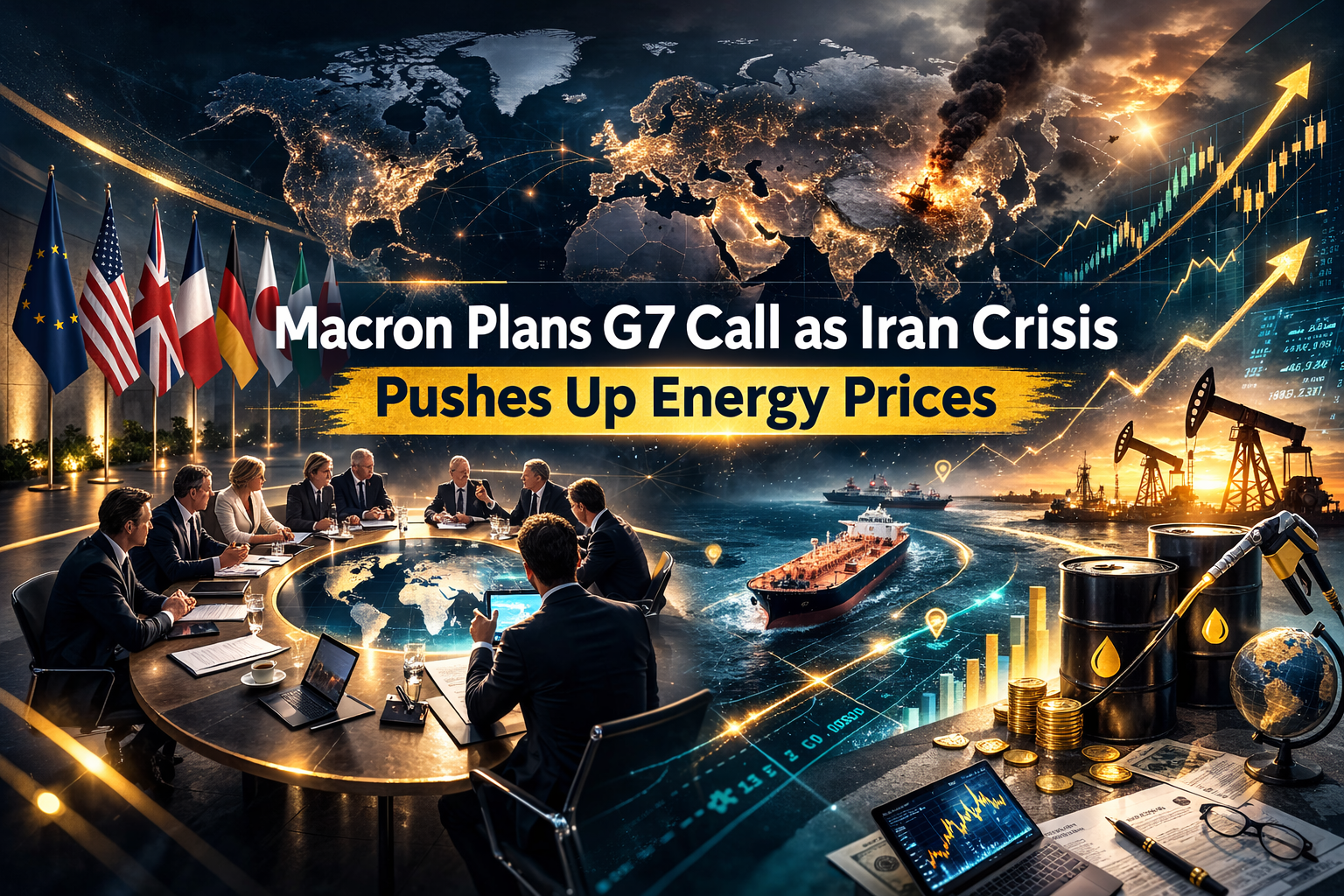
Macron Plans G7 Call as Iran Crisis Pushes Up Energy Prices
Intermediate | March 16, 2026
✨ Read the article aloud on your own or repeat each paragraph after your tutor.
A Fast-Moving Crisis Brings G7 Leaders Together
French President Emmanuel Macron said he would host a call with G7 leaders after tensions around Iran sent energy markets into a panic. The talks were meant to address both the growing regional crisis and the sharp rise in oil prices (Reuters). This shows how one conflict can quickly become a global business problem, not just a political one.
Oil Prices Jumped, Then Pulled Back
The market reaction was dramatic. Benchmark oil prices climbed to their highest level in nearly four years on Monday, then dropped by about 11% on Tuesday after comments from U.S. President Donald Trump gave investors some hope that the conflict might not get even worse (Reuters). That kind of swing tells us one thing very clearly: markets hate uncertainty.
Why G7 Iran Energy Prices Matter So Much
For the G7, this is about much more than headlines. The phrase G7 Iran energy prices may sound technical, but it points to a very real problem for businesses and consumers around the world. Higher oil prices can hit transportation, manufacturing, shipping, and even food costs. G7 energy ministers stopped short of agreeing to release strategic oil reserves right away (Reuters). Instead, they asked the International Energy Agency (IEA) to study the situation first. In plain English, they did not want to pull the emergency lever too early.
The Strait of Hormuz Is a Big Part of the Story
One reason leaders are so concerned is the Strait of Hormuz, one of the world’s most important oil routes. U.S. officials were considering ways to help keep oil moving through the area, including naval escorts and support for war-risk insurance for oil tankers (Reuters). When a narrow waterway becomes a danger zone, the whole global economy starts paying attention.
Business Learners Should Notice This Language
This news story is packed with useful business English. Phrases like strategic reserves, market volatility, energy supply, and economic impact are common in global business news. If you work in trade, logistics, finance, or manufacturing, this kind of vocabulary matters. Even if you do not work directly in energy, rising fuel costs can still land on your desk sooner or later.
What Happens Next?
The next step depends on whether the Iran crisis cools down or gets worse. If G7 Iran energy prices keep rising, governments may face even more pressure to respond quickly. If tensions ease, oil prices may settle. If not, G7 countries may need stronger action. For now, Macron’s planned G7 call looks like an effort to show unity, calm markets, and avoid making a rushed decision. Sometimes leadership is not about acting fast. Sometimes it is about keeping your head while everyone else is losing theirs.
Vocabulary
- Crisis (noun) – a serious situation that needs urgent attention.
Example: The Iran crisis pushed world leaders to act quickly. - Benchmark (noun) – a standard point used for comparison.
Example: Benchmark oil prices rose sharply after the conflict worsened. - Volatility (noun) – fast and unpredictable change.
Example: The market showed extreme volatility during the week. - Strategic reserves (noun) – emergency supplies kept for difficult situations.
Example: Some countries keep strategic reserves of oil in case of supply shocks. - Assess (verb) – to study or judge a situation carefully.
Example: The IEA was asked to assess the energy situation before action was taken. - Escort (noun) – protection given while traveling through a risky area.
Example: Officials discussed naval escorts for oil tankers. - Insurance (noun) – financial protection against loss or damage.
Example: War-risk insurance can help shipping companies manage danger. - Supply (noun) – the amount of something available.
Example: Global oil supply could be affected by conflict in the region. - Impact (noun) – a strong effect or result.
Example: Higher fuel costs can have a big impact on businesses. - Uncertainty (noun) – a situation where the future is unclear.
Example: Investors dislike uncertainty because it makes planning difficult.
Discussion Questions (About the Article)
- Why did Macron decide to organize a G7 leaders call?
- What happened to oil prices after the crisis intensified?
- Why did G7 energy ministers avoid releasing oil reserves immediately?
- Why is the Strait of Hormuz so important to the global economy?
- What business sectors could be hurt most by rising energy prices?
Discussion Questions (About the Topic)
- Should governments release emergency reserves quickly during an energy shock? Why or why not?
- How do global conflicts affect ordinary workers and families?
- What industries are most vulnerable to fuel price increases?
- How can companies prepare for sudden market volatility?
- Do you think leaders should act fast in a crisis, or wait for more data?
Related Idiom
“Keep your powder dry” – stay ready, but do not act too early.
Example: The G7 chose to keep its powder dry instead of releasing oil reserves immediately.
📢 Want more practical English using real news? 👉 Sign up for the All About English Mastery Newsletter! Click here to join us!
Want to finally Master English but don’t have the time? Mastering English for Busy Professionals is the course for you! Check it out now!
Follow our YouTube Channel @All_About_English for more great insights and tips.
This article was inspired by: (Reuters) and (Reuters)


 English
  한국어
한국어