

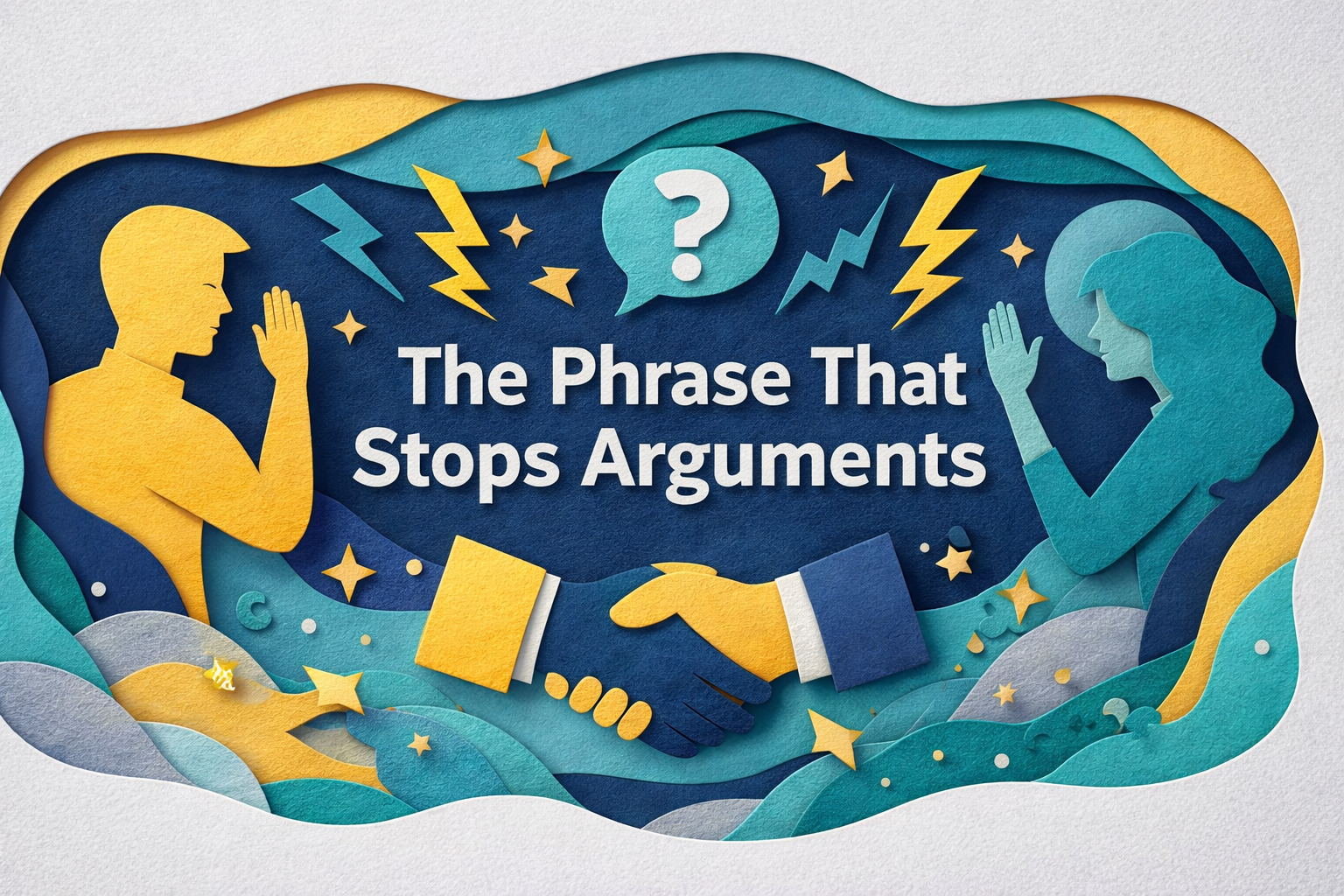
The Phrase That Stops Arguments 👔
Intermediate Level | April 9, 2026
혼자서 기사를 소리 내어 읽거나 튜터를 따라 각 단락을 반복해서 읽으세요. 레벨...
Arguments at work usually do not explode because of one big problem. More often, they grow because two people feel unheard. A project discussion turns tense, a client call gets sharp, or a simple meeting starts to feel like a boxing match in business clothes. The good news is that one small expression can calm things down fast. That expression is: “I see your point.” It is a simple phrase, but it can completely change the direction of a conversation.
Many English learners think they need strong grammar or advanced vocabulary to handle conflict well. Actually, the opposite is often true. In tense moments, simple language wins. When you say “I see your point,” you are not admitting defeat. You are showing respect. You are telling the other person, “I heard you, and I understand what you mean.” That is why this phrase that stops arguments is so powerful.
Why “I See Your Point” Works
This phrase works because it lowers pressure right away. Most people argue harder when they feel ignored. However, when they feel understood, they often relax. Imagine a manager saying, “We cannot delay this launch again,” and a teammate replying, “I see your point. The deadline matters. I am just worried about quality.” Suddenly, the conversation becomes more balanced. Nobody had to wave a white flag, but the heat drops quickly.
Another reason it works is that it creates space for cooperation. Instead of fighting to win, you start working to solve the problem. That is a huge difference. In professional English, this matters a lot because people want to sound calm, capable, and solutions-focused. The phrase that stops arguments helps you sound mature and steady, even when the room feels tense.
How to Use the Phrase That Stops Arguments Naturally
You can use the phrase in a few easy patterns. First, say: “I see your point, but…” and then explain your concern clearly. Second, try: “I see your point. At the same time…” if you want to sound softer and more diplomatic. Third, use: “I see your point. What if we…?” when you want to move toward a solution. These patterns help you avoid sounding defensive while still expressing your idea.
For example, imagine a coworker says, “We need to answer the client today.” You could reply, “I see your point. At the same time, I want to make sure we send the right information.” That answer sounds professional, respectful, and clear. It keeps the conversation moving forward instead of dragging both people deeper into frustration.
When This Phrase Helps Most
This expression is especially useful in meetings, email discussions, negotiations, and team projects. It is helpful when someone is emotional, when deadlines are tight, or when two good ideas are competing. It also works well across cultures because it shows respect without sounding weak. In many workplaces, that is pure gold. It is one of those rare phrases that can help you protect both the relationship and the result.
That said, do not use it like a robot. Say it only when you truly understand part of the other person’s view. People can smell fake politeness from a mile away, and nobody likes that perfume. Be sincere. Find one part of their idea that makes sense, acknowledge it, and then add your own point. That is where the magic happens.
Final Thought: Respect First, Solution Next
If you want to handle conflict better in English, do not start by trying to sound smarter. Start by helping the other person feel heard. “I see your point” is not dramatic, fancy, or complicated. That is exactly why it works. It is a practical, professional, and human phrase. Use it well, and you will notice that more conversations stay calm, more disagreements become productive, and more people will want to work with you.
Vocabulary List
- Tense (adjective) — Nervous, stressful, or likely to lead to conflict.
Example: The meeting became tense when the budget issue came up. - Defensive (adjective) — Acting as if you need to protect yourself from criticism.
Example: He sounded defensive when the client asked about the delay. - Acknowledge (verb) — To show that you have heard or recognized something.
Example: She acknowledged his concern before sharing her own opinion. - Diplomatic (adjective) — Careful and polite in a way that avoids conflict.
Example: His diplomatic answer helped calm the discussion. - Cooperation (noun) — Working together toward the same goal.
Example: Good cooperation helped the team finish the project on time. - Frustration (noun) — The feeling of being upset because something is difficult or unfair.
Example: You could hear the frustration in her voice during the call. - Mature (adjective) — Calm, responsible, and emotionally balanced.
Example: Her mature response changed the tone of the argument. - Competing (adjective) — Trying against each other to win or be chosen.
Example: The team had two competing ideas for the new campaign. - Sincere (adjective) — Honest and genuine.
Example: His sincere apology helped rebuild trust. - Productive (adjective) — Useful and leading to good results.
Example: After they calmed down, the conversation became productive.
5 Questions About the Article
- What is the main phrase introduced in the article?
- Why does “I see your point” help calm arguments?
- What are two natural patterns for using the phrase?
- In what kinds of work situations can this phrase be useful?
- Why is sincerity important when using this expression?
5 Open-Ended Discussion Questions
- Have you ever seen a small phrase change the direction of an argument?
- What kinds of disagreements happen most often in your workplace?
- Why do people become more emotional when they feel unheard?
- How can simple English sometimes be stronger than advanced English?
- What other phrases help people disagree without damaging the relationship?
📢 Want more practical English tips for real work situations? 👉 Sign up for the All About English Mastery Newsletter! Click here to join us.
Want to finally master English but do not have the time? Mastering English for Busy Professionals is built for busy people like you.
Follow our YouTube Channel @All_About_English for more helpful insights and tips.

 한국어
한국어  English