

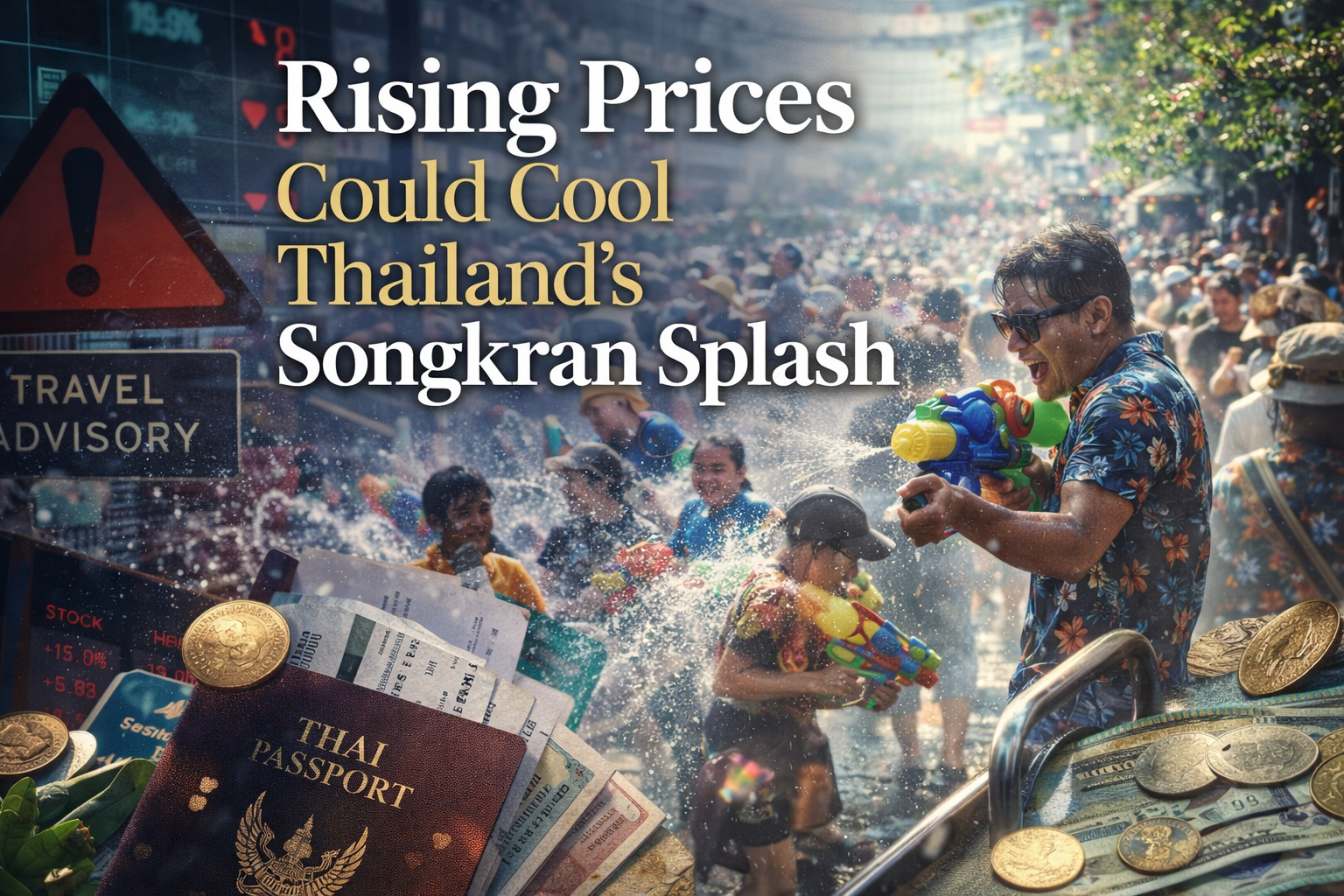
Rising Prices Could Cool Thailand’s Songkran Splash
Beginner | April 17, 2026
✨ 혼자서 기사를 소리 내어 읽거나 튜터를 따라 각 단락을 반복해서 읽으세요. 레벨...
Thailand’s Big Water Holiday Faces a Price Problem
Songkran is Thailand’s traditional New Year festival, and it is famous for huge water fights, family travel, and lively street celebrations. This year, however, the mood became a little more careful. Rising fuel and travel costs, linked in part to global oil pressure after the Iran war, made many people think twice before spending money freely. According to Reuters, many families planned a smaller holiday than usual.
Why Songkran Festival Spending May Be Lower This Year
A survey by the University of the Thai Chamber of Commerce said Songkran festival spending in 2026 could fall 3.7% to about 130 billion baht. Reuters reported that this would be the first drop since the COVID-19 pandemic. The same report said 36% of respondents planned to spend less during the holiday. That is a clear sign that higher living costs are changing how people celebrate.
People Are Still Celebrating, But More Carefully
Another poll, reported by Nation Thailand, found that 51.42% of respondents planned to skip some festive activities to save money. It also said 39.62% would avoid long-distance travel or not return to their hometowns, while 37.50% would stay closer to home to reduce transport costs. In other words, many people still wanted to enjoy the holiday, but they were trying to protect their wallets at the same time.
Vendors Feel the Pressure Too
It was not only families who felt the squeeze. Reuters reported that sellers in Bangkok’s Sampeng wholesale market also saw weaker demand. One vendor, Saran Keavvichai, said he had cut his water-gun orders by about half because customers were buying less and profit margins were thinner. That detail gives us a good business lesson: when consumers become cautious, small sellers feel it fast.
The Spirit of Songkran Is Still Strong
Even so, Songkran did not lose its meaning. The festival still brought crowds, water splashing, and traditional moments of respect and renewal. As AP News showed in its photo coverage, people across Thailand continued celebrating with joyful water fights, while traditional customs like pouring water on elders’ hands remained an important part of the holiday. So yes, Songkran festival spending may be lower, but the cultural heart of the festival is still very much alive.
A Useful Reminder for English Learners
This story is a good reminder that holidays are not only about culture. They are also about economics, consumer behavior, and daily choices. When prices rise, people adjust. They may travel less, buy fewer goods, or stay closer to home. That kind of change happens in many countries, not just Thailand. So this article gives you useful English for both travel talk and business talk.
Vocabulary
- Festival (noun) – a special time of celebration, often with public events.
Example: Songkran is one of Thailand’s most famous festivals. - Spending (noun) – the act of using money to buy things.
Example: Holiday spending may fall this year. - Survey (noun) – a set of questions used to collect information from people.
Example: A university survey showed that many people plan to spend less. - Respondent (noun) – a person who answers survey questions.
Example: Many respondents said they would celebrate more carefully. - Avoid (verb) – to stay away from something.
Example: Some families will avoid long-distance travel this year. - Demand (noun) – the desire or need for a product or service.
Example: Vendors saw lower demand for water guns. - Profit margin (noun) – the amount of money left after costs are paid.
Example: Thin profit margins made business harder for sellers. - Vendor (noun) – a person who sells goods.
Example: A vendor in Bangkok said customers were buying less. - Tradition (noun) – a custom or belief passed down over time.
Example: Water blessings are an important Songkran tradition. - Renewal (noun) – the act of starting fresh again.
Example: Songkran is connected with renewal and the new year.
Discussion Questions (About the Article)
- What is Songkran, and why is it important in Thailand?
- Why is Songkran festival spending expected to fall this year?
- What did the university survey say about spending in 2026?
- How are families changing their travel and celebration plans?
- Why are vendors like Saran Keavvichai feeling pressure?
Discussion Questions (About the Topic)
- Do rising prices change the way people celebrate holidays in your country?
- When money is tight, what parts of a holiday do people usually cut first?
- Is it better to travel far for a holiday or stay close to home? Why?
- How can small businesses survive when customers spend less?
- Do you think culture stays strong even when people spend less money? Why or why not?
Related Idiom or Phrase
“Feel the pinch” – to experience financial pressure.
Example: Families and vendors both felt the pinch during this year’s Songkran season.
📢 Want more useful English practice with real-world international news? Sign up for the All About English Mastery Newsletter! Click here to join us.
Want to finally Master English but don’t have the time? Mastering English for Busy Professionals is built for busy learners. Check it out now.
Follow our YouTube Channel @All_About_English for more English tips and real-world practice.
This article was inspired by: Reuters, Nation Thailand, and AP News


 한국어
한국어  English