

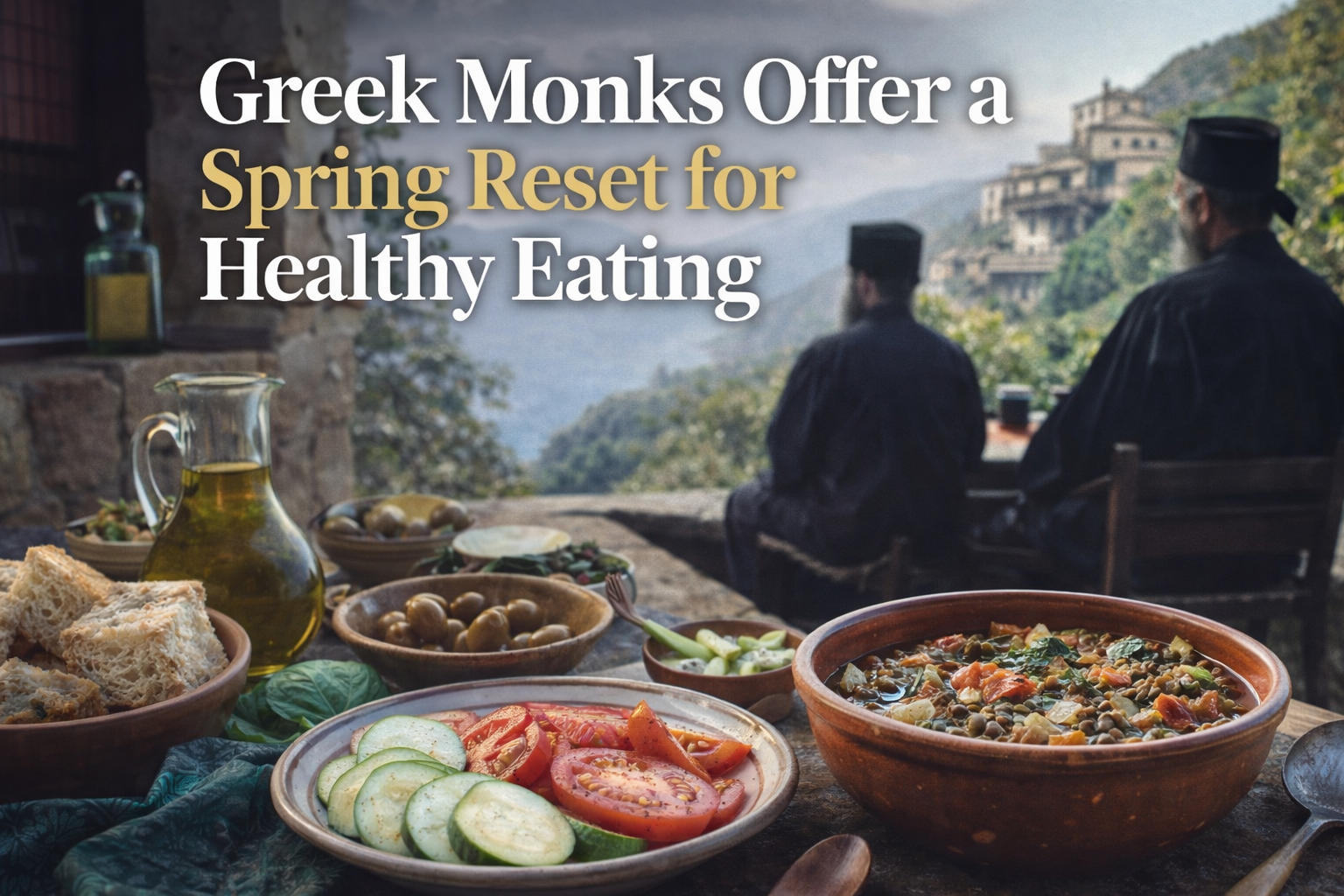
Greek Monks Offer a Spring Reset for Healthy Eating
Beginner | April 17, 2026
✨ 혼자서 기사를 소리 내어 읽거나 튜터를 따라 각 단락을 반복해서 읽으세요. 레벨...
A Centuries-Old Food Habit Gets New Attention
Every spring, many people try to clean up their eating habits. Some cut sugar. Others eat more vegetables. In Greece, however, there is an older and more disciplined tradition. According to AP News, Orthodox Christians in Greece and around the world follow a six-week Lenten fast that is built around simple meals, vegetables, legumes, and self-control. For many people, it is a spiritual practice. But it also offers a useful lesson in healthy eating.
Why Greek Monks Healthy Eating Habits Still Matter Today
AP reported that for six weeks every year, millions of Orthodox Christians follow a largely vegan diet. During that time, they avoid meat, dairy products, eggs, and fish with backbones. On weekdays during the 40-day period before Orthodox Easter, oil and wine are also restricted. That may sound strict, but the basic idea is surprisingly modern: eat more plant-based foods, rely less on rich processed meals, and bring more discipline to the table.
What the Monks Actually Eat During Lent
At the Monastery of St. Augustine and Seraphim in Trikorfo, about 236 kilometers northwest of Athens, AP reported that around 40 monks follow these food rules closely. They grow much of their own produce, including zucchini and tomatoes, and prepare simple but flavorful meals. The report noted that oven-roasted potatoes are coated with tahini instead of oil, and vegetable stock helps give lentil dishes a deeper taste. So the meals are basic, but not boring. That is an important point for learners and busy professionals alike: healthy food does not have to be sad food.
The Diet Is About More Than Weight Loss
The monks say the habit is not only about food. AP quoted Father Nektarios Moulatsiotis, the monastery’s abbot, saying fasting helps people prepare spiritually and build focus. He compared the church to “a gym for the soul.” In his view, less indulgence can create more clarity. That is a pretty strong phrase, and honestly, it works well even outside religion. Many people today are not just trying to lose weight. They are trying to eat with more intention and less chaos.
Research Suggests Some Real Health Benefits
This is where the story gets especially interesting. AP noted that researchers have studied Orthodox monks’ food habits for decades to see whether these customs might help prevent heart disease, type 2 diabetes, and strokes. A study published in Public Health Nutrition found that Greek Orthodox fasting contributed to a more favorable dietary profile and favorable blood lipid levels in a sample of monks. The same study said fasters tended to have lower cholesterol and saturated fat intake and higher fiber intake during fasting periods. (Cambridge Core)
Nutrition Experts Also Add a Word of Caution
Still, this is not a magic trick. AP quoted sports nutritionist Eirini Babaroutsi, who said fasting can have benefits if it is done correctly. She explained that people often eat more fiber during Lent, which helps digestion, but she also warned that it matters what people eat, not only what they avoid. AP also reported that a full six-week fasting cycle is not recommended for older adults, young children, pregnant or nursing women, or people with serious health conditions. In other words, there is wisdom here, but people still need balance and common sense.
A Small Break That Can Teach Bigger Lessons
One of the most practical lines in the AP story came from Gerasimos Mantalvanos, manager of Athens’ central fish market. He said a period of fasting and a little abstinence from meat can be “a kind of small detox, a little break.” That may be why this story connects with so many modern readers. Greek monks healthy eating habits are not just about religion or old customs. They show how structure, moderation, and simple ingredients can help people reset. And for English learners, this topic also gives useful vocabulary for talking about food, health, routine, and self-discipline.
Vocabulary
- Fasting (noun) – going without some foods, or eating less, for a period of time.
Example: The monks follow a fasting tradition before Easter. - Legumes (noun) – foods such as beans, lentils, and peas.
Example: Legumes are an important part of the Lenten diet. - Discipline (noun) – the ability to control your behavior and follow rules.
Example: The eating plan requires discipline. - Plant-based (adjective) – made mostly from foods that come from plants.
Example: Lent meals are often plant-based and simple. - Indulgence (noun) – allowing yourself extra pleasure, often with food.
Example: The monks avoid indulgence during Lent. - Fiber (noun) – a part of plant foods that helps digestion.
Example: Beans and vegetables give the body more fiber. - Digestive system (noun) – the body system that processes food.
Example: Fiber helps the digestive system work well. - Moderation (noun) – not too much and not too little.
Example: Healthy eating often depends on moderation. - Restrict (verb) – to limit or control something.
Example: The fasting period restricts many animal foods. - Nutrients (noun) – useful substances in food that help the body stay healthy.
Example: Good food combinations can provide the nutrients we need.
Discussion Questions (About the Article)
- What foods do Orthodox Christians often avoid during Lent?
- Where is the monastery in the AP report, and what do the monks grow there?
- How do the monks make simple food taste better?
- What did Father Nektarios mean when he called the church “a gym for the soul”?
- What health benefits have researchers linked to Greek Orthodox fasting?
Discussion Questions (About the Topic)
- Have you ever changed your diet for health or religious reasons?
- Do you think simple food is easier or harder to follow in modern life? Why?
- What is the difference between discipline and punishment when it comes to eating?
- Could a short seasonal reset help people build better food habits?
- What healthy eating habits from your culture would be interesting to share with others?
Related Idiom or Phrase
“Back to basics” – returning to simple, important things.
Example: The monks’ spring diet is a back to basics approach to healthy eating.
📢 Want more useful English practice with real-world international news? Sign up for the All About English Mastery Newsletter! Click here to join us.
Want to finally Master English but don’t have the time? Mastering English for Busy Professionals is built for busy learners. Check it out now.
Follow our YouTube Channel @All_About_English for more English tips and real-world practice.
This article was inspired by: AP News, Public Health Nutrition on Cambridge Core, and Nutrients journal (MDPI)


 한국어
한국어  English