

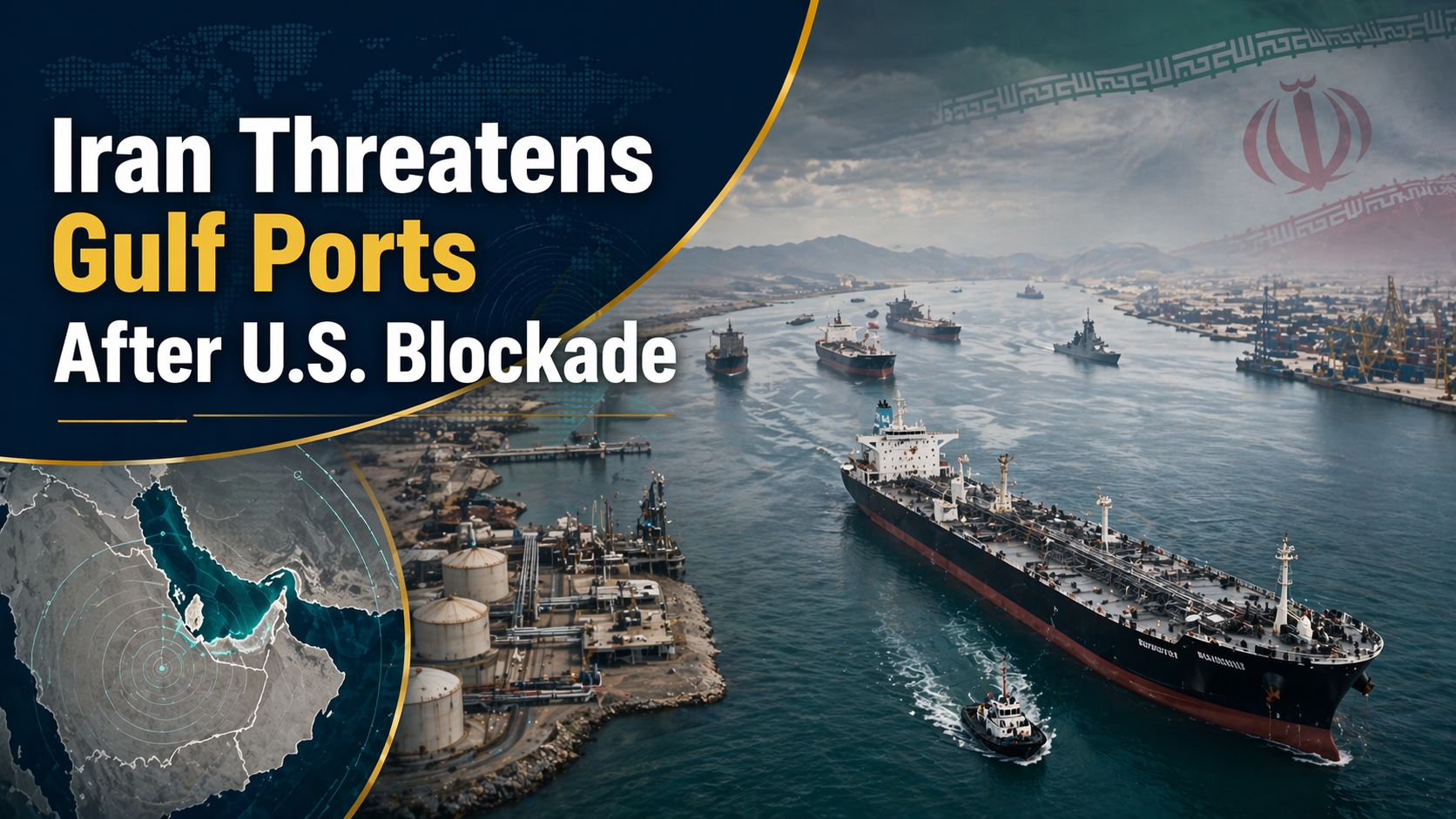
Iran Threatens Gulf Ports After U.S. Blockade
Advanced | April 20, 2026
✨ 혼자서 기사를 소리 내어 읽거나 튜터를 따라 각 단락을 반복해서 읽으세요. 레벨...
A New Escalation in the Gulf
Iran warned that ports across the Persian Gulf and the Gulf of Oman could become targets after the United States began blocking ships entering and leaving Iranian ports. President Donald Trump said the blockade started after peace talks in Islamabad failed to produce a deal, and the move immediately raised fears that the conflict could spread far beyond Iran itself. (Reuters)
Why Iran Gulf Ports Retaliation Matters
The Iran Gulf ports retaliation threat matters because it goes beyond one country’s coastline. Reuters reported that Iran warned no port in the Gulf or Gulf of Oman would be secure if Iranian ports were threatened. That message was aimed not just at Washington, but also at nearby Gulf states that host trade routes, energy terminals, and U.S.-aligned governments. (Reuters)
This is also about the Strait of Hormuz, one of the most important shipping lanes in the world. Reuters noted that roughly one-fifth of the world’s oil normally passes through that area, which means any escalation there can rattle global markets in a hurry. In other words, this is not just a regional headache. It is the kind of problem that can hit energy prices, shipping, and business confidence around the world. (Reuters)
Ceasefire Pressure and Rising Risk
The blockade came during a fragile ceasefire that had paused weeks of U.S. and Israeli strikes. Reuters reported that the U.S. military said the blockade would be enforced against vessels entering or leaving Iranian ports, while Iran called the restrictions “piracy” and warned that foreign military patrols near the strait would deepen the crisis. (Reuters)
A few days later, the danger became more concrete. Reuters reported that the U.S. said it had seized an Iranian cargo ship that tried to reach Bandar Abbas, while Iran vowed to retaliate and backed away from new peace talks. That development made the Iran Gulf ports retaliation threat look less like political theater and more like a real possibility hanging over the region. (Reuters)
Why Oil Markets and Businesses Are Watching Closely
AP reported that oil prices jumped again as the U.S.-Iran standoff blocked tanker traffic through the Strait of Hormuz. Early Sunday trading showed U.S. crude up 6.4% to $87.90 a barrel and Brent crude up 5.8% to $95.64, a reminder that even one tough headline from the Gulf can move global prices fast. (AP News)
AP also noted that the broader war had already created one of the worst global energy crises in decades, with higher fuel costs hitting consumers and businesses around the world. That is why shipping companies, importers, airlines, and ordinary drivers are all paying attention. When energy chokepoints get squeezed, everybody feels it sooner or later.
What Could Happen Next?
Right now, nobody seems eager to blink first. The United States says the blockade is meant to pressure Iran into concessions, especially over nuclear issues and maritime access. Iran says the move is illegal and has signaled that any attempt to choke its ports could trigger broader retaliation across the region. (Reuters)
That leaves the region in a dangerous spot. If diplomacy restarts, this may end up being another tense chapter in an already brutal conflict. But if both sides keep raising the stakes, then the shipping lanes, ports, and oil markets around the Gulf could remain on edge for quite a while. Nobody in business likes uncertainty, and right now the Gulf is full of it.
Vocabulary
- Blockade (noun) – an action to stop ships or goods from entering or leaving a place.
Example: The U.S. blockade targeted ships using Iranian ports. - Retaliation (noun) – an attack or action taken in response to another action.
Example: Iran threatened retaliation against Gulf ports. - Ceasefire (noun) – an agreement to stop fighting for a period of time.
Example: The blockade put pressure on an already fragile ceasefire. - Piracy (noun) – robbery or illegal violence at sea; sometimes used politically for unlawful actions on the water.
Example: Iran called the shipping restrictions piracy. - Escalation (noun) – a situation becoming more intense or dangerous.
Example: The blockade created fears of a wider escalation. - Chokepoint (noun) – a narrow route that is very important for movement or trade.
Example: The Strait of Hormuz is a major energy chokepoint. - Concession (noun) – something one side agrees to give up during negotiations.
Example: Washington says it wants concessions from Iran. - Terminal (noun) – a place where cargo or fuel is loaded and unloaded.
Example: Ports and terminals across the Gulf are under closer watch. - Fragile (adjective) – weak and easily damaged or broken.
Example: The ceasefire remained fragile after the blockade began. - Volatility (noun) – rapid and unpredictable change.
Example: Oil market volatility increased after the latest threats.
Discussion Questions (About the Article)
- Why did the U.S. say it began a blockade of Iranian ports?
- What exactly did Iran threaten after the blockade began?
- Why is the Strait of Hormuz so important to the world economy?
- How did the seizure of an Iranian cargo ship raise tensions further?
- Why did oil prices react so quickly to this news?
Discussion Questions (About the Topic)
- Should countries ever use blockades in modern conflicts?
- How much power do energy routes have over global politics?
- What risks do nearby Gulf countries face in a conflict like this?
- Can economic pressure work without causing wider instability?
- What should matter more in a crisis like this: military pressure or diplomacy?
Related Idiom or Phrase
“Play with fire” – to do something very risky that could cause serious trouble.
Example: Targeting ports near a major oil route is playing with fire for the global economy.
📢 Want more practical English through real news stories? Sign up for the All About English Mastery Newsletter here: allaboutenglishmastery.com/newsletter
Want to build stronger English in less time? Check out Mastering English for Busy Professionals.
Follow our YouTube channel @All_About_English for more English tips and practice.
This article was inspired by: Reuters, Reuters follow-up coverage, and AP News.


 한국어
한국어  English