

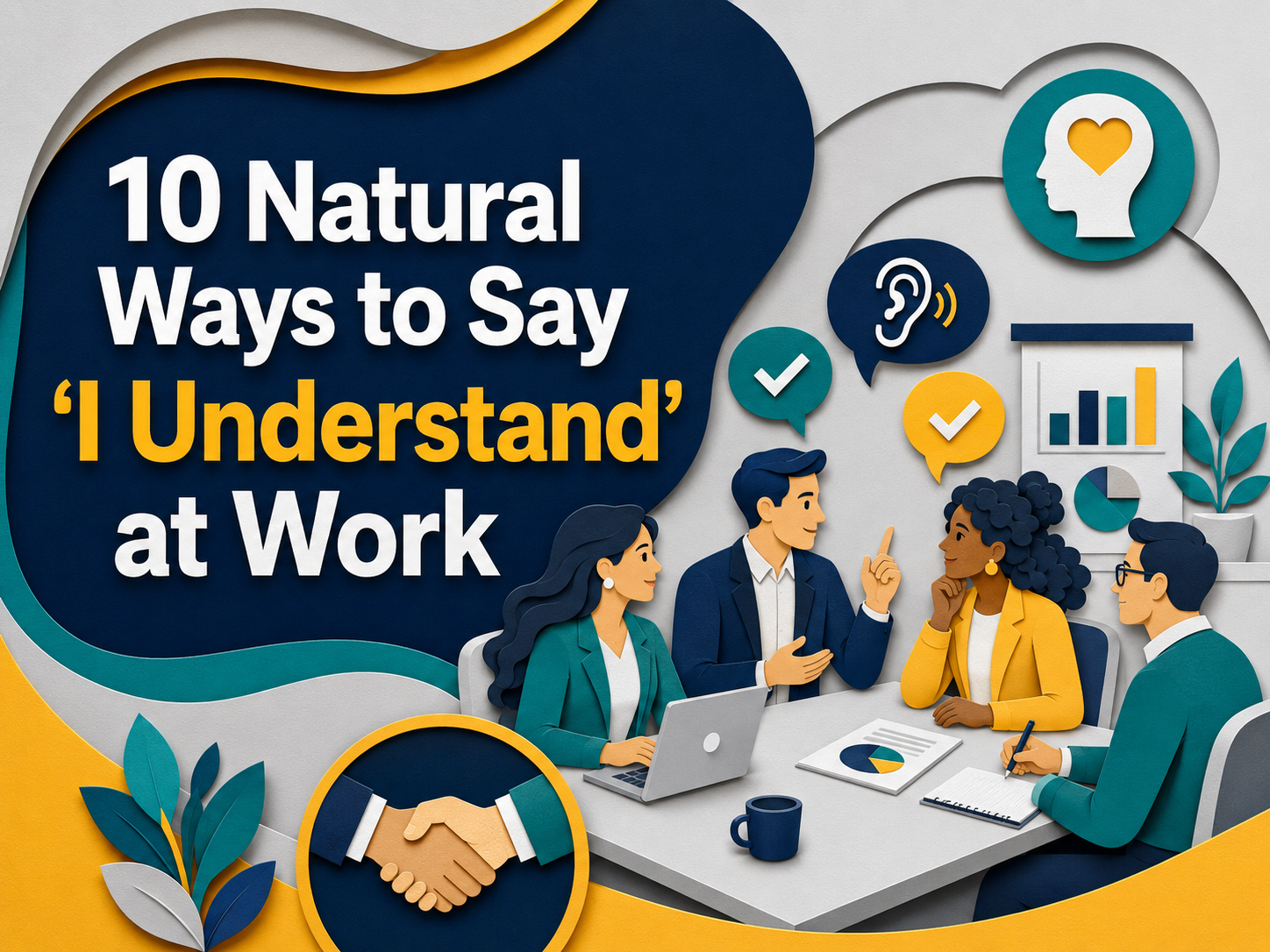
10 Natural Ways to Say “I Understand” at Work 🤝
Intermediate Level | June 24, 2026
혼자서 기사를 소리 내어 읽거나 튜터를 따라 각 단락을 반복해서 읽으세요. 레벨...
In professional English, saying “I understand” is useful, but if you use it too often, it can start to sound a little robotic. At work, you often need to show that you understand instructions, feedback, problems, or emotions. The good news is that there are many natural ways to say I understand at work without sounding cold or repetitive.
When someone explains a task, shares a concern, or gives you feedback, your response matters. A simple phrase can show that you are listening, thinking, and ready to respond professionally. Instead of always saying, “I understand,” you can choose a phrase that fits the situation better.
Why Natural Responses Matter at Work
Good communication is not only about giving information. It is also about showing people that you are listening. Imagine your manager explains a problem with a project, and you only say, “I understand.” That is correct English, but it may feel too short. Now imagine saying, “I see what you mean. Let me check the details and get back to you.” That sounds more engaged, more professional, and more useful.
Learning natural phrases helps you sound more confident in meetings, emails, and daily conversations. It also helps you build trust because people feel heard. And in business, feeling heard is half the battle. The other half is usually finding the right spreadsheet, but that’s a problem for another day.
1. “I see what you mean.”
This phrase is one of the most natural ways to show understanding. It means you understand the person’s point or opinion. You can use it when someone explains an idea, a problem, or a reason for a decision.
Example: “I see what you mean. The timeline is too tight for the current team size.”
2. “That makes sense.”
Use this phrase when someone explains something clearly and you agree with the logic. It is friendly, simple, and very common in workplace conversations.
Example: “That makes sense. If we change the deadline, the team will have more time to review the report.”
3. “I get your point.”
This phrase means you understand the main idea. It is slightly more direct, so it works well in meetings or discussions. Be careful with your tone. If you say it too quickly, it might sound impatient. Say it calmly and respectfully.
Example: “I get your point. We need to focus on quality before we launch.”
4. “I follow you.”
This means you understand the explanation step by step. It is useful when someone is explaining a process, plan, or technical issue.
Example: “I follow you. First we update the client file, then we send the revised proposal.”
5. “Got it.”
This is short, casual, and useful for quick workplace communication. You can use it in chat messages, short emails, or simple conversations. However, avoid using it when the topic is serious or emotional. If your boss says the company is facing a major crisis, “Got it” may sound like you are ordering fries. Not ideal.
Example: “Got it. I’ll send the file before 3 p.m.”
6. “I understand your concern.”
This phrase is professional and respectful. Use it when someone is worried, frustrated, or giving a complaint. It shows that you are not only hearing the words but also recognizing the person’s feeling.
Example: “I understand your concern. The delay has caused extra pressure on your team.”
7. “I can see why that’s important.”
This phrase is great when you want to show empathy and agreement. It tells the other person that you understand the reason behind their opinion or request.
Example: “I can see why that’s important. Clear communication with the client will prevent confusion later.”
8. “Thanks for clarifying.”
Use this when someone explains something again or gives more detail. It is especially helpful when you asked a question first. This phrase sounds polite and professional.
Example: “Thanks for clarifying. I now understand which version of the report we should use.”
9. “That’s clear now.”
This phrase is useful after someone explains something that was confusing before. It shows progress: you did not understand before, but now you do.
Example: “That’s clear now. I thought the meeting was tomorrow, but it’s actually next Monday.”
10. “I’m on the same page.”
This means you and the other person have the same understanding. It is a very common business expression, especially in meetings and project discussions.
Example: “I’m on the same page. We’ll finish the first draft this week and review it on Friday.”
How to Say “I Understand at Work” Naturally
The best phrase depends on the situation. For quick tasks, you can say, “Got it,” for serious concerns, say, “I understand your concern,” and for explanations, use “I follow you” or “That makes sense.” The more you match your phrase to the situation, the more natural your English will sound.
Using different ways to say I understand at work helps you avoid sounding repetitive. It also shows emotional intelligence, which is very important in professional communication. People do not only want correct English. They want to feel that you are present, respectful, and easy to work with.
Start small. Choose two or three phrases from today’s article and practice them this week. Try saying them out loud. Use them in a meeting, an email, or a chat message. Over time, these phrases will feel natural, and your workplace English will become smoother and more confident.
Vocabulary List
- Robotic (adjective) — Sounding automatic, cold, or unnatural.
Example: Saying the same phrase every time can sound robotic. - Repetitive (adjective) — Happening again and again in a boring way.
Example: Try not to sound repetitive in workplace conversations. - Concern (noun) — A worry or important issue.
Example: I understand your concern about the deadline. - Clarify (verb) — To make something easier to understand.
Example: Could you clarify which file you need? - Engaged (adjective) — Interested and actively involved.
Example: She sounded engaged during the meeting. - Logic (noun) — A clear reason or way of thinking.
Example: That makes sense because the logic is easy to follow. - Empathy (noun) — The ability to understand another person’s feelings.
Example: Good managers show empathy when employees are stressed. - Recognize (verb) — To notice or accept that something is true.
Example: He recognized the client’s concern. - Impatient (adjective) — Annoyed because something is taking too long.
Example: Be careful not to sound impatient when you say, “I get your point.” - On the same page (idiom) — Having the same understanding as someone else.
Example: Let’s make sure we are on the same page before the meeting.
5 Questions About the Article
- Why can “I understand” sound robotic if you use it too often?
- When should you use “I understand your concern”?
- What does “I’m on the same page” mean?
- Which phrase is useful after someone explains something again?
- Why is it important to match your phrase to the situation?
5 Open-Ended Discussion Questions
- Which phrase from this article do you already use at work?
- Which phrase sounds the most natural to you? Why?
- How do people in your workplace usually show understanding?
- What phrase would you use when your manager explains a new task?
- How can better listening phrases improve your professional relationships?
📢 Want more tips like this? 👉 Sign up for the All About English Mastery Newsletter! Click here to join us!
Want to finally Master English but don’t have the time? Mastering English for Busy Professionals is the course for you! Check it out now!
Follow our YouTube Channel @All_About_English for more great insights and tips.

 한국어
한국어  English