

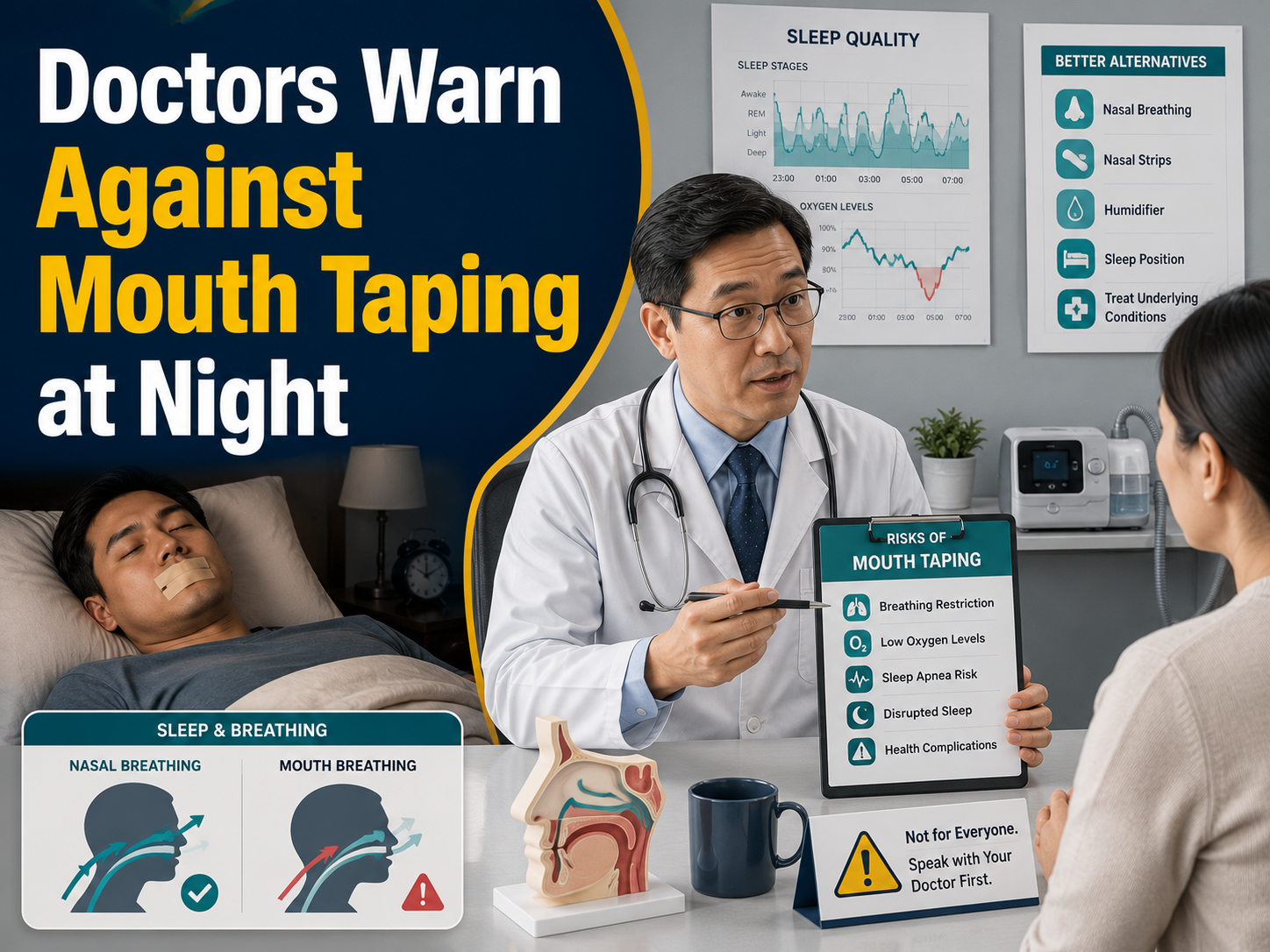
Doctors Warn Against Mouth Taping at Night
Beginner | June 23, 2026
✨ 혼자서 기사를 소리 내어 읽거나 튜터를 따라 각 단락을 반복해서 읽으세요. 레벨...
Why Doctors Warn Against Mouth Taping at Night
Some people are putting tape over their mouths before they sleep. They believe it may help them breathe through their nose, sleep better, or snore less. But doctors are warning people to be careful. An Associated Press article explains that this trend has become popular on social media, especially on platforms like TikTok, but many of the big claims are not strongly supported by science. In simple English: just because something is popular online does not mean it is a good idea. (AP News)
What Is Mouth Taping?
Mouth taping at night means placing tape over the lips before bed. The goal is to keep the mouth closed and force the person to breathe through the nose. Nasal breathing can be helpful because the nose filters, warms, and moistens air before it enters the body. But doctors say forcing the mouth closed with tape is not the same as solving a sleep problem. If someone cannot breathe well through the nose, tape may make the situation worse. (AP News, Cleveland Clinic)
The Big Concern: Sleep Apnea
One major concern is sleep apnea, a condition where breathing repeatedly stops and starts during sleep. According to the Mayo Clinic, loud snoring can be a sign of sleep apnea. That matters because many people try mouth taping because they snore. But snoring may be a warning sign, not just an annoying sound. If a person has undiagnosed sleep apnea and tapes their mouth shut, they may make breathing more difficult. That is not a smart “sleep hack.” That is more like turning a small problem into a boss-level problem. (Mayo Clinic)
What the Research Says
A 2025 PLOS One systematic review looked at research on mouth taping and sleep-disordered breathing. The review found limited evidence that mouth taping helped some people in certain studies. However, other studies showed no clear benefit and discussed possible risks, including asphyxiation when a person has nasal obstruction. In plain English, the research is not strong enough to say, “Everyone should do this.” It is much safer to ask why someone is mouth breathing in the first place. (PLOS One)
Safer Ways to Handle Snoring
The Cleveland Clinic says mouth taping is not recommended, especially for people who snore, have sleep apnea, or have trouble breathing through the nose. Safer options may include sleeping on your side, using nasal strips, treating congestion, or using a CPAP machine or oral appliance if a doctor diagnoses sleep apnea. In other words, the better plan is not “tape first, ask questions later.” The better plan is to understand the real cause of the problem. (Cleveland Clinic)
Why This Story Matters
This story matters because health trends spread fast online. A short video can make something look easy, cheap, and clever. But your body is not a science experiment from the comment section. For English learners, this story is useful because it teaches everyday health words like “snoring,” “breathing,” “risk,” and “sleep apnea.” It also gives a practical phrase you can use: “I should check with a doctor first.” That sentence may not sound exciting, but it is often the smartest sentence in the room.
Vocabulary
- Tape (noun/verb) – sticky material used to hold something in place; to attach something with tape.
Example: “Some people tape their mouths before sleeping.” - Snore (verb) – to make a loud breathing sound while sleeping.
Example: “He snores loudly at night.” - Breathe (verb) – to take air into and out of the body.
Example: “Doctors say people should be able to breathe safely while sleeping.” - Nasal (adjective) – related to the nose.
Example: “Nasal breathing means breathing through the nose.” - Sleep apnea (noun) – a condition where breathing stops and starts during sleep.
Example: “Loud snoring can be a sign of sleep apnea.” - Risk (noun) – the chance that something bad may happen.
Example: “Mouth taping may create breathing risks for some people.” - Congestion (noun) – a blocked or stuffy nose.
Example: “Congestion can make nasal breathing difficult.” - Obstruction (noun) – something that blocks the way.
Example: “A nasal obstruction can make mouth taping dangerous.” - Treatment (noun) – medical care or action to help a health problem.
Example: “A doctor can suggest the right treatment for sleep apnea.” - Recommend (verb) – to say that something is a good idea.
Example: “Doctors do not recommend mouth taping for everyone.”
Discussion Questions About the Article
- Why are some people taping their mouths at night?
- What do doctors say about this trend?
- Why is sleep apnea an important concern?
- What did the PLOS One review say about the research?
- What are some safer ways to handle snoring or breathing problems?
Discussion Questions About the Topic
- Have you ever seen a health trend on social media? What was it?
- Why do people often trust simple “hacks” online?
- What should people do before trying a health trend?
- Do you think social media companies should warn users about risky health advice?
- What helps you sleep better in a safe way?
Related Idiom
“Don’t take it at face value” – do not believe something immediately without checking it first.
Example: “When you see a sleep hack online, don’t take it at face value. Check reliable medical sources first.”
📢 Want more practical English through real news stories? Sign up for the All About English Mastery Newsletter here: allaboutenglishmastery.com/newsletter
Want to build stronger English in less time? Check out Mastering English for Busy Professionals.
Follow our YouTube channel @All_About_English for more English tips and practice.
This article was inspired by: AP News, Cleveland Clinic, Mayo Clinic, and PLOS One


 한국어
한국어  English