

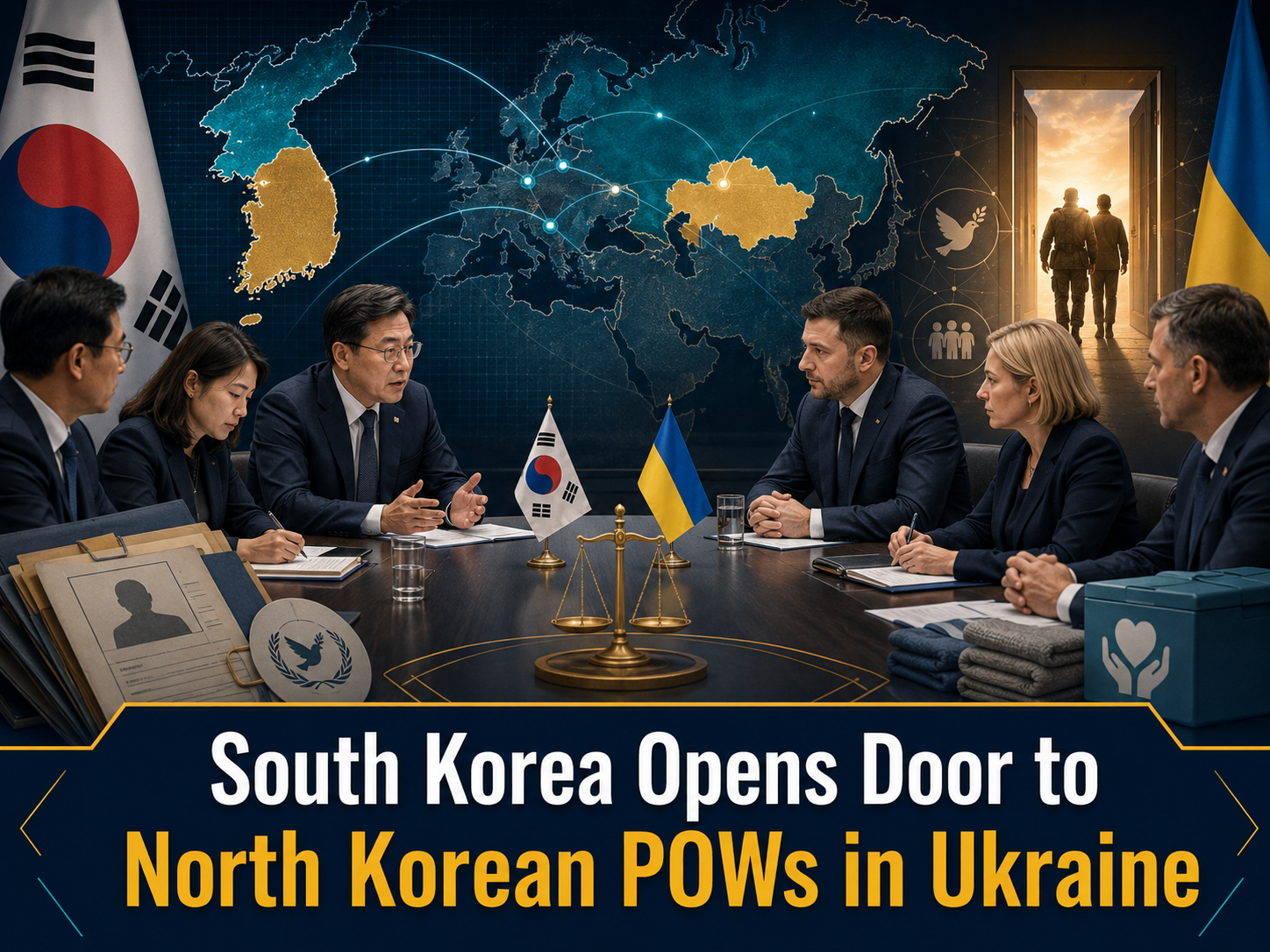
South Korea Opens Door to North Korean POWs in Ukraine
Intermediate | June 24, 2026
✨ 혼자서 기사를 소리 내어 읽거나 튜터를 따라 각 단락을 반복해서 읽으세요. 레벨...
A Major Offer from South Korea
South Korea says it will accept North Korean POWs in Ukraine if they want to go to South Korea. According to Reuters, these prisoners of war are North Korean soldiers who fought for Russia and were captured by Ukraine. Seoul’s foreign ministry said South Korea opposes sending them back to Russia or North Korea against their wishes. In simple English: South Korea is saying, “If they choose us, we will take them.” (Reuters)
Why North Korean POWs in Ukraine Matter
This story is important because it connects several serious issues: the war in Ukraine, North Korea’s support for Russia, South Korea’s constitution, and human rights. Ukrainian Pravda reported, citing Reuters, that South Korea sees North Koreans as people who may have a legal connection to South Korea because South Korea’s constitution defines the whole Korean Peninsula as its territory. That makes this more than a simple prisoner-of-war issue. It is also a question of identity, freedom, and political responsibility. (Ukrainian Pravda)
Talks Are Coming Soon
South Korean and Ukrainian ministers are expected to meet in Seoul on June 30. Yonhap reported that South Korean Foreign Minister Cho Hyun is scheduled to hold talks with Ukrainian Foreign Minister Andrii Sybiha, and the issue of North Korean prisoners of war in Ukraine is likely to be on the agenda. That meeting could help decide what happens next. Diplomacy usually moves slowly, but in this case, the people involved do not have the luxury of waiting forever. (Yonhap News Agency)
The Human Side of the Story
For the captured soldiers, this could be a life-changing decision. If they return to North Korea, they could face serious punishment. If they go to South Korea, they may have a chance to start a new life. Ukrainian Pravda reported that two North Korean soldiers captured in Ukraine in early 2025 had written a letter expressing their wish to go to South Korea. That makes the issue much more personal. These are not just numbers in a war report; they are people facing a dangerous choice. (Ukrainian Pravda)
North Korea’s Role in the War
This story also reminds the world that North Korea has become more involved in Russia’s war against Ukraine. Reuters reported in April that North Korea sent an estimated 14,000 troops to fight with Russian forces in Russia’s Kursk region. South Korean, Ukrainian, and Western officials said more than 6,000 North Korean soldiers were killed in the fighting. Reuters also reported that North Korean leader Kim Jong Un praised soldiers who killed themselves rather than be captured, showing how dangerous capture can be for these troops. (Reuters)
The Big Picture
The big picture is that North Korean POWs in Ukraine are now part of a much larger diplomatic problem. Ukraine is holding soldiers who fought for Russia. South Korea says it will accept them if they choose to come. North Korea and Russia may not like that at all. So yes, this is complicated. It is the kind of geopolitical knot that makes diplomats reach for coffee, legal documents, and probably a very strong headache pill.
Vocabulary
- Prisoner of War / POW (noun) – a soldier captured during war.
Example: “South Korea may accept North Korean POWs in Ukraine.” - Captured (verb) – taken by the enemy during fighting.
Example: “The soldiers were captured by Ukrainian forces.” - Repatriation (noun) – sending someone back to their home country.
Example: “South Korea opposes forced repatriation to North Korea.” - Against Their Wishes (phrase) – not what someone wants.
Example: “Seoul does not want the prisoners returned against their wishes.” - Foreign Ministry (noun) – the government department that handles relations with other countries.
Example: “South Korea’s foreign ministry announced the position.” - Constitution (noun) – the basic legal document of a country.
Example: “South Korea’s constitution affects how it views North Koreans.” - Diplomacy (noun) – the work of managing relationships between countries.
Example: “This issue will require careful diplomacy.” - Human Rights (noun) – basic freedoms and protections that people should have.
Example: “The story raises serious human rights questions.” - Defect (verb) – to leave one country or political system for another.
Example: “The soldiers may wish to defect to South Korea.” - Geopolitical (adjective) – related to politics between countries and regions.
Example: “The POW issue has become a geopolitical problem.”
Discussion Questions About the Article
- What did South Korea say it would do for North Korean POWs in Ukraine?
- Why does South Korea oppose sending the prisoners back against their wishes?
- What meeting is expected to happen in Seoul on June 30?
- Why could returning to North Korea be dangerous for the prisoners?
- How does North Korea’s support for Russia make this issue more complicated?
Discussion Questions About the Topic
- Should prisoners of war be allowed to choose where they go after capture? Why or why not?
- How should governments balance national security and human rights?
- What responsibilities does South Korea have toward North Koreans?
- How can one war create problems for countries that are not directly fighting?
- Why is diplomacy important in sensitive cases like this?
Related Idiom
“Caught in the middle” – stuck between two difficult sides or situations.
Example: “The North Korean POWs in Ukraine are caught in the middle of war, politics, and diplomacy.”
📢 Want more practical English through real news stories? Sign up for the All About English Mastery Newsletter here: allaboutenglishmastery.com/newsletter
Want to build stronger English in less time? Check out Mastering English for Busy Professionals.
Follow our YouTube channel @All_About_English for more English tips and practice.
This article took inspiration from: Reuters, Yonhap News Agency, and Ukrainian Pravda


 한국어
한국어  English