

Edible Chopsticks Turn a Simple Tool Into Big Design News
Beginner | April 28, 2026
✨ 혼자서 기사를 소리 내어 읽거나 튜터를 따라 각 단락을 반복해서 읽으세요. 레벨...
A Small Tool Gets a Big Makeover
At Milan Design Week 2026, designers looked at something very simple: chopsticks. The exhibition was called “CHOPSTICKS 箸.” It was presented by S—3, a platform that connects East Asian design with global ideas, and it was curated by Yoko Choy. The show ran from April 20 to April 26, 2026, at Via Pietro Giannone 3 in Milan. (The Design Release)
Edible Chopsticks Design at Milan Design Week
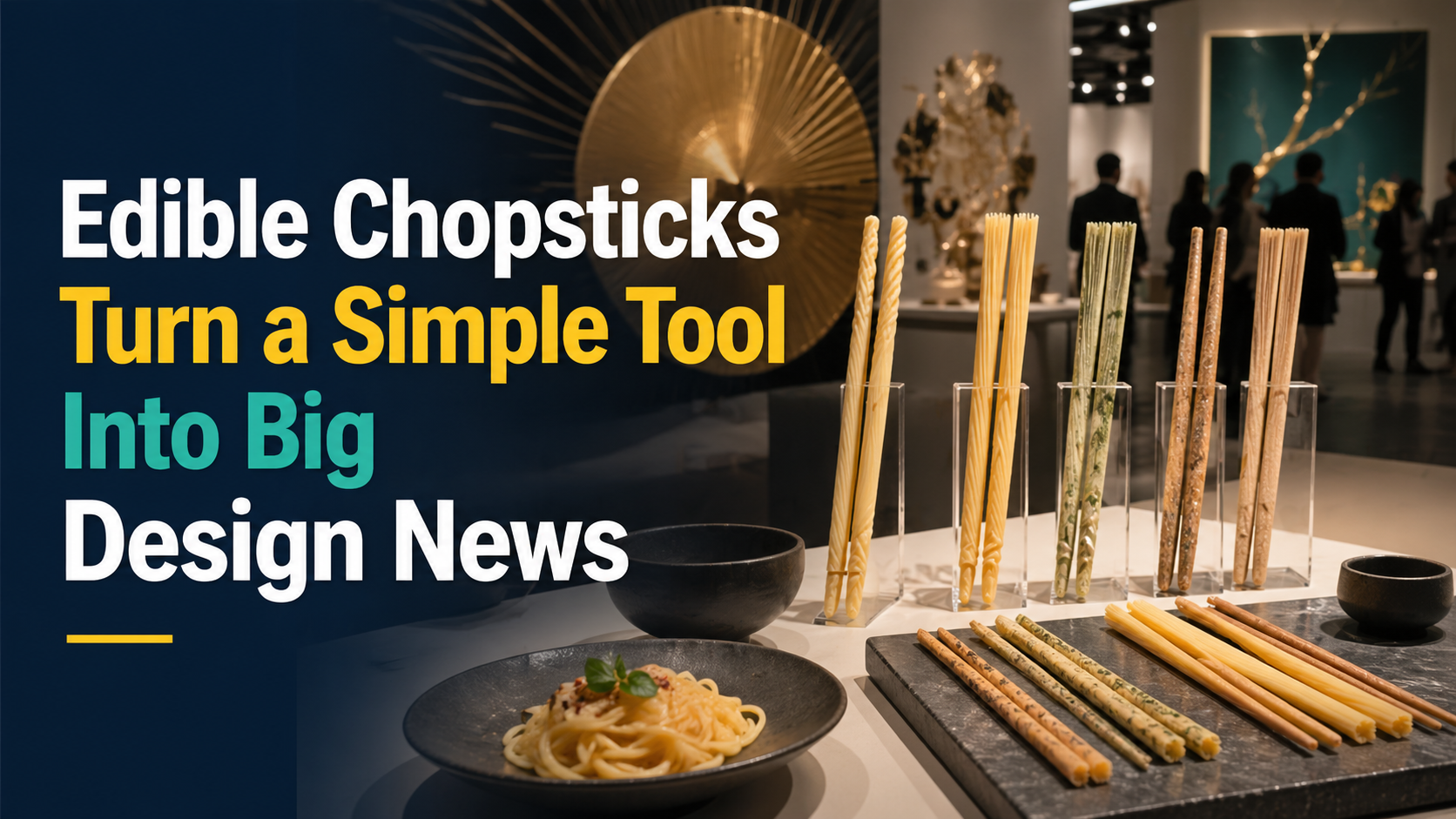
One of the most surprising examples of edible chopsticks design was a pair of pasta chopsticks by Japanese designer Jin Kuramoto. These chopsticks were shaped like fusilli and penne and made from wheat flour. The idea sounds playful, but it also has a serious point. Kuramoto wanted to explore edible cutlery as a possible answer to waste. After using the chopsticks, people could cook them and eat them. In other words, the tool could become food. (Wallpaper)
Why Designers Are Thinking About Everyday Objects
This story matters because design is not only about expensive chairs, luxury lamps, or strange museum pieces that make normal people say, “So… where do I sit?” Sometimes, design starts with something small that people use every day. Chopsticks are simple, useful, and easy to clean. They also carry deep cultural meaning in East Asia. The exhibition asked a smart question: how can a familiar object keep its history but still change for the modern world? (Wallpaper)
More Than One Creative Idea
The exhibition included work from 16 creatives, including 11 product designers and studios, 3 graphic designers, and 2 experience designers for space and scent. Some designs changed the way chopsticks worked. South Korean design duo Kuo Duo created “Seon,” a hybrid design that connects chopsticks with the shape of a spoon. This idea reflects Korean table culture, where metal spoons and chopsticks are often used together. Another South Korean studio, Niceworkshop, made a single U-shaped metal form that works more like tweezers. This could make chopsticks easier to grip and control. (The Design Release, Wallpaper)
Design Can Also Start a Conversation
Other designs were more like comments on culture. Japanese studio We+ made lacquer-coated disposable chopsticks that could not be split apart. That sounds useless at first, but that was the point. The design showed a tension in Japanese chopstick culture: beautiful, long-lasting lacquered chopsticks on one side, and cheap disposable chopsticks on the other. Chinese designer Mario Tsai also looked at production. He created an aluminum “chopsticks maker” that works like a large pencil sharpener. A user can insert fresh wood and shape it into chopsticks. (Wallpaper)
The Big Lesson for English Learners
The edible chopsticks design story from Milan Design Week is useful for English practice because it gives us a clear way to talk about design, culture, food, and sustainability. You can use simple phrases like “everyday object,” “creative idea,” “cultural symbol,” and “reduce waste.” It also reminds us that strong conversation topics do not always need to be heavy news. Sometimes, a small object on the dinner table can lead to a big discussion.
Vocabulary
- Exhibition (noun) – a public show where people can see art, design, products, or ideas.
Example: “The chopstick exhibition was shown during Milan Design Week.” - Reimagined (verb) – changed or created again in a new way.
Example: “Designers reimagined chopsticks as food, tools, and art.” - Edible (adjective) – safe and possible to eat.
Example: “The edible chopsticks were made from wheat flour.” - Utensil (noun) – a tool used for eating or cooking.
Example: “A spoon, fork, and chopsticks are common utensils.” - Sustainability (noun) – the idea of using resources in a way that protects the future.
Example: “Edible cutlery can be part of a sustainability discussion.” - Disposable (adjective) – made to be used once and then thrown away.
Example: “Disposable chopsticks are common in fast-food restaurants.” - Hybrid (noun/adjective) – something made by combining two different things.
Example: “The Korean designers created a hybrid of a spoon and chopsticks.” - Grip (noun/verb) – the way you hold something tightly or control it with your hand.
Example: “The U-shaped design may help people grip food more easily.” - Cultural Symbol (noun) – an object, image, or action that represents a culture.
Example: “Chopsticks are a cultural symbol in many East Asian countries.” - Craft (noun) – skill in making something by hand.
Example: “Lacquered chopsticks show a long tradition of craft.”
Discussion Questions (About the Article)
- What was the exhibition “CHOPSTICKS 箸” about?
- What made Jin Kuramoto’s pasta chopsticks unusual?
- How did Kuo Duo connect chopsticks with Korean table culture?
- Why did We+ make disposable chopsticks that could not be split apart?
- How did Mario Tsai’s chopsticks maker work?
Discussion Questions (About the Topic)
- What everyday object would you like to redesign? Why?
- Should designers focus more on reducing waste? Why or why not?
- What eating tools are common in your culture?
- Can food and design work together in interesting ways?
- What simple object in your daily life has a deeper cultural meaning?
Related Idiom
“Think outside the box” – to think in a creative or unusual way.
Example: “The designers had to think outside the box to turn chopsticks into pasta, metal tools, and cultural statements.”
📢 Want more practical English through real news stories? Sign up for the All About English Mastery Newsletter here: allaboutenglishmastery.com/newsletter
Want to build stronger English in less time? Check out Mastering English for Busy Professionals.
Follow our YouTube channel @All_About_English for more English tips and practice.
This article took inspiration from: Wallpaper, The Design Release, and Trend Hunter

 한국어
한국어  English