

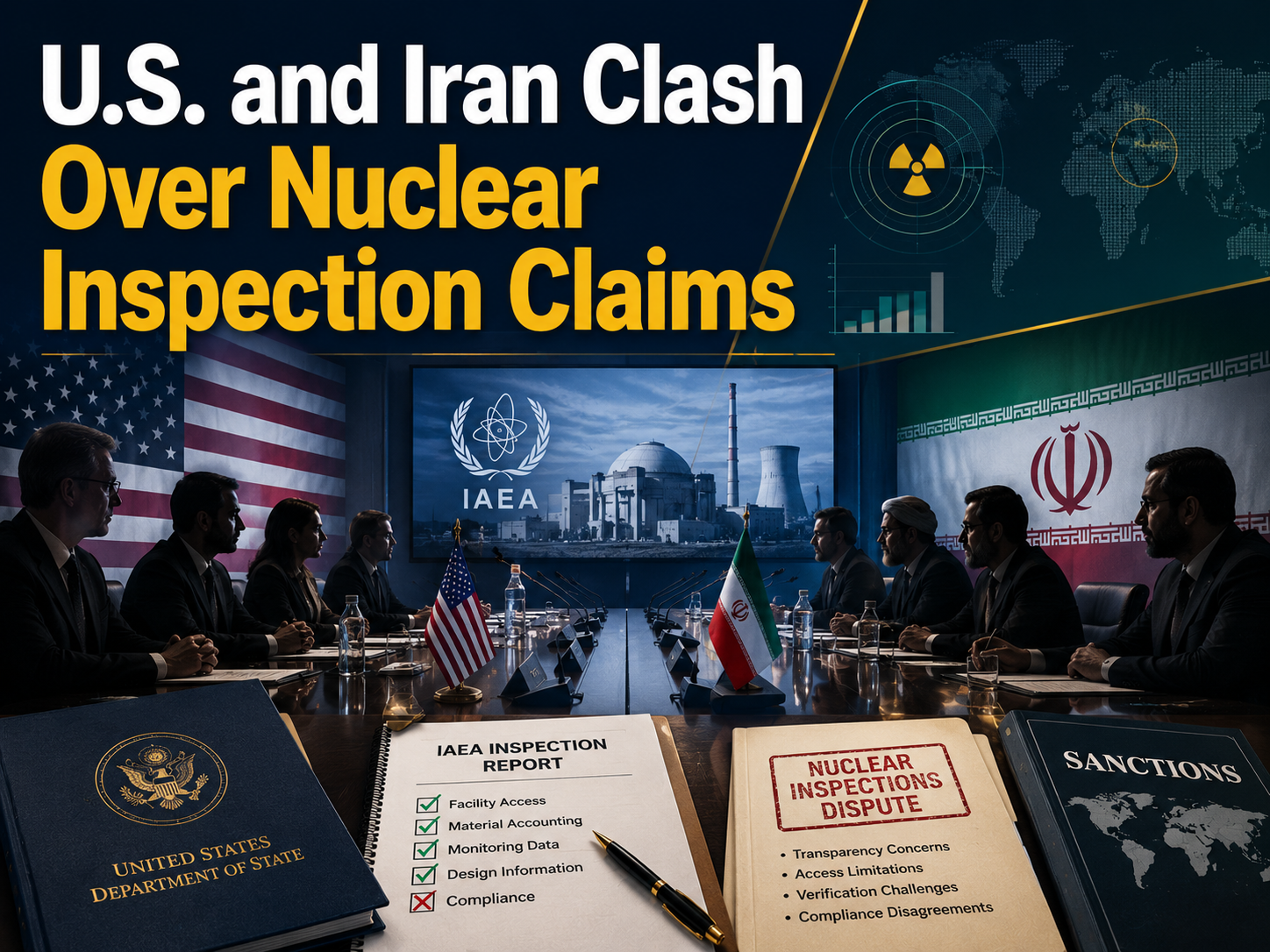
U.S. and Iran Clash Over Nuclear Inspection Claims
Advanced | June 25, 2026
✨ 혼자서 기사를 소리 내어 읽거나 튜터를 따라 각 단락을 반복해서 읽으세요. 레벨...
A New Dispute Over Iran Nuclear Inspections
On June 23, 2026, U.S. President Donald Trump said Iran had agreed to allow nuclear inspections into “infinity.” Iran quickly denied that claim, saying it had not made any new nuclear concessions in talks with the United States. The disagreement created a fresh problem for the fragile U.S.-Iran peace framework, which had only recently been signed after months of conflict. The Iran nuclear inspections dispute now raises a simple but serious question: did both sides actually agree to the same thing? (Reuters)
Why the Iran Nuclear Inspections Dispute Matters
The Iran nuclear inspections dispute matters because nuclear monitoring is one of the most sensitive parts of any agreement with Tehran. Trump said Iran had “fully and completely agreed” to the highest level of nuclear inspections far into the future. Tehran pushed back, saying nuclear issues had not been discussed in that way and that it had not agreed to invite International Atomic Energy Agency, or IAEA, inspectors back to damaged nuclear facilities. In plain English, Washington said, “They agreed.” Tehran said, “No, we didn’t.” That is not exactly the cleanest way to launch a peace deal. (Reuters)
The Framework Deal Leaves Big Questions Open
Reuters reported that the framework deal itself does not yet set limits on Iran’s nuclear program. Instead, that issue is supposed to be handled during 60 days of negotiations. The deal also includes major economic points, such as lifting U.S. sanctions on Tehran, unfreezing Iranian assets held abroad, and creating a proposed $300 billion investment fund for Iran’s reconstruction. In business terms, the two sides may have signed a “big picture” agreement, but the fine print is still doing push-ups in the corner. (Reuters)
Inspectors, Frozen Assets, and Mixed Messages
The disagreement was not only about inspections. Trump said any unfrozen Iranian assets would be used to buy food and medical supplies from the United States. Iran’s ambassador to the United Nations in Geneva, Ali Bahreini, said Iran would decide how to spend that money. Washington had already agreed to waive some sanctions on Iran for 60 days, allowing Tehran to sell oil and related products and receive payment. When both sides describe the same deal in different ways, it becomes harder for allies, markets, and ordinary citizens to know what was actually agreed. (Reuters)
The IAEA Says Inspections Are Coming
On June 24, 2026, IAEA chief Rafael Grossi said the U.N. nuclear watchdog would carry out inspections in Iran soon. He said the agency was working on the details, including dates, procedures, and locations. But Iran’s deputy foreign minister Kazem Gharibabadi said there were no current plans to grant access to attacked nuclear facilities or nuclear material. He said those issues would only be addressed under a final agreement with Washington and after practical steps to lift U.S. sanctions. So, the message is still mixed: the watchdog says inspections are coming, while Tehran says not so fast. (Reuters)
What Happens Next?
The next stage of talks will be difficult. U.S. officials want stronger guarantees that Iran cannot build a nuclear weapon. Iran says it does not want nuclear weapons but also wants sanctions relief and control over its own nuclear program. At the same time, U.S. Secretary of State Marco Rubio has been visiting Gulf allies, including Bahrain, to explain the preliminary deal and reassure governments worried about Iran’s regional influence. For English learners, this story is useful because it shows diplomatic language in action: “framework,” “concession,” “sanctions relief,” “inspections,” and “conflicting accounts.” In short, the Iran deal may be moving forward, but the paperwork and the politics are still very much under construction. (Reuters)
Vocabulary
- Inspection (noun) – an official check to make sure rules are being followed.
Example: “The IAEA wants to carry out nuclear inspections in Iran.” - Concession (noun) – something one side gives up or agrees to during negotiations.
Example: “Iran denied making a new nuclear concession.” - Framework deal (noun phrase) – a broad agreement that sets the general direction but leaves details for later.
Example: “The two countries signed a framework deal to guide future talks.” - Sanctions relief (noun phrase) – the easing or removal of economic restrictions.
Example: “Iran wants sanctions relief before allowing access to some sites.” - Frozen assets (noun phrase) – money or property blocked by legal or government action.
Example: “The deal discusses Iran’s frozen assets held abroad.” - Nuclear watchdog (noun phrase) – an organization that monitors nuclear activity.
Example: “The IAEA is the U.N. nuclear watchdog.” - Conflicting accounts (noun phrase) – different versions of the same event or agreement.
Example: “The U.S. and Iran gave conflicting accounts of the deal.” - Viability (noun) – the ability of something to work or succeed.
Example: “The disagreement raised questions about the viability of the peace deal.” - Modality (noun) – a formal way or method for doing something.
Example: “The IAEA is working on the modalities for inspections.” - Reassure (verb) – to make someone feel less worried.
Example: “Rubio tried to reassure Gulf allies about the Iran deal.”
Discussion Questions (About the Article)
- What did Trump say Iran had agreed to on June 23, 2026?
- How did Tehran respond to Trump’s claim?
- What nuclear issue is still supposed to be handled during 60 days of negotiations?
- What did Rafael Grossi say about future IAEA inspections?
- Why were Gulf allies worried about the preliminary Iran accord?
Discussion Questions (About the Topic)
- Why are nuclear inspections important in international agreements?
- What problems can happen when two countries describe the same deal differently?
- Should sanctions relief come before inspections, or should inspections come first?
- How can international organizations like the IAEA help reduce mistrust?
- What makes a “framework deal” useful — and what makes it risky?
Related Idiom
“The devil is in the details” – the general idea may sound good, but the small details can create serious problems.
Example: “The U.S. and Iran may have a framework deal, but the devil is in the details when it comes to nuclear inspections.”
📢 Want more practical English through real news stories? Sign up for the All About English Mastery Newsletter here: allaboutenglishmastery.com/newsletter
Want to build stronger English in less time? Check out Mastering English for Busy Professionals.
Follow our YouTube channel @All_About_English for more English tips and practice.
This article was inspired by: Reuters, Reuters IAEA reporting, and Reuters reporting on Rubio’s Gulf trip.


 한국어
한국어  English