

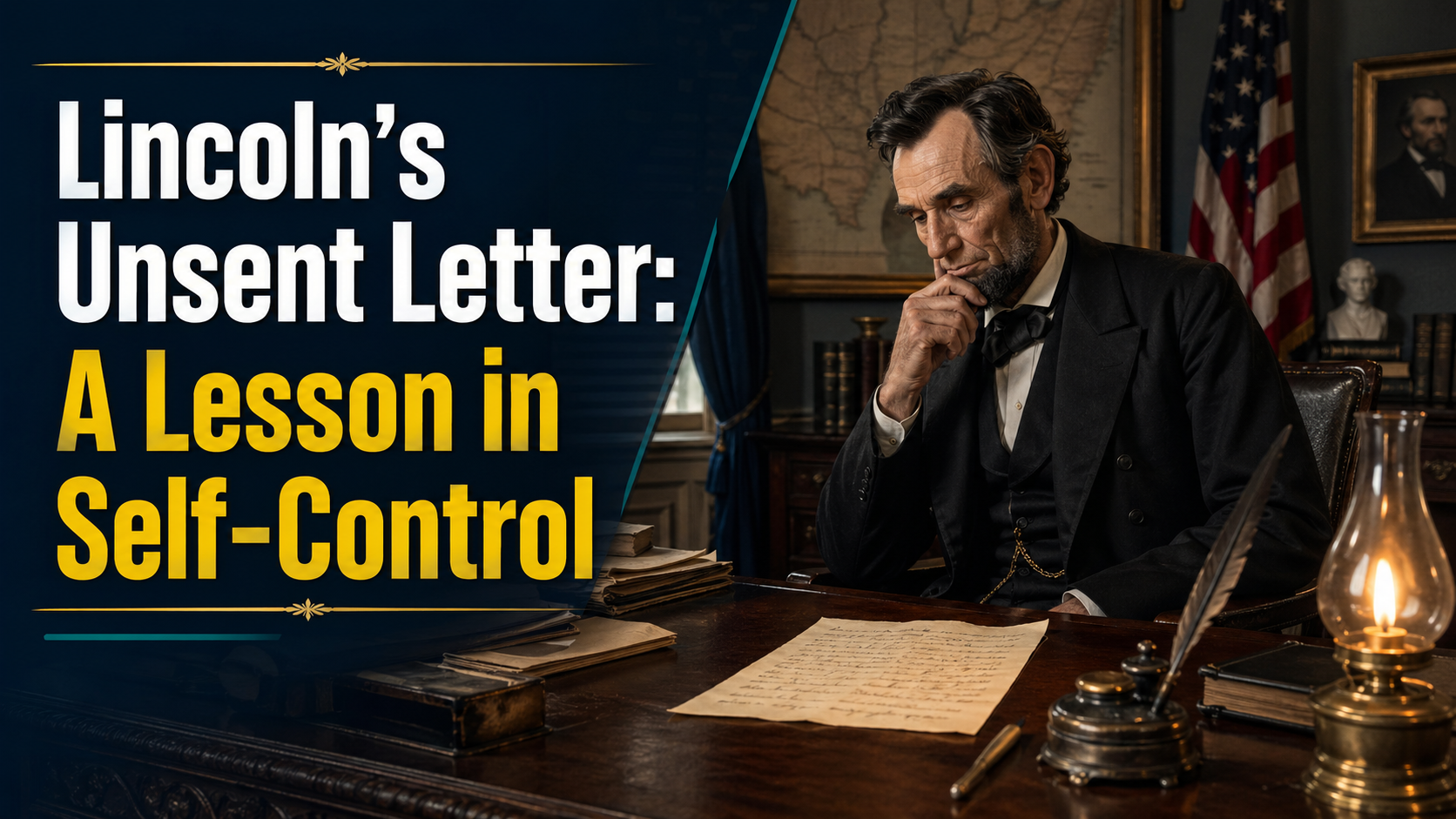
Lincoln’s Unsent Letter: A Lesson in Self-Control
Intermediate | April 27, 2026
✨ 혼자서 기사를 소리 내어 읽거나 튜터를 따라 각 단락을 반복해서 읽으세요. 레벨...
Why Lincoln’s Unsent Letter Still Matters
President Abraham Lincoln is remembered for leadership during the American Civil War, but one small story shows another side of his character: self-control. An April 9, 2026 article in The Epoch Times tells the story of Lincoln and an angry letter he wrote but never sent. The story is not just about history. It is also about communication, patience, and knowing when to pause before saying something you may regret. (The Epoch Times)
Gettysburg, Pressure, and Disappointment
In July 1863, Union forces won the Battle of Gettysburg, one of the most important battles of the Civil War. After the battle, Confederate General Robert E. Lee and his army began retreating. Lincoln believed Union General George Meade had a chance to pursue Lee and possibly end the war sooner. When Meade did not move as aggressively as Lincoln hoped, the president felt deeply disappointed. (American Battlefield Trust)
The Letter Lincoln Never Sent
Lincoln wrote a strong letter to Meade on July 14, 1863. In it, he explained that Lee had been within Meade’s reach and that allowing him to escape was a serious missed opportunity. Lincoln even wrote that the war would now be “prolonged indefinitely.” But here is the important part: Lincoln did not send the letter. On the envelope, he wrote that it was “never sent, or signed.” (American Battlefield Trust)
A Smart Communication Habit
Lincoln’s unsent letter story shows a powerful communication habit. Lincoln used writing to express anger privately before deciding what to do publicly. Today, we might call this emotional control, strategic patience, or simply good judgment. The Association for Psychological Science notes that Lincoln sometimes wrote “hot letters” when he was angry, then set them aside until his emotions cooled down. (Association for Psychological Science)
What Modern Professionals Can Learn
This lesson applies far beyond politics and war. In modern business, people often send emails, texts, or online comments too quickly. One angry message can damage trust, create conflict, or make a small problem much bigger. Lincoln’s example reminds us that strong leaders do not always respond immediately. Sometimes the most professional move is to write your thoughts, wait, and decide later whether the message should actually be sent.
The Real Power of Restraint
Lincoln’s unsent letter teaches that restraint is not weakness. In fact, it can be a sign of strength. Lincoln had the authority to criticize Meade directly, but he chose not to act from anger. For English learners and professionals, this is a useful reminder: good communication is not only about choosing the right words. It is also about choosing the right time, tone, and purpose.
Vocabulary
- Restraint (noun) – the ability to control your actions or emotions.
Example: “Lincoln showed restraint by not sending the angry letter.” - Pursue (verb) – to follow someone or something in order to catch or reach them.
Example: “Lincoln wanted Meade to pursue Lee’s army after Gettysburg.” - Retreat (verb/noun) – to move away from danger, conflict, or a difficult position.
Example: “Lee’s army began to retreat after the battle.” - Disappointment (noun) – sadness or frustration because something did not happen as expected.
Example: “Lincoln felt disappointment after Meade failed to attack again.” - Opportunity (noun) – a chance to do something useful or important.
Example: “Lincoln believed Meade had missed a major opportunity.” - Aggressively (adverb) – in a forceful, active, or determined way.
Example: “Lincoln wanted the army to move more aggressively.” - Privately (adverb) – in a way that is not seen or shared by the public.
Example: “He expressed his anger privately in a letter.” - Judgment (noun) – the ability to make good decisions.
Example: “Good judgment helped Lincoln avoid sending a harmful message.” - Strategic (adjective) – carefully planned to reach a goal.
Example: “Waiting before replying can be a strategic communication choice.” - Tone (noun) – the feeling or attitude shown in words.
Example: “The tone of an email can change how people understand your message.”
Discussion Questions About the Article
- Why was Lincoln disappointed with General Meade after Gettysburg?
- What did Lincoln do with the angry letter he wrote?
- Why might Lincoln have decided not to send the letter?
- What does this story show about Lincoln’s character?
- How can this story help professionals communicate better today?
Discussion Questions About the Topic
- Have you ever written a message and decided not to send it? What happened?
- Why is it dangerous to reply too quickly when you are angry?
- How can writing your thoughts privately help you calm down?
- Should leaders always be honest immediately, or should they sometimes wait?
- What is one situation at work where patience can improve communication?
Related Idiom
“Sleep on it” – to wait until the next day before making a decision.
Example: “Before sending an angry email, it may be better to sleep on it and decide tomorrow.”
This idiom fits the Lincoln unsent letter story because Lincoln did not act immediately on his anger. He gave himself time, and that likely helped him make a wiser decision.
📢 Want more practical English through real news stories? Sign up for the All About English Mastery Newsletter here: allaboutenglishmastery.com/newsletter
Want to build stronger English in less time? Check out Mastering English for Busy Professionals.
Follow our YouTube channel @All_About_English for more English tips and practice.
This article was inspired by: The Epoch Times, American Battlefield Trust, and Association for Psychological Science

 한국어
한국어  English