

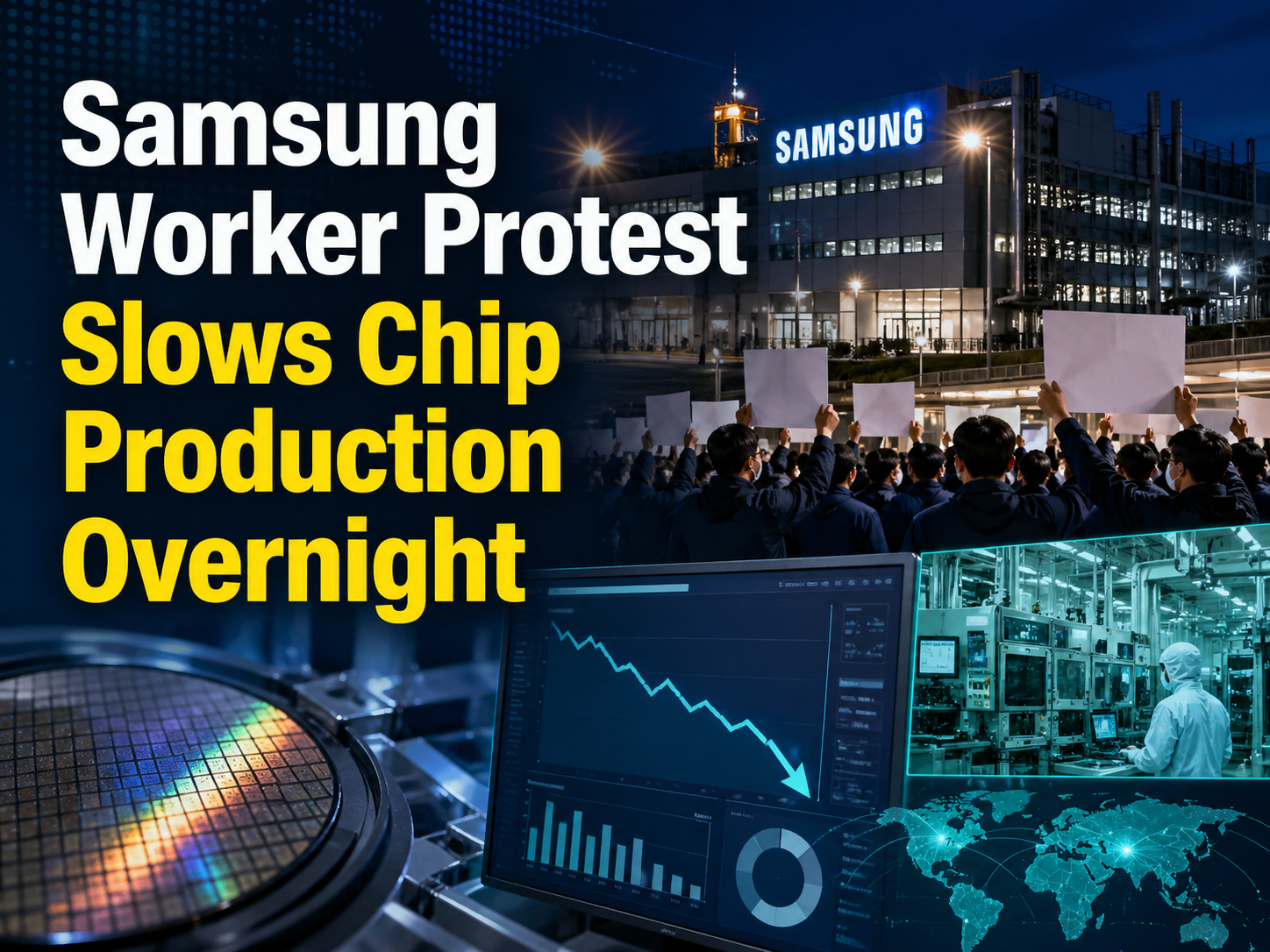
Samsung Worker Protest Slows Chip Production Overnight
Intermediate | April 29, 2026
✨ 혼자서 기사를 소리 내어 읽거나 튜터를 따라 각 단락을 반복해서 읽으세요. 레벨...
Samsung Chip Production Drops During Protest
Samsung Electronics faced a sharp overnight drop in chip output after many unionized workers joined a pay protest in South Korea. According to Reuters, foundry chip production fell 58% and memory chip production fell 18% during the overnight shift from Thursday night to Friday morning (Reuters). The drop happened after workers attended a large rally at Samsung’s factory complex in Pyeongtaek, south of Seoul.
Why Workers Are Angry
The protest was mainly about pay, bonuses, and fairness. Samsung workers say they are not being rewarded enough while the company benefits from strong demand for memory chips used in artificial intelligence. The Associated Press reported that about 40,000 union members joined the rally and called for more transparent compensation and the removal of limits on bonuses (AP News). For workers, the message was simple: if the company is doing well, employees want to share in that success.
The SK Hynix Comparison
A big part of the anger comes from comparisons with Samsung’s rival, SK Hynix. Reuters reported that Samsung’s union says a chip division employee with a base salary of 76 million won could receive 38 million won in bonus pay for 2025, which would be less than one-third of what a similarly paid SK Hynix worker could qualify for (Reuters). That pay gap has become a serious problem for Samsung, especially as SK Hynix has performed strongly in the AI memory chip market.
Why Samsung Chip Production Matters
This is not only a company story. Samsung chip production matters because Samsung is one of the most important memory chip makers in the world. AP News reported that Samsung and SK Hynix together produce about two-thirds of global memory chips (AP News). These chips are used in phones, computers, data centers, and AI systems. So when Samsung’s production slows, people start asking whether the wider technology supply chain could feel the pressure.
A Bigger Strike Could Be Coming
The overnight slowdown may be only the beginning. Reuters reported that Samsung union members now number more than 90,000, representing more than 70% of Samsung’s South Korean workforce (Reuters). The union has also threatened an 18-day strike starting May 21 if negotiations do not lead to a deal. Samsung said it would continue working toward a quick agreement in wage talks, but the situation is clearly tense.
What English Learners Can Learn From This Story
For English learners, this story is useful because it connects workplace language with business news. Words like union, bonus, strike, production, and negotiation appear often in real professional conversations. The phrase Samsung chip production is also useful because it connects a company name with a clear business topic. When you read stories like this, try to notice the cause-and-effect pattern: workers protested, some skipped the night shift, production dropped, and the company now faces more pressure.
Vocabulary
- Union (noun) – an organization that represents workers and negotiates with employers.
Example: “The union said many workers skipped the overnight shift after the rally.” - Protest (noun/verb) – an event where people publicly show disagreement or demand change.
Example: “Samsung workers joined a protest over pay and bonuses.” - Production (noun) – the process of making goods or products.
Example: “Samsung chip production dropped during the overnight shift.” - Foundry (noun) – a factory or business that makes chips for other companies.
Example: “Foundry chip output fell sharply during the protest.” - Memory Chip (noun) – a chip that stores data in electronic devices.
Example: “Memory chips are important for phones, computers, and AI data centers.” - Bonus (noun) – extra money paid to workers in addition to regular salary.
Example: “Workers demanded higher bonuses after strong company profits.” - Compensation (noun) – total pay and benefits a worker receives.
Example: “The union wants more transparent compensation.” - Negotiation (noun) – a discussion to reach an agreement.
Example: “Samsung and the union are still in wage negotiations.” - Shift (noun) – a scheduled period of work.
Example: “Many workers skipped the overnight shift after the rally.” - Supply Chain (noun) – the system of companies and processes that make and deliver products.
Example: “A long strike could affect the global technology supply chain.”
Discussion Questions (About the Article)
- What happened to Samsung’s chip production during the overnight shift?
- Where did the workers hold their protest?
- Why are Samsung workers unhappy about bonuses?
- How does SK Hynix fit into this story?
- Why could a longer strike affect the technology industry?
Discussion Questions (About the Topic)
- Should workers receive larger bonuses when company profits rise? Why or why not?
- How should companies balance worker pay and business costs?
- Why are memory chips so important in today’s economy?
- What could happen if a major chip company stops production for several days?
- How can companies avoid conflict with workers before it becomes a strike?
Related Idiom
“A wake-up call” – an event that warns people that something needs attention or change.
Example: “The overnight drop in Samsung chip production was a wake-up call for management because it showed how serious the labor dispute had become.”
📢 Want more practical English through real news stories? Sign up for the All About English Mastery Newsletter here: allaboutenglishmastery.com/newsletter
Want to build stronger English in less time? Check out Mastering English for Busy Professionals.
Follow our YouTube channel @All_About_English for more English tips and practice.
This article was inspired by: Reuters, Reuters, and AP News


 한국어
한국어  English