

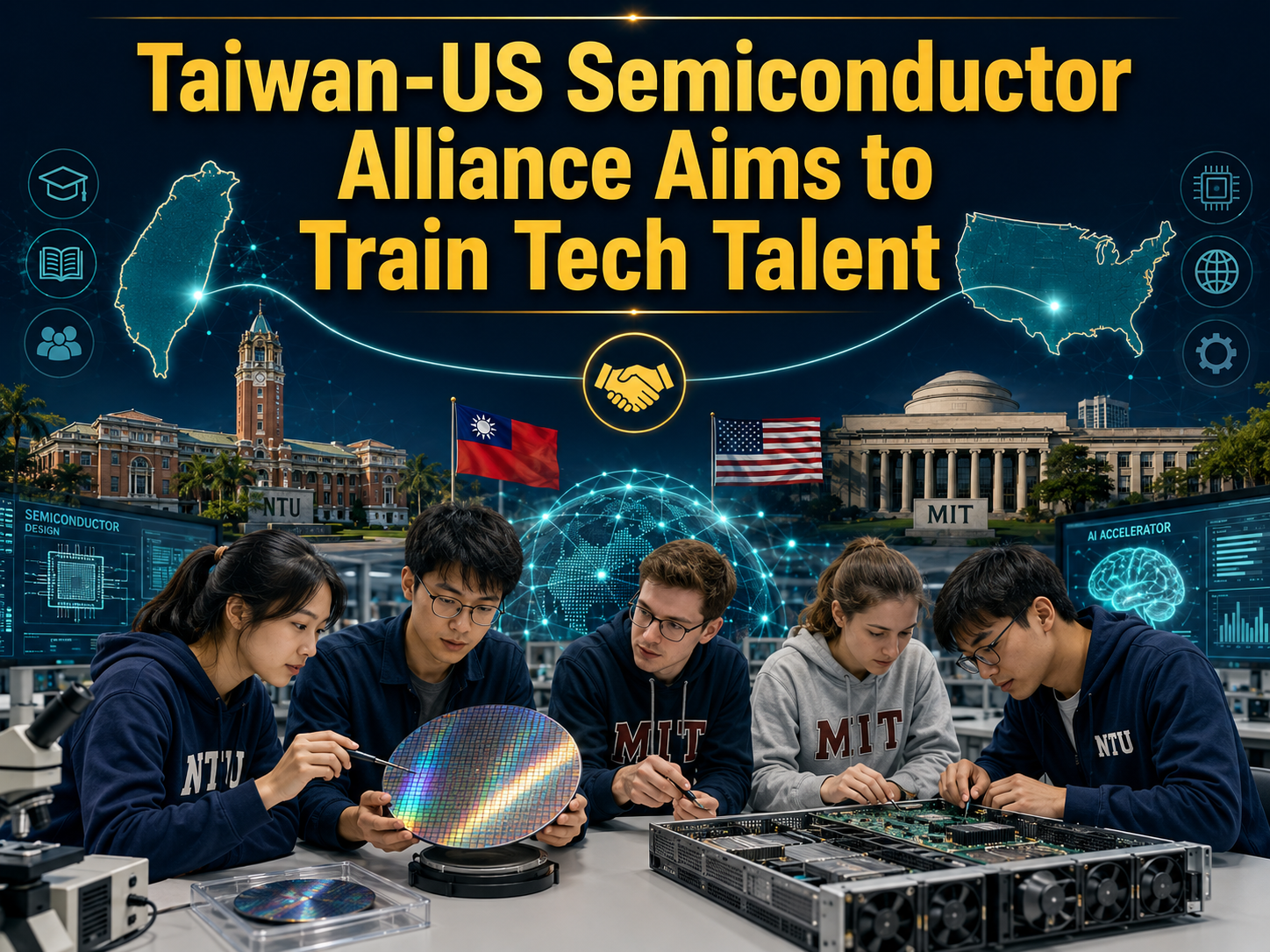
Taiwan-US Semiconductor Alliance Aims to Train Tech Talent
Intermediate | June 1, 2026
✨ 혼자서 기사를 소리 내어 읽거나 튜터를 따라 각 단락을 반복해서 읽으세요. 레벨...
Taiwan-US Semiconductor Alliance Focuses on People, Not Just Chips
Taiwan and the United States have launched a new education partnership to train more semiconductor talent. The project brings together universities, education leaders, and technology experts from both sides. The goal is simple but important: prepare more people for jobs in one of the world’s most important industries. (Taiwan News)
Why the Taiwan-US Semiconductor Alliance Matters
The Taiwan-US semiconductor alliance matters because chips are now at the center of the global economy. Smartphones, cars, AI servers, medical devices, and defense systems all depend on semiconductors. But making chips is not only about factories and machines. It also requires skilled engineers, researchers, technicians, and managers. (Taiwan News)
Education Becomes Part of the Supply Chain
When people talk about the semiconductor supply chain, they often talk about materials, factories, and equipment. This story shows another piece of the puzzle: education. If companies cannot find enough trained workers, even strong factories can face delays. In business terms, talent is now a key bottleneck. (Study in Taiwan)
More Exchange Between Taiwan and the US
The education partnership is expected to bring more American students and professionals to Taiwan. That could help them learn from Taiwan’s strong semiconductor ecosystem. It may also help Taiwanese universities and companies build deeper connections with American schools, research teams, and future tech workers. (Study in Taiwan)
What This Means for English Learners
This story is great for English learners because it combines business, education, technology, and international cooperation. Words like partnership, talent, supply chain, and global competitiveness are useful in many professional situations. If you work in tech or business, this kind of article gives you language you can use right away.
The Bigger Picture
The Taiwan-US semiconductor alliance is not just about today’s chip shortage or tomorrow’s AI boom. It is about preparing the next generation of workers. As technology becomes more important, countries and companies will compete not only for chips, but for people who know how to design, build, manage, and improve them. (Taiwan News)
Vocabulary
- Alliance (noun) – a partnership between groups, countries, or organizations.
Example: “Taiwan and the US formed an education alliance.” - Semiconductor (noun) – a material or chip used in electronic devices.
Example: “Semiconductors are used in phones, cars, and computers.” - Talent (noun) – skilled people who can do important work.
Example: “The industry needs more semiconductor talent.” - Partnership (noun) – a relationship where people or groups work together.
Example: “The partnership connects universities in Taiwan and the US.” - Ecosystem (noun) – a connected system of people, companies, and organizations.
Example: “Taiwan has a strong semiconductor ecosystem.” - Technician (noun) – a worker with technical skills.
Example: “Chip factories need engineers and technicians.” - Bottleneck (noun) – a problem that slows down a process.
Example: “A shortage of trained workers can become a bottleneck.” - Competitiveness (noun) – the ability to succeed against others.
Example: “Training workers can improve global competitiveness.” - Research (noun) – careful study to discover new information.
Example: “Universities support research in chip technology.” - Next Generation (noun phrase) – the people who will lead or work in the future.
Example: “The program aims to train the next generation of chip workers.”
Discussion Questions (About the Article)
- What is the goal of the Taiwan-US semiconductor education partnership?
- Why does the semiconductor industry need more skilled workers?
- How can education become part of the supply chain?
- Why might American students and professionals want to study in Taiwan?
- What professional vocabulary from this article is useful for business English?
Discussion Questions (About the Topic)
- Why are semiconductors so important in modern life?
- Should countries cooperate more on technology education? Why or why not?
- What skills will future semiconductor workers need?
- How can international education programs help businesses?
- Would you want to study or work in another country for career training?
Related Idiom
“Build a pipeline” – to create a steady path for people, products, or ideas to move from one stage to the next.
Example: “The Taiwan-US semiconductor alliance is trying to build a pipeline of trained tech workers.”
📢 Want more practical English through real news stories? Sign up for the All About English Mastery Newsletter here: allaboutenglishmastery.com/newsletter
Want to build stronger English in less time? Check out Mastering English for Busy Professionals.
Follow our YouTube channel @All_About_English for more English tips and practice.
This article was inspired by: Taiwan News, Taiwan News, and Study in Taiwan


 한국어
한국어  English