

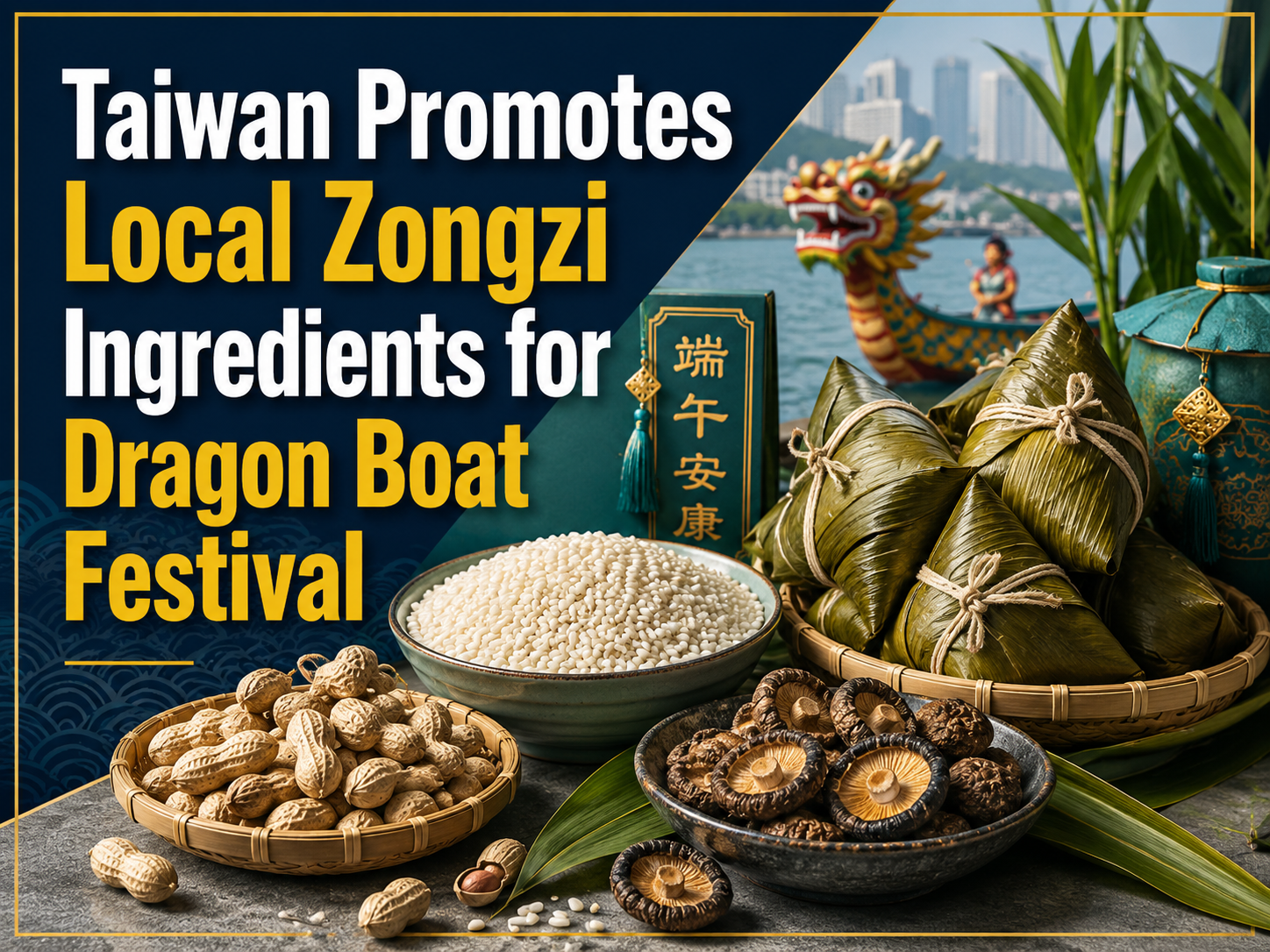
Taiwan Promotes Local Zongzi Ingredients for Dragon Boat Festival
Beginner | June 5, 2026
✨ 혼자서 기사를 소리 내어 읽거나 튜터를 따라 각 단락을 반복해서 읽으세요. 레벨...
Taiwan Promotes Local Zongzi Ingredients
Taiwan is getting ready for the Dragon Boat Festival, and that means one thing for many families: zongzi. Zongzi are sticky rice dumplings wrapped in leaves. They are usually filled with rice, mushrooms, peanuts, meat, or other tasty ingredients.
On May 29, 2026, Taiwan News reported that Taiwan’s Agriculture and Food Agency encouraged people to use local Taiwanese ingredients when making zongzi. The agency said local ingredients can give zongzi a fresher taste and better texture.
Why Taiwan Zongzi Ingredients Matter
The agency focused on three important Taiwan zongzi ingredients: glutinous rice, dried shiitake mushrooms, and peanuts. These ingredients may sound simple, but they make a big difference. Good rice gives the zongzi a soft and chewy texture, good mushrooms add a rich smell, and good peanuts add a warm, nutty flavor.
According to the Agriculture and Food Agency, Taiwan’s glutinous rice is mostly grown in central and southern Taiwan. The agency said long-grain sticky rice is better for savory foods like zongzi and oil rice, while round-grain sticky rice is often better for sweet desserts.
Local Rice, Mushrooms, and Peanuts
The agency also gave some useful cooking advice. It said people should soak sticky rice in cold water before cooking. This helps the center of the rice cook fully. That way, the zongzi can become chewy but not hard in the middle. For red or black sticky rice, the agency said people should wash it gently so they do not lose too much of the natural color.
Taiwan’s dried shiitake mushrooms are another key ingredient. Local mushrooms are produced in places such as Xinshe in Taichung and Puli and Yuchi in Nantou. The agency said local dried mushrooms usually have a stronger natural smell. They often have wrinkled brown caps, light yellow gills, and slightly longer stems.
How Shoppers Can Choose Better Ingredients
The Central News Agency explained that shoppers can use both their eyes and nose when choosing mushrooms. Local dried mushrooms often smell naturally fresh and rich. Some imported mushrooms may smell lighter, or may even have an old or musty smell if they were stored badly.
Peanuts are also important in many zongzi recipes. Taiwan’s local peanuts are mainly grown in Yunlin and Changhua. The Agriculture and Food Agency said local peanuts are fresher because they travel a shorter distance from farm to market. After steaming, these peanuts can bring out a stronger nutty smell and richer flavor.
A Small Food Choice with a Bigger Meaning
This story is not only about food. It is also about supporting local farmers and keeping traditional food connected to local places. When people choose local ingredients, they help Taiwan’s farmers, food markets, and small businesses. That is a nice “win-win”: families get better-tasting zongzi, and local farmers get more support.
The Dragon Boat Festival in Taiwan is on June 19, 2026, so many families still have time to prepare. The next time people buy ingredients for zongzi, they may want to check labels such as organic, traceable agricultural product, or Taiwan mushroom labels. Good ingredients do not need to be fancy. Sometimes, the best choice is simply the fresh local one.
Vocabulary
- Ingredient (noun) – one food item used to make a dish.
Example: “Rice is an important ingredient in zongzi.” - Local (adjective) – from a nearby area or the same country.
Example: “The agency encouraged people to buy local mushrooms.” - Texture (noun) – the way food feels in your mouth.
Example: “Sticky rice gives zongzi a chewy texture.” - Aroma (noun) – a pleasant smell.
Example: “The mushrooms have a rich aroma.” - Savory (adjective) – salty or not sweet.
Example: “Long-grain sticky rice is good for savory zongzi.” - Dessert (noun) – sweet food eaten after a meal.
Example: “Round sticky rice is often used in desserts.” - Soak (verb) – to put food in water for some time.
Example: “You should soak the rice before cooking.” - Fresh (adjective) – recently made, picked, or prepared.
Example: “Local peanuts can taste fresher.” - Imported (adjective) – brought in from another country.
Example: “Some imported mushrooms have a lighter smell.” - Label (noun) – a small sign or information on a product.
Example: “Check the label before buying mushrooms.”
Discussion Questions (About the Article)
- What food is Taiwan preparing for before the Dragon Boat Festival?
- What three local ingredients did the Agriculture and Food Agency recommend?
- Where is much of Taiwan’s glutinous rice grown?
- How can shoppers identify local dried mushrooms?
- Why are local peanuts good for zongzi?
Discussion Questions (About the Topic)
- What traditional holiday food is popular in your country?
- Do you usually buy local food or imported food? Why?
- Why might local food taste fresher?
- How can food support local farmers and businesses?
- What food reminds you of your family or hometown?
Related Idiom
“The proof is in the pudding” – you can judge something by trying it or seeing the result.
Example: “The agency says local ingredients make better zongzi, but the proof is in the pudding—you have to taste it yourself.”
📢 Want more practical English through real news stories? Sign up for the All About English Mastery Newsletter here: allaboutenglishmastery.com/newsletter
Want to build stronger English in less time? Check out Mastering English for Busy Professionals.
Follow our YouTube channel @All_About_English for more English tips and practice.
This article took inspiration from: Taiwan News, Taiwan Agriculture and Food Agency, and Central News Agency.


 한국어
한국어  English