

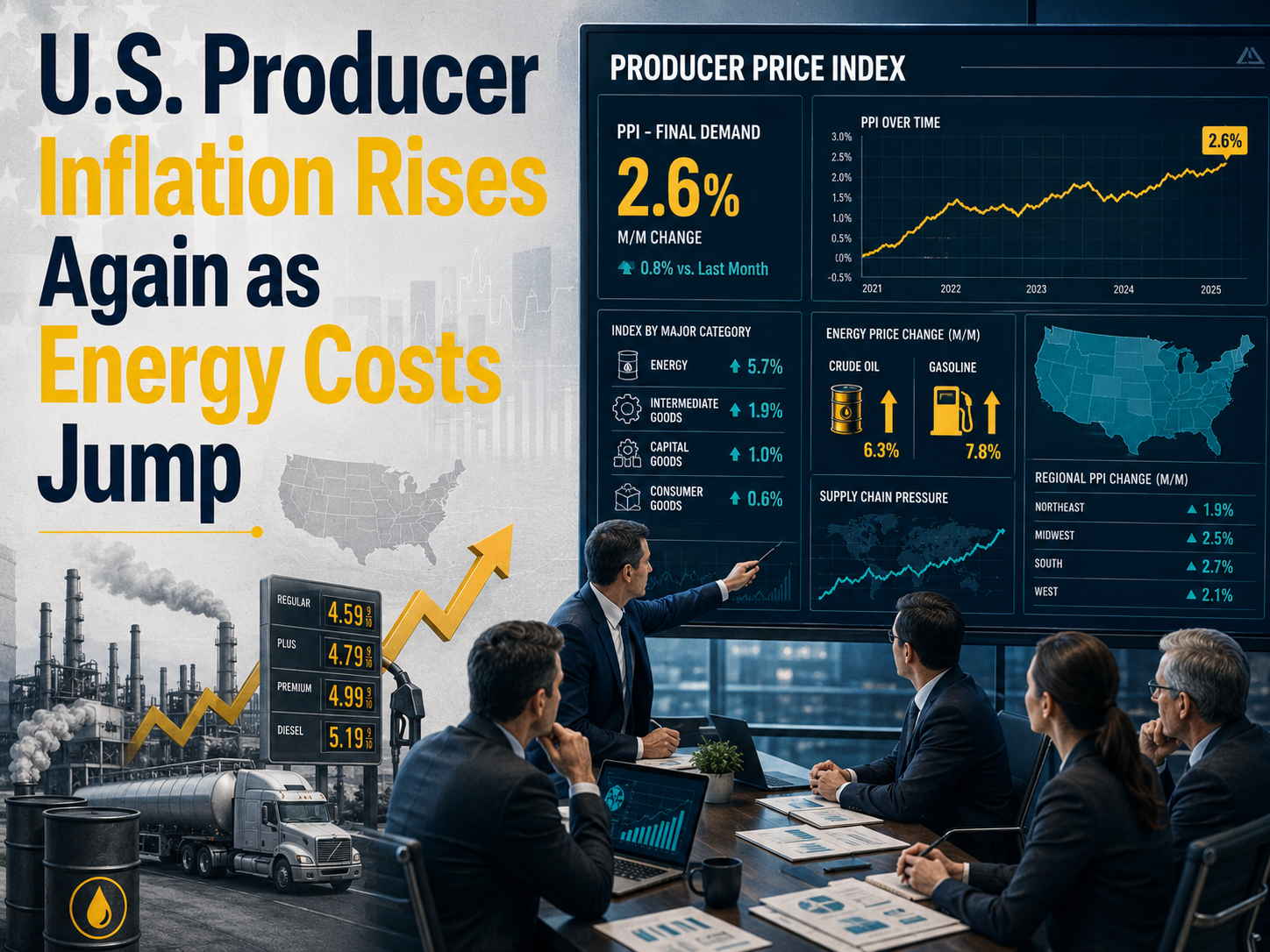
U.S. Producer Inflation Rises Again as Energy Costs Jump
Advanced | June 21, 2026
✨ 혼자서 기사를 소리 내어 읽거나 튜터를 따라 각 단락을 반복해서 읽으세요. 레벨...
Prices Rise Before They Reach Consumers
U.S. producer prices rose again in May, giving businesses and consumers another reason to watch inflation closely. According to The Epoch Times, the Producer Price Index, or PPI, increased by 1.1% in May, the same as April’s revised increase. The PPI measures prices that businesses receive for goods and services before those costs reach regular shoppers.
Why U.S. Producer Inflation Matters
The story matters because U.S. producer inflation can be an early warning sign for consumer prices. When companies pay more for fuel, materials, transportation, or services, they may eventually pass those higher costs on to customers. The Bureau of Labor Statistics reported that final demand prices rose 1.1% in May, after rising 1.1% in April and 0.7% in March. Over the past 12 months, producer prices increased 6.5%, the largest yearly gain since November 2022.
Energy Costs Drive the Increase
Energy was the biggest reason producer prices moved higher. The BLS said nearly 80% of the May increase came from a 2.8% rise in goods prices. Final demand energy prices jumped 10.7%, and gasoline prices surged 23.4%. Prices also rose for diesel fuel, jet fuel, plastic resins, industrial chemicals, and natural gas liquids. In simple terms, when energy gets more expensive, many other business costs can follow it uphill like a tired hiker with a heavy backpack.
Reuters: Inflation Came in Hotter Than Expected
The May number was stronger than many economists expected. Reuters reported that economists had forecast a 0.7% increase, but the actual number came in at 1.1%. Reuters also noted that producer inflation reached its largest annual gain in about 3½ years, partly because conflict in the Middle East pushed energy prices higher and strained supply chains.
Core Inflation Also Shows Pressure
This was not only an energy story. The BLS reported that prices for final demand less foods, energy, and trade services rose 0.8% in May, the biggest monthly increase since March 2022. That matters because economists often look at “core” inflation measures to see whether price pressure is spreading beyond volatile categories like gas and food. Reuters noted that wholesale goods prices excluding food and energy posted their largest monthly gain since April 2022.
What This Means for the Federal Reserve
The Federal Reserve wants inflation to move closer to its long-term 2% target, but this report makes that job harder. If producer prices keep rising, the Fed may feel pressure to keep interest rates higher for longer. Higher rates can help slow inflation, but they can also make loans, mortgages, and business investment more expensive. For companies, this creates a difficult planning environment: costs are rising, borrowing is expensive, and customers may become more careful with spending.
The Bigger Business Lesson
For English learners, this article is useful because it connects economics, business strategy, and everyday life. U.S. producer inflation may sound like a technical topic, but it affects real decisions: how companies set prices, how families plan budgets, and how investors think about the future. When prices rise before products reach the store shelf, everyone down the line needs to pay attention.
Vocabulary
- Producer Price Index (noun) – a measure of prices businesses receive for goods and services.
Example: “The Producer Price Index rose 1.1% in May.” - Inflation (noun) – a general increase in prices over time.
Example: “Inflation makes everyday goods more expensive.” - Final demand (noun) – goods and services sold for personal use, business investment, government use, or export.
Example: “Final demand prices rose again in May.” - Energy costs (noun) – prices related to fuel, electricity, oil, and gas.
Example: “Higher energy costs pushed producer prices upward.” - Forecast (noun/verb) – a prediction about what may happen.
Example: “Economists had forecast a smaller increase.” - Core inflation (noun) – an inflation measure that removes volatile categories like food and energy.
Example: “Core inflation can show whether price pressure is spreading.” - Supply chain (noun) – the system that moves products from producers to customers.
Example: “Energy problems can put pressure on the supply chain.” - Interest rate (noun) – the cost of borrowing money.
Example: “The Federal Reserve may keep interest rates higher.” - Consumer prices (noun) – prices paid by regular shoppers.
Example: “Producer prices can later affect consumer prices.” - Volatile (adjective) – changing quickly and unpredictably.
Example: “Gasoline prices are often volatile.”
Discussion Questions About the Article
- What does the Producer Price Index measure?
- How much did producer prices rise in May?
- Why did energy prices play such a big role in the May increase?
- Why do economists pay attention to core inflation?
- How could this report affect the Federal Reserve’s interest rate decisions?
Discussion Questions About the Topic
- How do rising business costs affect regular consumers?
- Should companies pass higher costs on to customers, or absorb them when possible?
- How do higher interest rates affect businesses and families?
- What products or services do you notice becoming more expensive recently?
- How can professionals prepare for inflation in their personal or business planning?
Related Idiom
“Feel the pinch” – to experience financial pressure because costs are rising or money is tight.
Example: “If U.S. producer inflation keeps rising, both businesses and consumers may start to feel the pinch.”
📢 Want more practical English through real news stories? Sign up for the All About English Mastery Newsletter here: allaboutenglishmastery.com/newsletter
Want to build stronger English in less time? Check out Mastering English for Busy Professionals.
Follow our YouTube channel @All_About_English for more English tips and practice.
This article was inspired by: The Epoch Times – U.S. Producer Inflation Rises 1 Percent for 2nd Straight Month, Bureau of Labor Statistics – Producer Price Index News Release, and Reuters – U.S. producer inflation posts largest annual gain in 3½ years as energy prices surge


 한국어
한국어  English