

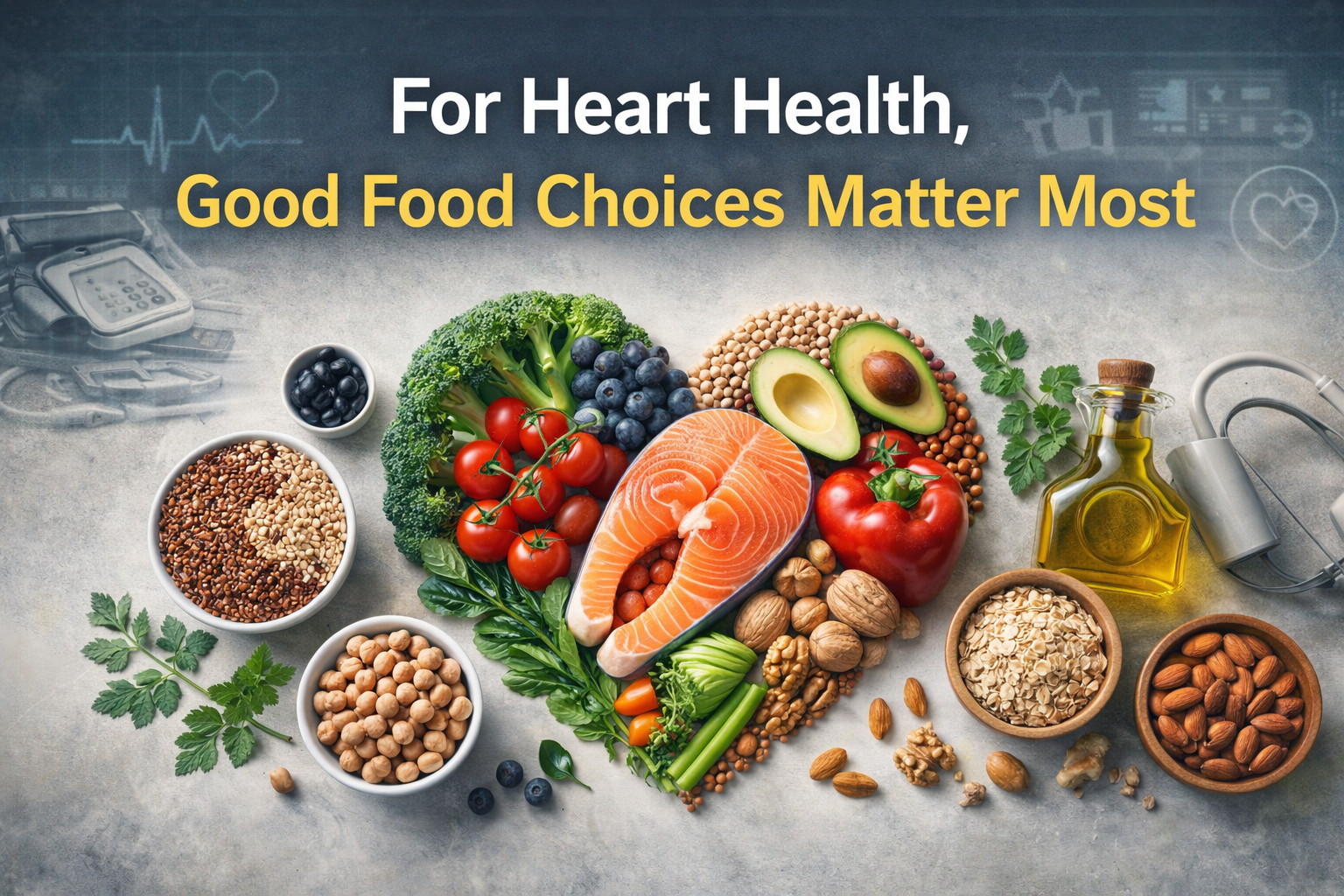
For Heart Health, Good Food Choices Matter Most
Beginner | March 17, 2026
✨ Read the article aloud on your own or repeat each paragraph after your tutor.
Low-Carb or Low-Fat? The Bigger Question Is Food Quality
Many people ask the same question: Is a low-carb diet better, or is a low-fat diet better? A new report from Health.com says the answer may surprise people. According to a large new study, both eating styles can support heart health—but only when people choose high-quality foods (Health.com).
A Huge Study Followed People for More Than 30 Years
The study was published in the Journal of the American College of Cardiology (JACC) and followed nearly 200,000 U.S. adults for more than 30 years. Researchers looked at how different low-carb and low-fat diets affected the risk of coronary heart disease, which is the most common cause of heart attacks. The researchers found that healthy versions of both diets were linked to lower risk, while unhealthy versions were linked to higher risk (Harvard T.H. Chan School of Public Health; American College of Cardiology).
Healthy Versions of Both Diets Helped the Heart
Here is the key point: the healthy low-carb and healthy low-fat diets were both linked to about a 15% lower risk of coronary heart disease. These healthier eating patterns focused more on whole grains, fruits, vegetables, legumes, and unsaturated fats. In contrast, unhealthy versions of both diets included more refined carbohydrates, animal fats, and animal proteins, and these patterns were linked to worse heart outcomes (Harvard T.H. Chan School of Public Health; STAT).
The Study Also Found Better Blood Markers
The story did not stop there. The researchers also found better blood markers in people following healthier eating patterns. The healthy versions of both diets were linked with lower triglycerides, higher HDL cholesterol, and lower inflammation. These are all important signs for heart health. In other words, the body seemed to respond well when people chose better food sources, even if one person ate fewer carbs and another ate less fat (American College of Cardiology).
Low-Carb or Low-Fat Heart Health Depends on What You Eat
This is why the low-carb or low-fat heart health debate may be missing the real point. The study suggests that food quality matters more than simply cutting one nutrient. A low-carb diet full of processed meat and poor-quality fats may not help much. A low-fat diet filled with sugary foods and refined starches may also fall short. What seems to matter most is building meals with better ingredients and more balanced choices (Health.com; JAMA).
The Real Message Is Simpler Than the Diet Debate
So, what should people learn from this? The big lesson is that there may not be one perfect diet label for everyone. Instead, the smarter move is to focus on food quality. From a practical point of view, that means choosing more whole foods, fewer ultra-processed foods, and healthier plant-based options more often. For everyday life, that is a much more useful lesson than fighting over whether low-carb or low-fat is the winner.
Vocabulary
- quality (noun) – how good something is.
Example: “The study said food quality matters more than diet labels.” - coronary heart disease (noun) – a heart problem caused by reduced blood flow to the heart.
Example: “The researchers studied the risk of coronary heart disease.” - linked (adjective/verb) – connected or associated with something.
Example: “Healthy diets were linked to lower heart disease risk.” - refined carbohydrates (noun) – processed carbs such as white bread or sugary foods.
Example: “Refined carbohydrates were part of the unhealthy diet patterns.” - unsaturated fats (noun) – fats generally considered healthier for the heart.
Example: “Nuts and olive oil contain unsaturated fats.” - legumes (noun) – beans, lentils, and peas.
Example: “Legumes were part of the healthier eating patterns.” - triglycerides (noun) – a type of fat found in the blood.
Example: “Lower triglycerides are usually better for heart health.” - inflammation (noun) – the body’s reaction to injury or illness, sometimes harmful if too high.
Example: “The healthier diets were linked to lower inflammation.” - processed (adjective) – changed from its natural form, often with added ingredients.
Example: “Many experts say processed foods should be limited.” - balanced (adjective) – healthy and not too extreme.
Example: “A balanced meal often includes vegetables, protein, and healthy fats.”
Discussion Questions (About the Article)
- What was the main question behind this study?
- How long did the researchers follow the participants?
- What kinds of foods were included in the healthier diets?
- What blood markers improved in people following healthier diet patterns?
- What does the article say matters most for heart health?
Discussion Questions (About the Topic)
- Do you pay attention to carbs or fat when you choose food?
- What are some healthy foods you enjoy eating regularly?
- Why do you think many people look for one “perfect” diet?
- Is it easy or difficult to eat fewer processed foods where you live?
- What small change could help someone improve heart health through food?
Related Idiom
“Don’t judge a book by its cover” – do not decide something only by its outer label or appearance.
Example: “This study reminds us not to judge a diet by its label, because low-carb and low-fat can both be healthy or unhealthy.”
📢 Want more practical English using real news? 👉 Sign up for the All About English Mastery Newsletter! Click here to join us!
Want to finally Master English but don’t have the time? Mastering English for Busy Professionals is the course for you! Check it out now!
Follow our YouTube Channel @All_About_English for more great insights and tips.
This article was inspired by: Health.com, Harvard T.H. Chan School of Public Health, American College of Cardiology, STAT, and JAMA.


 English
  한국어
한국어