

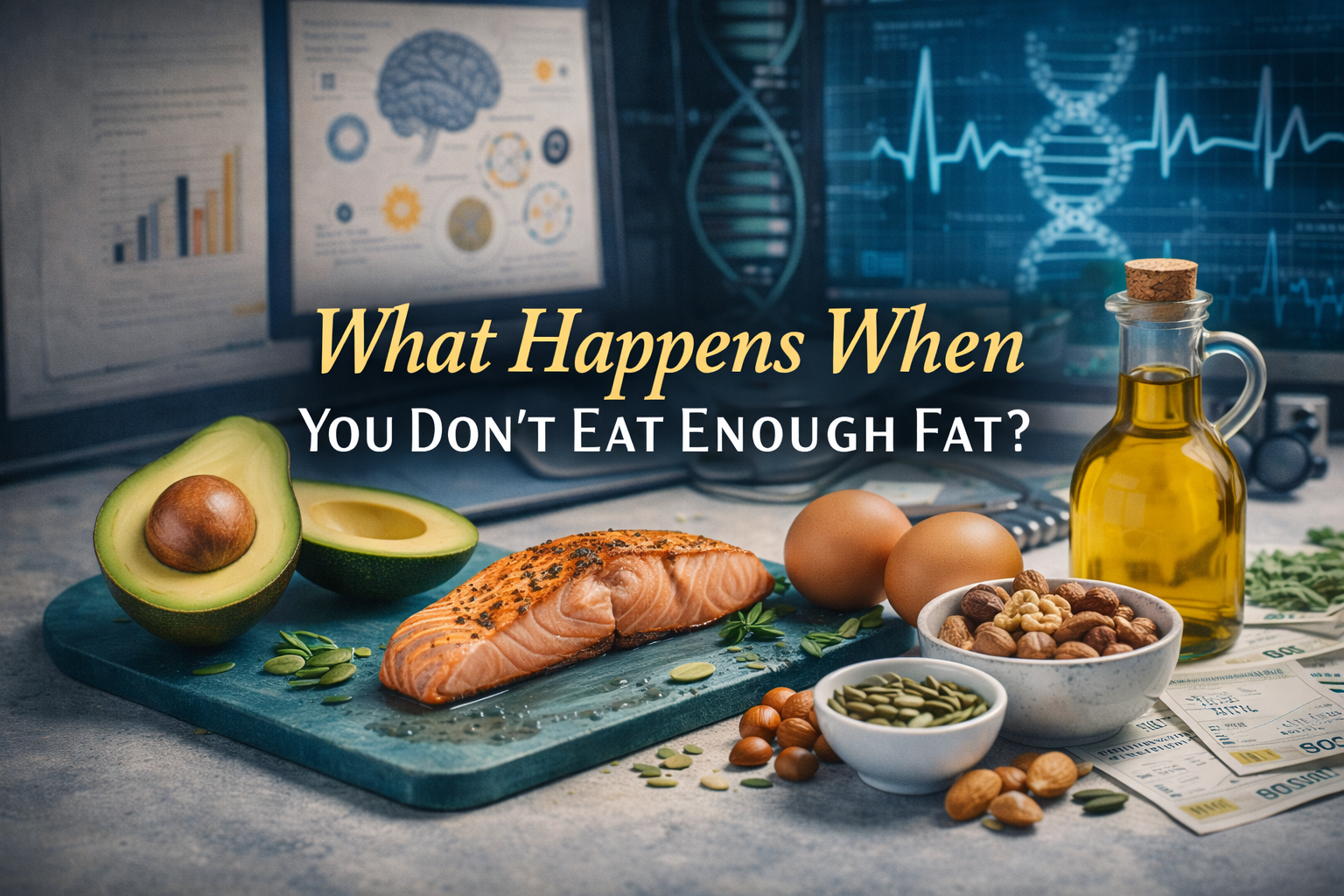
What Happens When You Don’t Eat Enough Fat?
Beginner | April 4, 2026
✨ Read the article aloud on your own or repeat each paragraph after your tutor.
Why Cutting Too Much Fat Can Backfire
For many years, people were told to fear fat. But newer health reporting says the real problem may be going too low. A recent Men’s Fitness article explained that fat is essential for hormone balance, vitamin absorption, and skin health. In other words, cutting too much fat can backfire instead of helping your body. (Men’s Fitness)
Not Enough Healthy Fat Can Affect Daily Health
When you do not eat enough fat, your body can start to struggle in a few important ways. Men’s Fitness says very low-fat diets may interfere with hormone balance, including testosterone and estrogen. The article also explains that fat helps your body absorb vitamins A, D, E, and K, which are fat-soluble vitamins. Without enough dietary fat, your body may not use these nutrients well. (Men’s Fitness)
Skin, Focus, and Energy Can Also Suffer
The story is not only about hormones. Men’s Fitness notes that fat is an important part of skin cell membranes and helps the skin hold in moisture, so eating too little may contribute to dry skin. A related Real Simple report added that healthy fats—especially omega-3 fats—support mood, memory, focus, and steady energy. Experts in that article said low fat intake over time may lead to slower thinking, mental fatigue, and trouble concentrating. (Men’s Fitness, Real Simple)
Not All Fats Are the Same
One useful point in the Men’s Fitness article is that different fats do different jobs. It highlights monounsaturated fats from foods like olive oil, avocados, and nuts, and polyunsaturated fats like omega-3s from fatty fish. These are often treated as the better options. The article says saturated fat is more controversial and should still be kept moderate. The World Health Organization also says fats in the diet should be mainly unsaturated fats, with saturated fat kept below 10% of total energy intake. (Men’s Fitness, WHO)
How Much Fat Do People Usually Need?
Men’s Fitness gives two simple ways to think about fat intake. One is about 0.3 grams of fat per pound of body weight per day as a practical minimum floor. The other is the more general advice that 20% to 35% of daily calories can come from fat. The article says most of that should come from monounsaturated and polyunsaturated fat sources. This does not mean every person needs the exact same diet, but it does mean going extremely low for a long time may cause problems. (Men’s Fitness)
Not Enough Healthy Fat Is a Useful Nutrition Lesson
The not enough healthy fat story matters because many people still think “less fat” automatically means “better health.” But the real lesson is more balanced. Fat is not just fuel. It also helps support your brain, hormones, skin, and nutrient absorption. So, while quality matters, eating too little for too long may do more harm than good. That is the part many people miss. (Men’s Fitness, Real Simple)
Vocabulary
- fat-soluble (adjective) – able to be absorbed with fat in the diet.
Example: Vitamins A, D, E, and K are fat-soluble vitamins. - hormone (noun) – a chemical in the body that controls many functions.
Example: Eating too little fat may affect hormone balance. - absorb (verb) – to take in or use something.
Example: Your body needs fat to absorb some vitamins properly. - moisture (noun) – water or wetness.
Example: Healthy skin needs enough moisture. - omega-3 (noun) – a type of healthy fat found in foods like fish and walnuts.
Example: Omega-3 fats may support brain health. - concentrate (verb) – to focus your attention.
Example: Some people may find it harder to concentrate if their diet is too low in fat. - unsaturated (adjective) – a type of fat usually considered better for health.
Example: Olive oil is rich in unsaturated fat. - saturated (adjective) – a type of fat often found in meat, butter, and dairy.
Example: Many health groups say saturated fat should be limited. - intake (noun) – the amount of something you eat or drink.
Example: Your daily fat intake should not stay too low for too long. - balanced (adjective) – healthy and in the right proportions.
Example: A balanced diet includes protein, carbs, and fat.
Discussion Questions (About the Article)
- Why does the article say cutting fat too low can backfire?
- Which vitamins need fat for proper absorption?
- How can low fat intake affect the skin?
- What kinds of fats are presented as better choices?
- What general fat intake range does the article mention?
Discussion Questions (About the Topic)
- Why do you think so many people still fear fat?
- Have nutrition trends changed a lot during your lifetime?
- What are some healthy fat foods you already eat?
- Why is balance better than extreme dieting?
- Do you think people often oversimplify health advice online?
Related Idiom
“Throw the baby out with the bathwater” – to remove something bad but also lose something valuable by mistake.
Example: Some diets throw the baby out with the bathwater by cutting fat so much that they lose important health benefits.
📢 Want more practical English through real news? Sign up for the All About English Mastery Newsletter! Click here to join us.
Want to build stronger English in just a few minutes a day? Mastering English for Busy Professionals is designed to help busy people improve without wasting time.
Follow our YouTube Channel @All_About_English for more English tips, practice, and discussion.
This article was inspired by: Men’s Fitness, Real Simple, and World Health Organization


 English
  한국어
한국어