

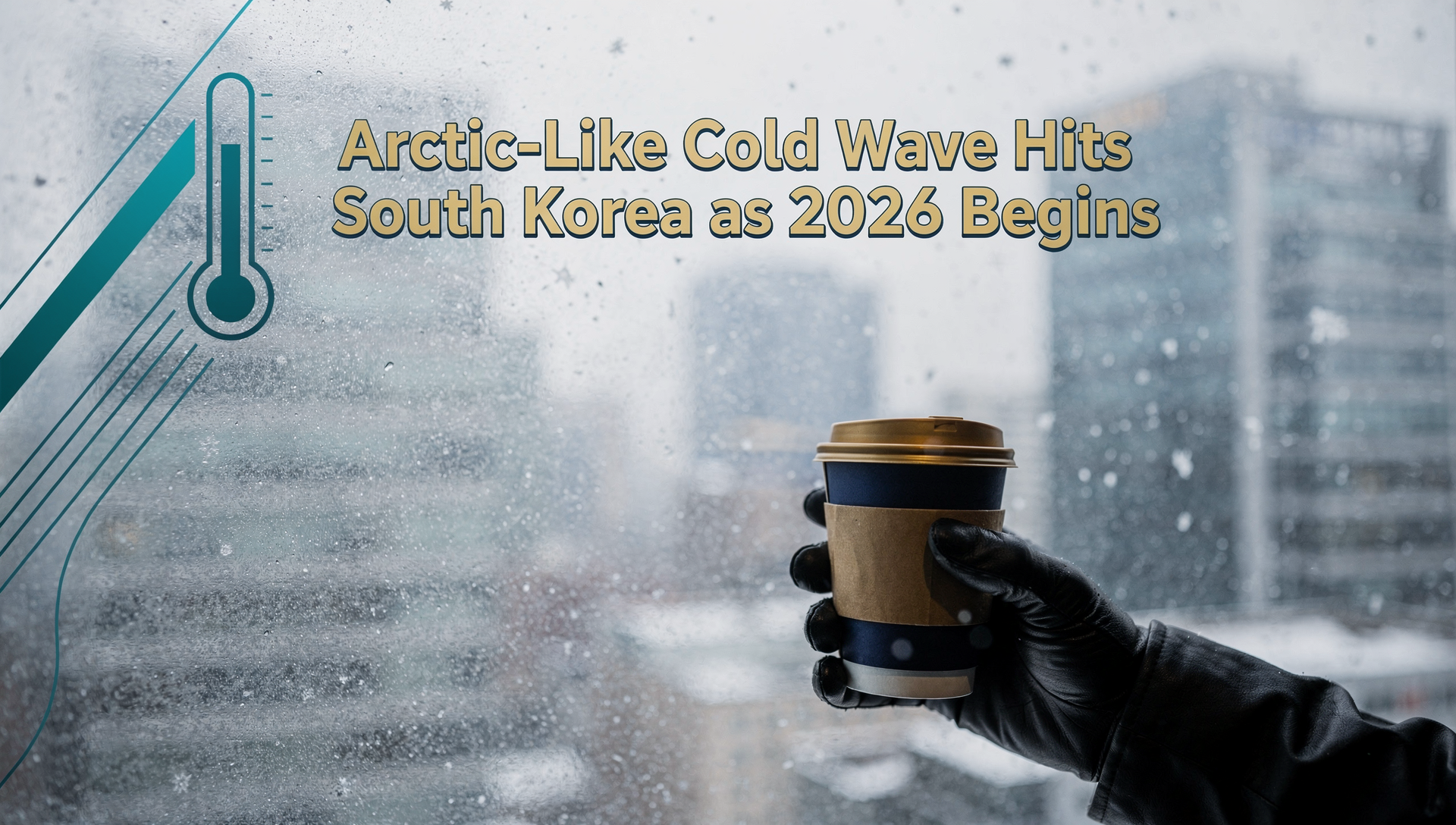
Arctic-Like Cold Wave Hits South Korea as 2026 Begins
Intermediate | January 5, 2026
✨ Read the article aloud on your own or repeat each paragraph after your tutor.
South Korea cold wave is a real disruption
If you felt like Korea turned into a giant freezer lately… you’re not imagining it. This South Korea cold wave is the kind of weather that can mess with daily routines fast. Weather officials warned that frigid Arctic air would sweep in around New Year’s, pushing temperatures deep below zero and making it feel even colder with strong winds. In Seoul, the wind chill was forecast to drop to about -17°C, even though skies were expected to stay mostly clear for sunrise viewing. (Korea JoongAng Daily)
Cold alerts, dangerous wind chill, and a wider impact
According to the Korea Meteorological Administration (KMA), much of the country was expected to see morning temperatures near -10°C, with some inland and mountainous areas dropping as low as -15°C on January 1. A cold-weather alert for Seoul, Daejeon, and parts of Gyeonggi was set to take effect on the night of December 31, with the cold expected to continue into early January. (The Straits Times)
Clear skies for sunrise… but not everywhere
Here’s the ironic part: the sky cooperated, but the temperature did not. One report noted that skies were expected to be mostly clear for the first sunrise of the year in many regions—good news for people chasing those “new year, new me” sunrise photos. But the Yellow Sea coast and Jeju were expected to be cloudier, and some areas were warned about snow and limited visibility. (Korea JoongAng Daily)
Snow and travel delays become the second problem
Once temperatures drop, the next issue is operations: roads, flights, and logistics. Heavy snow was expected along parts of the western coast and islands. For example, forecasts included 3–8 cm of snow along the west coast of the Jeolla provinces on January 2, and Jeju’s mountains were expected to get more than the coast. With strong winds in the Yellow Sea and Jeju areas, travelers were advised to check for possible flight delays or cancellations. (The Straits Times; Korea JoongAng Daily)
What to do when the forecast turns “business-critical”
This isn’t just a “wear a thicker coat” moment. A cold wave can impact commutes, delivery schedules, and workplace safety. If you’re commuting early, plan extra time. If you run a business—or manage a team—think about a quick cold-weather checklist: flexible start times, safety reminders, and a backup plan if transport slows down.
The bigger picture: short spikes can still be costly
Cold waves like this often arrive fast and hit hard. And when a South Korea cold wave combines sub-zero temperatures with strong wind, the disruption spreads beyond comfort—into commuting, deliveries, and safety. Even if temperatures rise after a few days, the short-term disruption can ripple through daily life—especially when wind chill pushes conditions into dangerous territory. The key is not panic… it’s preparation.
Vocabulary
- Cold wave (noun) – a period of unusually cold weather.
Example: The cold wave made morning commutes much harder. - Wind chill (noun) – how cold it feels because of wind.
Example: The wind chill made -10°C feel much colder. - Frigid (adjective) – extremely cold.
Example: Frigid air moved in from the north. - Advisory (noun) – an official warning or notice.
Example: The weather advisory told people to prepare for dangerous cold. - Alert (noun) – a notice that something risky may happen.
Example: A cold-weather alert was issued for several regions. - Forecast (noun) – a prediction about weather.
Example: The forecast said temperatures could drop to -15°C. - Inland (adjective) – away from the coast.
Example: Inland areas often get colder at night. - Disruption (noun) – something that interrupts normal life or work.
Example: Snow caused travel disruptions across the region. - Precaution (noun) – an action taken to prevent problems.
Example: Wearing layers is a simple precaution in extreme cold. - Bundle up (phrasal verb) – to dress warmly.
Example: People bundled up before going out for sunrise viewing.
Discussion Questions (About the Article)
- What details show that this cold wave could affect daily life, not just comfort?
- Why does wind chill matter even if the temperature is “only” -10°C?
- Which part of the story feels most relevant to workers and commuters?
- What types of businesses are most affected by extreme cold and snow?
- What advice in the article would you personally follow?
Discussion Questions (About the Topic)
- How does severe winter weather change the way people plan work and travel?
- What’s the biggest winter weather risk where you live: cold, snow, ice, or wind?
- Do you think companies should allow flexible work during weather extremes? Why?
- What’s one “small habit” that helps you prepare for harsh winter days?
- Have you ever experienced a weather-related disruption that affected your schedule?
Related Idiom
“Better safe than sorry” – it’s smarter to be careful now than regret it later.
Example: Checking weather alerts and leaving early is “better safe than sorry” during a cold wave.
📢 Want more news-based English practice like this? 👉 Sign up for the All About English Mastery Newsletter! https://allaboutenglishmastery.com/newsletter
Want to finally master English but don’t have the time? Mastering English for Busy Professionals is the course for you!
Follow our YouTube Channel @All_About_English for more great insights and tips.
Sources (for reference and deeper reading):
- Korea JoongAng Daily (KMA forecast + wind chill details)
- The Straits Times (temps, alerts, snowfall ranges)
This article was inspired by Yonhap News Agency coverage as republished by partner outlets, including Korea JoongAng Daily and The Straits Times.


 English
  한국어
한국어