

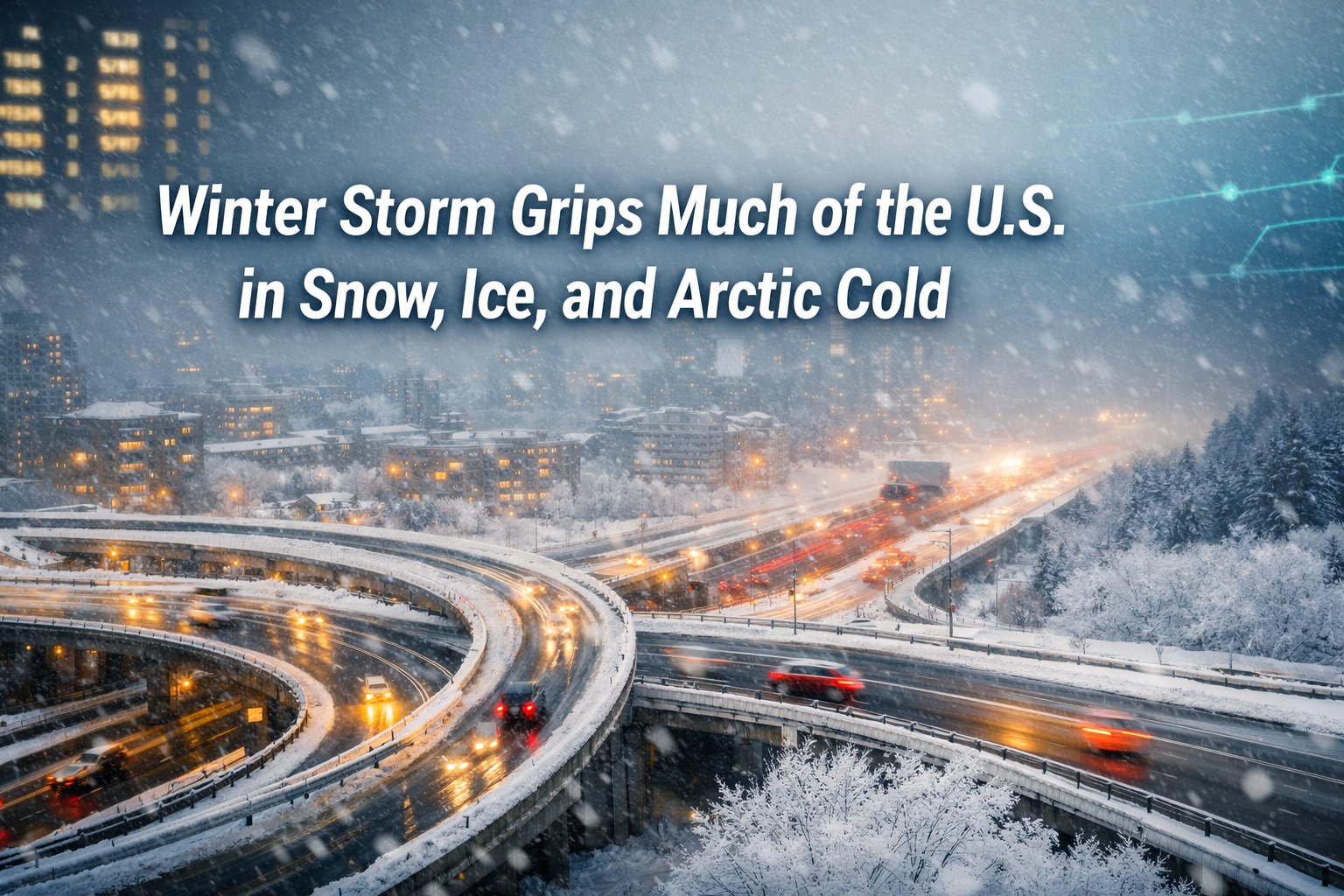
Winter Storm Grips Much of the U.S. in Snow, Ice, and Arctic Cold
Intermediate | January 27, 2026
✨ Read the article aloud on your own or repeat each paragraph after your tutor.
A Big Storm, a Bigger Mess
A powerful winter storm pushed across the eastern United States, dropping heavy snow, sleet, and freezing rain from the Ohio Valley and mid-South up to New England. (Reuters) In other words, winter storm grips US communities with fast-changing conditions that can disrupt travel and daily routines. At the same time, an Arctic blast drove temperatures down hard—creating a double problem: dangerous roads and dangerous cold. (Reuters)
Winter storm grips US: Warnings for Millions—and Brutal Wind Chill
According to U.S. forecasters, winter storm warnings covered about 118 million people, and officials warned roughly 157 million to prepare for severe cold. (Reuters) In the northern Plains, wind chill values (how cold it feels) reportedly dipped to around -50°F (about -46°C). (Reuters) That kind of cold can turn a normal commute into a real safety risk.
Snow, Ice, and “Don’t Even Drive” Conditions
Some areas measured a foot of snow or more since the storm developed—reported in states including Colorado, Illinois, Indiana, Missouri, New Jersey, New York, and Pennsylvania. (Reuters) In the South, freezing rain coated power lines and trees with ice—sometimes up to about an inch thick—making travel slippery and creating serious damage. (NWS Briefing (PDF))
Flights Canceled, Airports Nearly Shut Down
Air travel took a major hit. Flight trackers reported more than 11,000 U.S. flight cancellations for Sunday alone. (Reuters) Reagan National Airport (DCA) near Washington, D.C. was effectively closed, and airports serving major cities like New York, Philadelphia, and Charlotte saw 80% or more of flights canceled. (Reuters)
Power Outages and Emergency Moves
As ice built up, outages spread across the South. Reports said more than 1 million homes and businesses in eight states from Texas to the Carolinas lost electricity at the peak, and over 800,000 customers were still without power later that night. (Reuters) Leaders also took emergency steps—New York’s governor said the National Guard was mobilized for storm response. (Reuters)
What This Means for Work and Business
Storms like this don’t just slow down travel—they slow down business. When flights are canceled, shipments move later, meetings get rescheduled, and teams work with fewer people. When a winter storm grips US airports and highways at the same time, even well-run schedules can fall apart. It’s a reminder that simple habits—backup plans, flexible scheduling, and clear communication—can keep you productive when nature decides to “update your calendar” for you.
Vocabulary
- Paralyzing (adjective) – causing normal activity to stop.
Example: The paralyzing ice made roads too dangerous for drivers. - Sleet (noun) – frozen rain that falls as small ice pellets.
Example: Sleet covered sidewalks and made walking risky. - Freezing rain (noun) – rain that freezes when it hits cold surfaces.
Example: Freezing rain created a thin layer of ice on the highways. - Wind chill (noun) – the “feels-like” temperature caused by wind.
Example: Wind chill made the air feel far colder than the thermometer showed. - Accumulation (noun) – the amount that builds up over time.
Example: Ice accumulation damaged trees and power lines. - Outage (noun) – a period when power or service is not available.
Example: The outage lasted all night in some neighborhoods. - Strained (adjective) – under pressure; pushed near its limit.
Example: Cold weather strained energy supplies in several areas. - Mobilize (verb) – to prepare and organize people/resources for action.
Example: Officials mobilized emergency crews to clear roads. - Tracking service (noun) – a system that monitors information in real time.
Example: A tracking service reported thousands of flight cancellations. - Treacherous (adjective) – very dangerous and unpredictable.
Example: Treacherous road conditions caused many accidents.
Discussion Questions (About the Article)
- What made this storm especially disruptive compared to a normal snow day?
- Which detail surprised you most: flight cancellations, power outages, or wind chill?
- Why is ice often more dangerous than snow?
- How did the storm affect transportation in major cities?
- What steps did officials take to respond to the storm?
Discussion Questions (About the Topic)
- How does extreme weather affect businesses and workplaces in your country?
- What’s a smart “backup plan” for work when travel becomes impossible?
- Should companies allow remote work more easily during storms? Why or why not?
- What emergency supplies do you think every home should have?
- Have you ever experienced a weather event that changed your plans completely?
Related Idiom
“When it rains, it pours” – when problems happen, they often happen all at once.
Example: Flights were canceled, power went out, and roads froze—when it rains, it pours.
📢 Want more English like this—short, useful, and easy to practice? 👉 Sign up for the All About English Mastery Newsletter! Click here to join us!
Want to finally Master English but don’t have the time? Mastering English for Busy Professionals is the course for you! Check it out now!
Follow our YouTube Channel @All_About_English for more great insights and tips.
This article was inspired by: Reuters | NWS Briefing (PDF)


 English
  한국어
한국어