

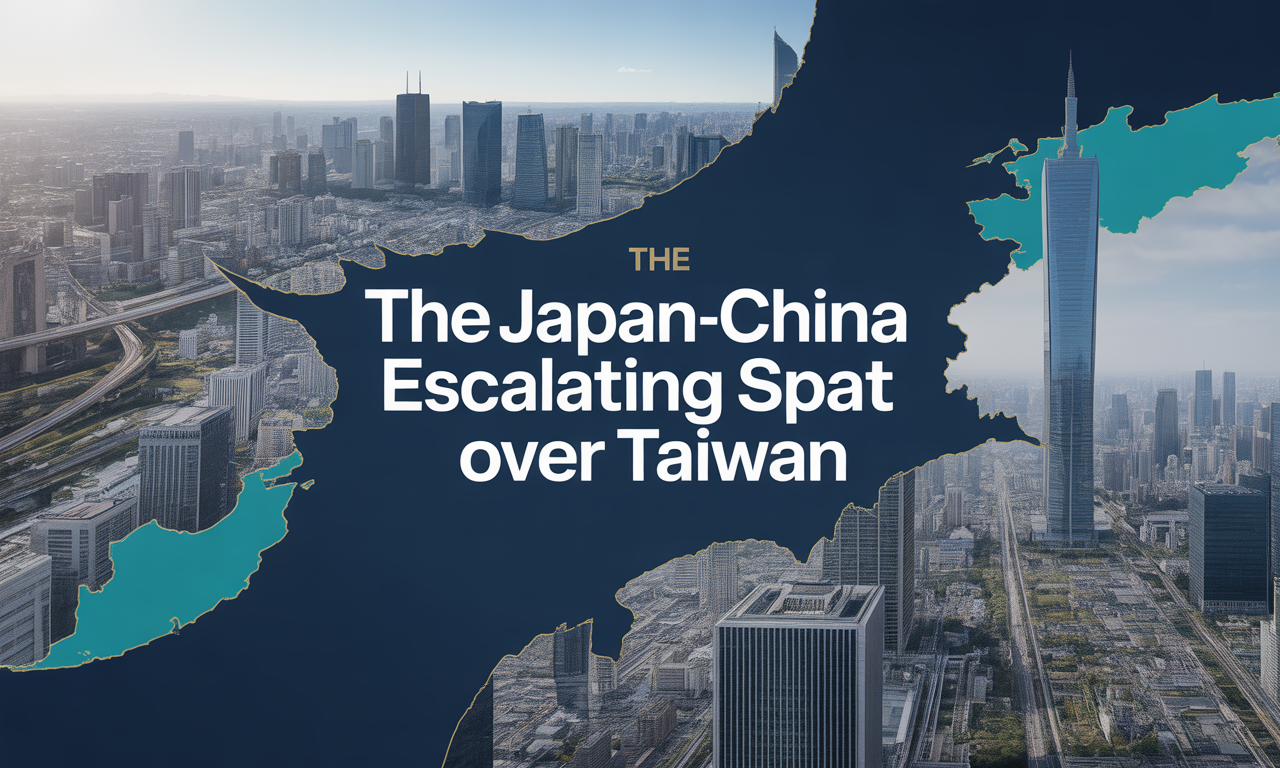
The Danger of Japan and China’s Escalating Spat
Advanced | December 3, 2025
✨ Read the article aloud on your own or repeat each paragraph after your tutor.
A Diplomatic Spat That Turned Serious
Takaichi Breaks with “Strategic Ambiguity”
In early November, Japanese Prime Minister Sanae Takaichi told lawmakers that a Chinese attack on Taiwan could create a “survival‑threatening situation” for Japan. Under Japan’s security laws, that wording could justify using collective self‑defense—in other words, joining a military response alongside the United States. Her remarks broke with Tokyo’s long‑standing policy of “strategic ambiguity” on Taiwan. (TIME explainer)
Chinese officials reacted with fury. A Chinese consul general in Osaka, Xue Jian, posted a now‑deleted message on X suggesting that Japan’s leader should have her “neck cut,” language that shocked many in Japan and revived memories of past “wolf warrior” diplomacy. The verbal clash quickly evolved into a full‑blown diplomatic crisis. (Wikipedia overview)
Beijing’s Escalating Pushback
Beijing summoned Japan’s ambassador, accused Tokyo of reviving militarism, and later sent a strongly worded letter to the United Nations claiming Japan was threatening illegal military action over Taiwan. Tokyo fired back, calling China’s claims “unsubstantiated” and insisting its policy remains defensive. (Reuters)
At the same time, Chinese state media and military officials warned that Japan would pay a “painful price” if it “stepped out of line” over Taiwan, while Chinese coast guard ships increased patrols around the disputed Senkaku/Diaoyu Islands in the East China Sea. (Reuters Breakingviews; ABC News)
From Sharp Words to Economic and Diplomatic Pressure
Travel Warnings, Boycotts, and Seafood Bans
China did not stop at angry statements. It discouraged travel to Japan, cut back flights, and cancelled concerts and film releases involving Japanese artists. It also expanded restrictions on Japanese seafood imports, officially linking them to safety concerns but clearly using them as political leverage. (TIME – economic impact)
Economists estimate that reduced Chinese tourism alone could cost Japan hundreds of millions to over a billion dollars in lost revenue if the dispute drags on, with some estimates suggesting potential losses of up to $9–11 billion if travel boycotts continue into next year. (Nikkei Asia via Wikipedia)
Letters, Phone Calls, and a Frozen Relationship
Diplomatically, the two governments have traded sharp letters and formal protests. China’s letter to the U.N. accused Japan of threatening to use force; Japan’s reply insisted it was simply describing legal scenarios under its existing security laws. (Reuters)
Meanwhile, Takaichi has tried to keep communication open with allies. She received a supportive phone call from U.S. President Donald Trump after his conversation with Chinese President Xi Jinping, but China has largely frozen high‑level contacts with Tokyo for now. (AP News; The Diplomat)
Why the Japan-China escalating spat Worries the Region
History and Emotion in the Background
Relations between Japan and China are never just about today’s headlines. Memories of Japan’s wartime occupation of parts of China, including atrocities like the Nanjing Massacre, still shape public opinion. Chinese leaders often remind audiences of that history, while Japanese leaders face domestic debates over how to acknowledge it. (TIME – Kerry Brown)
That emotional backdrop makes the Japan-China escalating spat over Taiwan especially volatile. Strong language from either side can quickly trigger nationalist anger at home, making compromise politically costly.
Military Risks Around Taiwan and the East China Sea
On the military side, both countries are increasing their capabilities. China continues frequent air and naval activity around Taiwan, while Taiwan’s government has announced a multi‑year US$40 billion defense budget boost to strengthen its deterrence. (Washington Post – Taiwan op‑ed)
Japan, for its part, is deploying more missiles and radar systems in its southwest islands near Taiwan and the Senkaku/Diaoyu area, and debating larger defense budgets at home. If Chinese and Japanese forces operate closer together more often, the risk of a miscalculation or dangerous incident grows.
The U.S. Role and the Risk of an Escalation Spiral
Trump, Xi, and Mixed Signals
The United States sits at the center of this triangle. Washington is bound by a security treaty to help defend Japan, while its commitments to Taiwan are deliberately less clear. Recent calls between Trump and Xi, followed by Trump’s call to Takaichi, have raised questions in Tokyo about how reliably the U.S. would support Japan if a Taiwan crisis escalated. (TIME; Arab News)
Some analysts argue that China hopes to exploit any perceived gap between U.S. and Japanese priorities. Others say Takaichi may also be using the crisis to justify higher defense spending and closer security ties with other Indo‑Pacific democracies.
A Feedback Loop of Tough Talk
Commentators warn that Japan and China risk falling into an “aggression feedback loop”—each side hardens its rhetoric and military posture in response to the other, making compromise harder over time. (Reuters Breakingviews)
The Japan-China escalating spat over Taiwan is dangerous precisely because it mixes history, domestic politics, alliance doubts, and real military deployments in a relatively small geographical area.
What Needs to Happen Next
Cooler Heads and Quiet Diplomacy
Analysts like Kerry Brown argue that both sides need to step back from the brink, dial down public threats, and return to the more careful diplomacy that has prevented open conflict for decades. That means clearer communication channels, more crisis‑management mechanisms between militaries, and a shared recognition that a war involving Japan, China, Taiwan, and the U.S. would be catastrophic. (TIME – Kerry Brown)
For English learners following this story, it is also a reminder that international disputes are rarely only about one quote or one speech. They are woven from history, economics, domestic politics, and questions about identity and security.
Vocabulary
- Spat (noun) – a short, sharp argument or dispute.
Example: “What began as a diplomatic spat has now become a serious security concern.” - Strategic ambiguity (noun) – a policy of being intentionally unclear about how a country would respond in a crisis.
Example: “Japan’s comments on Taiwan challenged its previous strategic ambiguity.” - Collective self‑defense (noun) – the right to use military force to defend an ally as part of a shared security arrangement.
Example: “Takaichi’s remarks suggested Japan might use collective self‑defense if Taiwan were attacked.” - Retaliation (noun) – action taken in response to a perceived wrong or harm.
Example: “China’s travel warnings and seafood bans were seen as forms of retaliation.” - Boycott (noun) – an organized decision to avoid buying from or visiting a country or company.
Example: “A tourism boycott from China could hurt Japan’s economy.” - Sovereignty (noun) – a state’s right to govern itself without outside interference.
Example: “China insists that questions about Taiwan are issues of its sovereignty.” - Escalation (noun) – a situation becoming more intense or serious, especially in conflict.
Example: “Military exercises near disputed islands risk escalation.” - Deterrence (noun) – the idea that strong defenses can discourage others from attacking.
Example: “Taiwan’s higher defense budget aims to strengthen deterrence.” - Brinkmanship (noun) – pushing a risky situation to the edge to gain advantage.
Example: “Some critics say both sides are engaging in brinkmanship.” - Flashpoint (noun) – a place or issue where conflict is very likely to start.
Example: “The waters around the Senkaku/Diaoyu Islands remain a flashpoint.”
Discussion Questions (About the Article)
- What specific comments by Prime Minister Takaichi helped trigger the current dispute between Japan and China?
- How has China responded diplomatically and economically to Japan’s stance on Taiwan?
- Why do history and wartime memory make the Japan China escalating spat more sensitive?
- What roles do the United States and the U.S.–Japan alliance play in this situation?
- What steps do analysts suggest Japan and China should take to reduce the risk of conflict?
Discussion Questions (About the Topic)
- Do you think countries should clearly state how they would respond to a crisis, or keep some ambiguity? Why?
- How should governments balance defending national interests with avoiding unnecessary escalation?
- What are the pros and cons of using economic tools—like boycotts or import bans—as part of foreign policy?
- How can historical events from decades ago still shape public opinion and diplomacy today?
- In your view, what would be the most dangerous outcome if tensions over Taiwan continue to rise?
Related Idiom
“On a knife‑edge” – in a very dangerous or critical situation where things could easily go very badly.
Example: “With rising military activity around Taiwan, regional security feels like it is on a knife‑edge.”
📢 Want more insights like this? 👉 Sign up for the All About English Mastery Newsletter!
Want to finally master English but don’t have the time?
Check out Mastering English for Busy Professionals — your 10-minute-a-day solution.
Follow our YouTube Channel @All_About_English for more daily insights.
This article was inspired by reporting and analysis from TIME, TIME explainer, Reuters, AP News, ABC News, and other major outlets covering the 2025 China–Japan diplomatic crisis.


 English
  한국어
한국어