

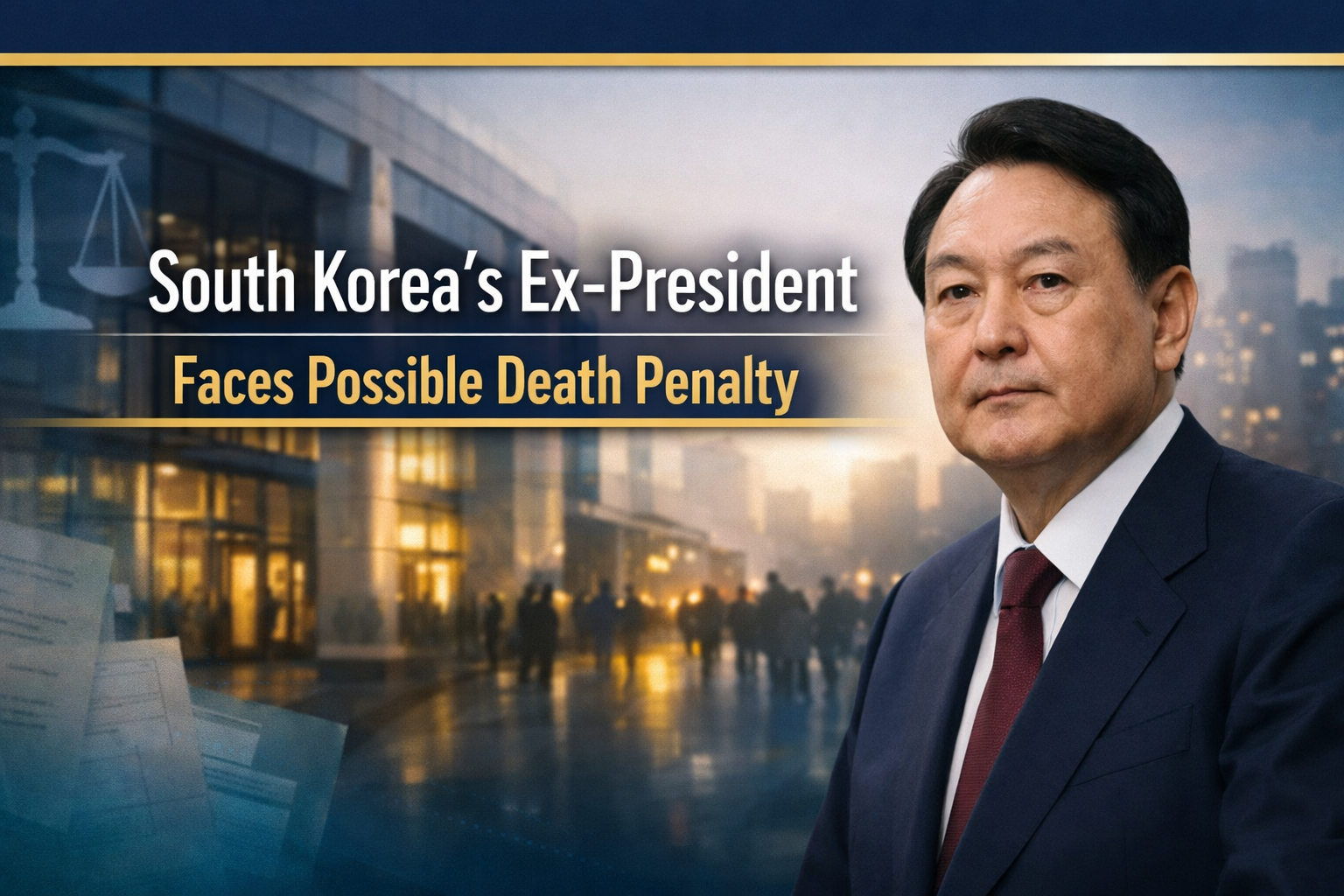
South Korea Prosecutors Seek Death Penalty for Ex‑President Yoon
Advanced | January 30, 2026
✨ Read the article aloud on your own or repeat each paragraph after your tutor.
The Big Headline
South Korean prosecutors are asking the court to give former President Yoon Suk Yeol the death penalty for Yoon for allegedly masterminding an insurrection tied to his brief martial law declaration in December 2024. It’s a rare move—and even people who follow politics closely are paying attention, because this is about more than one person. It’s about how a democracy handles a major constitutional crisis.
What Prosecutors Say Happened
According to prosecutors, Yoon’s martial law declaration wasn’t a normal emergency step—it was an attempt to hold onto power despite political opposition. In court, prosecutors argued the martial law order was unconstitutional and aimed at shutting down pushback from the National Assembly. (Reuters, TIME, Al Jazeera)
Yoon’s Defense
Yoon has denied the charges and claims the martial law declaration was within presidential authority. In other words, his side is saying: “This was a legal tool, not a coup.” (Reuters)
Why the death penalty for Yoon Matters (Even If It’s Unlikely)
South Korea still has the death penalty on the books, but the country has not executed anyone since 1997, so legal experts often describe a “moratorium” in practice. That means even if a death sentence is issued, it may be commuted to life in prison. (Reuters, NPR (transcript))
The Wider Fallout
This case is part of a larger legal and political storm around the 2024 crisis. Several officials from Yoon’s administration have faced charges in related cases. (Reuters, AP News)
What to Watch Next
A key question now is timing: when will the court rule on the death penalty for Yoon, and how will the country respond? (TIME, The Guardian)
Vocabulary
- Insurrection (noun) – an organized attempt to overthrow or undermine lawful authority.
Example: “Prosecutors accused Yoon of masterminding an insurrection.” - Martial law (noun) – a temporary period when the military controls normal civilian government.
Example: “The martial law declaration reportedly lasted only a few hours.” - Unconstitutional (adjective) – not allowed under a country’s constitution.
Example: “Prosecutors called the order unconstitutional.” - Mastermind (verb) – to plan and direct something (often secretly).
Example: “They argued he masterminded the plan to stay in power.” - Moratorium (noun) – an official pause or stop (often temporary).
Example: “South Korea has a moratorium on executions in practice.” - Commute (verb) – to reduce a legal punishment to a less severe one.
Example: “Some expect any death sentence would be commuted to life.” - Prosecution (noun) – the lawyers or legal team arguing a case against someone in court.
Example: “The prosecution asked for the maximum penalty.” - Verdict (noun) – the court’s final decision.
Example: “The verdict will be watched closely by the public.” - Accountability (noun) – responsibility for actions and consequences.
Example: “Supporters of the case say it’s about accountability.” - Precedent (noun) – an earlier decision that can guide future cases.
Example: “Some worry about the precedent this case could set.”
Discussion Questions
About the Article
- What reasons did prosecutors give for requesting the death penalty?
- What is Yoon’s main argument in his defense?
- Why is the death penalty request considered unusual in South Korea?
- How does the Han Duck-soo sentencing connect to the broader story?
- What do you think the court will focus on most when deciding the verdict?
About the Topic
- Should former political leaders be punished more harshly than ordinary citizens? Why or why not?
- What limits should exist on “emergency powers” in a democracy?
- If a country has a long execution moratorium, should it remove the death penalty completely?
- How can a democracy punish wrongdoing without turning trials into political revenge?
- What safeguards can prevent a future leader from abusing the system?
Related Idiom or Phrase
“A line in the sand” — a clear boundary that shouldn’t be crossed.
Example: “This trial is a line in the sand for how South Korea defines the limits of presidential power.”
📢 Want more practical English like this? 👉 Sign up for the All About English Mastery Newsletter! Click here to join us!
Want to finally Master English but don’t have the time? Mastering English for Busy Professionals is the course for you! Check it out now!
Follow our YouTube Channel @All_About_English for more great insights and tips.
This article was inspired by: Reuters, TIME, Al Jazeera, The Guardian, and NPR (transcript)


 English
  한국어
한국어