

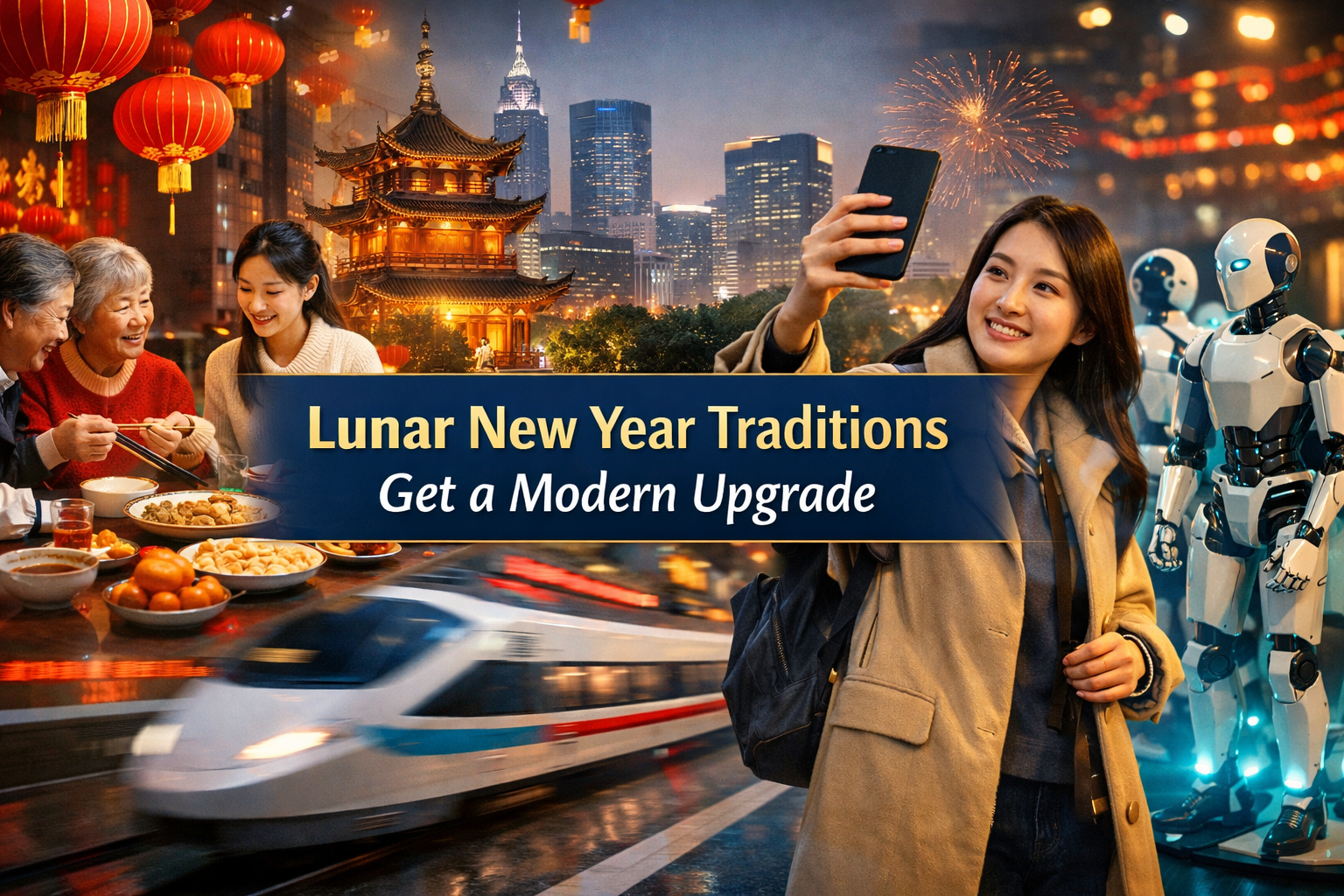
Lunar New Year Traditions Get a Modern Upgrade
Beginner | March 21, 2026
✨ Read the article aloud on your own or repeat each paragraph after your tutor.
Old Traditions, New Energy Across East Asia
Lunar New Year is one of the biggest holidays in East Asia, and in 2026 it began on February 17, welcoming the Year of the Horse. Families across the region still follow many old customs. People clean their homes, prepare special meals, wear red, visit temples, and gather with family to welcome good luck for the new year. In many places, Lunar New Year traditions are still deeply connected to family, renewal, and hope (AP News).
The Heart of the Holiday Still Looks Familiar
Some traditions have stayed strong for generations. A recent South China Morning Post article explained that many Lunar New Year customs in China go back more than 2,000 years. Families decorate their homes, hold reunion dinners, and follow small customs meant to bring luck and avoid bad fortune (South China Morning Post). Another article about Lunar New Year celebrations in East and Southeast Asia described the holiday as a time for deep cleaning, feasts, ancestor worship, and bright decorations (UK Civil Service Blog).
But Modern Life Is Changing the Celebration
At the same time, the holiday is changing with modern life. This year, one of the most talked-about surprises was the appearance of humanoid robots in China’s famous CCTV Spring Festival Gala, the country’s biggest holiday TV show. Reuters reported that robot companies like Unitree Robotics, Galbot, Noetix, and MagicLab showed off dancing, martial arts, and comedy performances (Reuters). In other words, ancient celebration met futuristic technology on one very big stage.
Travel and Experiences Matter More Than Ever
Another modern twist is how people choose to spend the holiday. Reuters reported that China’s longer nine-day holiday helped push travel and tourism higher this year. The Ministry of Culture and Tourism said domestic trips reached 596 million, while tourism spending hit 803.5 billion yuan. Many travelers were looking for a more traditional feeling, so lower-tier cities, villages, temple fairs, and folk events became especially popular (Reuters).
A Holiday Shared in Different Ways
Lunar New Year is also celebrated differently across the region. In Korea, it is called Seollal. In Vietnam, it is known as Tết. In Taiwan and China, many people call it Spring Festival. An AP report showed celebrations taking place in Beijing, Taipei, Hong Kong, Hanoi, Bangkok, Yokohama, and Indonesia, showing just how widely the holiday is shared (AP News). Even when customs differ, the main idea is similar: people want to begin the year with family, respect, joy, and a little luck.
Lunar New Year Traditions Are Adapting
That may be the most interesting part of the story. Lunar New Year traditions are not disappearing. They are adapting. Families still gather, pray, decorate, and eat together. But now they also travel more, watch robot performances, and enjoy modern versions of old customs. That mix of old and new may be exactly why the holiday remains so meaningful for younger generations as well as older ones.
Vocabulary
- tradition (noun) – a custom or way of doing something that has continued for a long time.
Example: Many families keep the tradition of eating together on Lunar New Year’s Eve. - renewal (noun) – a fresh start or the act of beginning again.
Example: The holiday is a symbol of renewal and hope. - ancestor (noun) – a family member from a long time ago.
Example: Some families honor an ancestor during the holiday. - decorate (verb) – to make something look more attractive with special items.
Example: People decorate their homes with red banners and lanterns. - auspicious (adjective) – lucky and likely to bring success.
Example: Many people follow auspicious customs at the start of the year. - humanoid (adjective) – having a shape or movement similar to a human.
Example: Humanoid robots performed during the holiday gala. - gala (noun) – a large public show or celebration.
Example: The Spring Festival Gala is one of China’s biggest television events. - tourism (noun) – the activity of traveling for pleasure.
Example: Tourism rose during the longer holiday break. - folk (adjective) – related to the traditional culture of ordinary people.
Example: Visitors enjoyed folk activities in smaller towns and villages. - adapt (verb) – to change in order to fit a new situation.
Example: Traditions often adapt to modern life.
Discussion Questions (About the Article)
- Why is Lunar New Year still such an important holiday in East Asia?
- What traditional customs are still common today?
- Why were robots such a surprising part of this year’s celebration?
- What do the travel numbers tell us about how people now celebrate the holiday?
- Why do you think traditions can survive even when they change?
Discussion Questions (About the Topic)
- Which holiday traditions are strongest in your culture or family?
- Do you think technology improves holidays, or does it distract from them?
- Why do younger generations sometimes change older traditions?
- Is it important to keep traditions exactly the same? Why or why not?
- What old tradition would you like to protect in modern society?
Related Idiom
“The best of both worlds” – enjoying the advantages of two different things at the same time.
Example: Modern Lunar New Year celebrations offer the best of both worlds: family tradition and new experiences.
📢 Want more practical English using real news? 👉 Sign up for the All About English Mastery Newsletter! Click here to join us!
Want to finally Master English but don’t have the time? Mastering English for Busy Professionals is the course for you! Check it out now!
Follow our YouTube Channel @All_About_English for more great insights and tips.
This article was inspired by: South China Morning Post, Reuters, Reuters, AP News, and UK Civil Service Blog.

 English
  한국어
한국어