

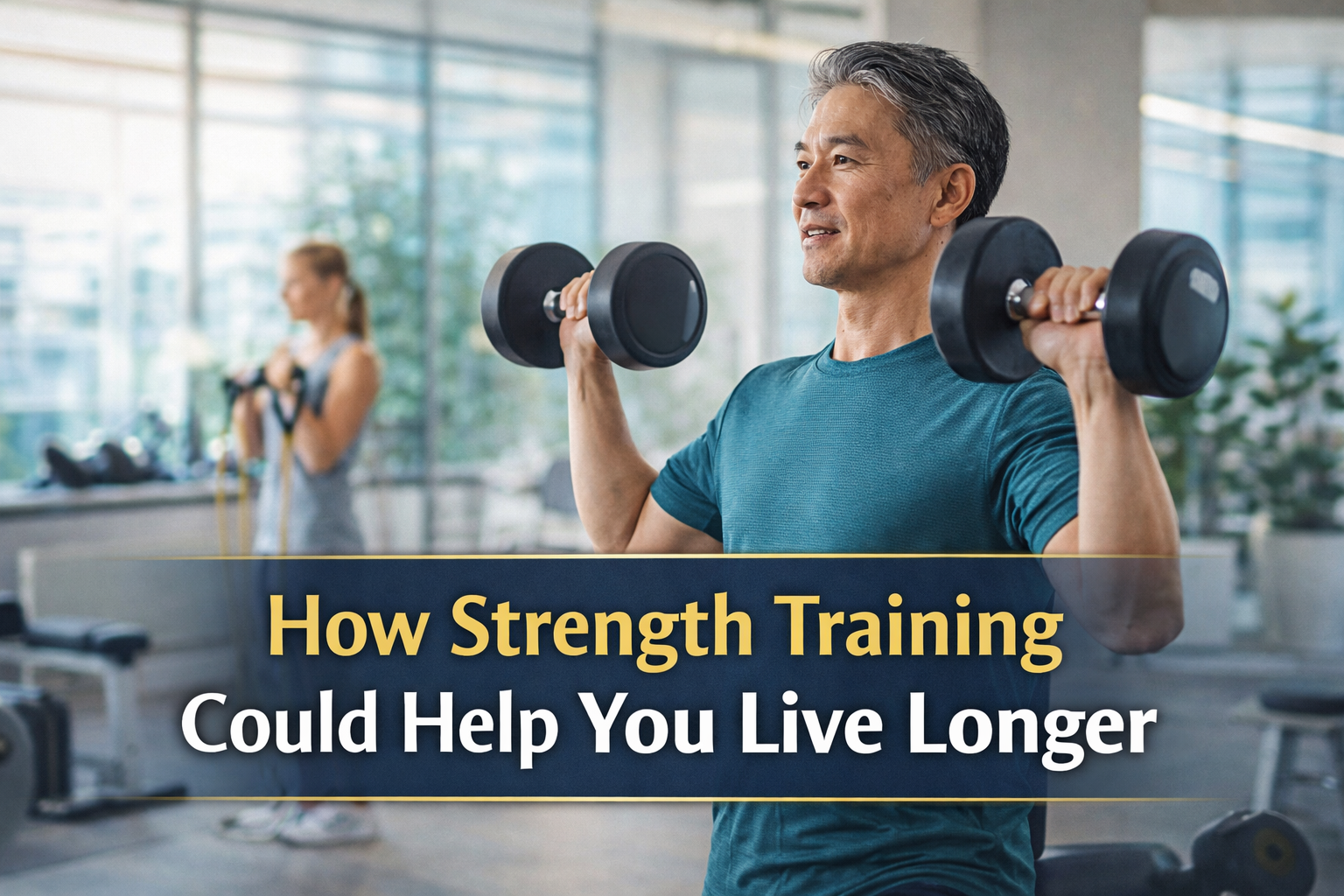
How Strength Training Could Help You Live Longer
Beginner | March 21, 2026
✨ Read the article aloud on your own or repeat each paragraph after your tutor.
Why Strength Training Matters More Than Many People Think
Many people think exercise for a long life mostly means walking, jogging, or other cardio workouts. But a recent EatingWell article says strength training longevity is becoming a bigger part of the health conversation, as muscle-building exercise may also play an important role in helping people live longer (EatingWell). In other words, lifting weights or doing resistance exercises may be about much more than building bigger muscles.
A New Study Focused on Older Women
The article was based on a new study published in JAMA Network Open. Researchers looked at women aged 63 to 99 and studied whether muscular strength was linked to a lower risk of death over time (JAMA Network Open). The study included women from the Women’s Health Initiative, and researchers measured things like grip strength, lower-body strength, physical activity, and sedentary time.
Stronger Muscles Were Linked to Better Survival
One of the most important findings was that stronger women were more likely to live longer, even after researchers considered overall activity levels, sedentary behavior, walking speed, and inflammation (EatingWell, JAMA Network Open). That means strength itself may matter, not just how often someone moves. For people who do not always meet cardio goals, that is an encouraging message.
Strength Training Does Not Have to Be Complicated
EatingWell also explained that strength training does not need to mean a hard gym routine. Simple exercises like squats, glute bridges, pushups, resistance-band workouts, or light dumbbell exercises can help people get started (EatingWell). The article also noted that the American College of Sports Medicine recommends muscle-strengthening activities at least two days per week.
Another Study Points to Healthy Aging
A separate report from Prevention described another study that found people who did about 90 minutes of strength training per week had longer telomeres, which are protective caps on the ends of chromosomes that shorten with age (Prevention). Researchers said that amount of strength training was linked with nearly four years less biological aging. That study looked at a different group and a different measure, but it points in the same direction: strength training may support healthy aging.
Strength Training Longevity Has Big Benefits
The big takeaway is not that everyone needs to become a bodybuilder. It is that strength training longevity can be a simple, practical, and realistic idea for busy adults. Building muscle may help support balance, independence, bone health, and long-term survival. For busy adults, that is good news: a few basic exercises done consistently may go a long way.
Vocabulary
- strength training (noun) – exercise that makes your muscles stronger by using resistance.
Example: Strength training can include squats, pushups, and dumbbell exercises. - resistance (noun) – force that makes muscles work harder.
Example: Resistance bands are a simple tool for home workouts. - muscular (adjective) – related to muscles.
Example: The study measured muscular strength in older women. - sedentary (adjective) – spending a lot of time sitting and not being active.
Example: Too much sedentary time can hurt long-term health. - inflammation (noun) – a biological reaction in the body that can be linked to illness or injury.
Example: Researchers also looked at inflammation in the study. - grip strength (noun) – the amount of force in your hand when you hold something.
Example: Grip strength was one way researchers measured strength. - guideline (noun) – an official suggestion or general rule.
Example: Health guidelines recommend strength training twice a week. - telomere (noun) – a protective part at the end of a chromosome.
Example: Telomeres usually get shorter as people age. - biological aging (noun) – how old the body seems based on health, not just years.
Example: Exercise may help slow biological aging. - consistently (adverb) – in a regular and steady way.
Example: Small workouts help most when you do them consistently.
Discussion Questions (About the Article)
- Why do many people connect long life more with cardio than strength training?
- What did the JAMA study find about stronger women?
- Why is it encouraging that strength mattered even beyond general activity levels?
- What simple forms of strength training were mentioned in the article?
- How did the Prevention report support the main idea of the story?
Discussion Questions (About the Topic)
- Do you do any kind of strength training now? Why or why not?
- What makes exercise feel realistic or unrealistic in a busy schedule?
- Do you prefer simple home workouts or going to a gym?
- Why do you think many people avoid strength training?
- What small health habit could you do twice a week starting now?
Related Idiom
“Go a long way” – to have an important effect even if the action seems small.
Example: Just two strength workouts a week can go a long way for long-term health.
📢 Want more practical English using real news? 👉 Sign up for the All About English Mastery Newsletter! Click here to join us!
Want to finally Master English but don’t have the time? Mastering English for Busy Professionals is the course for you! Check it out now!
Follow our YouTube Channel @All_About_English for more great insights and tips.
This article was inspired by: EatingWell, JAMA Network Open, and Prevention.


 English
  한국어
한국어