

U.S. Consumer Sentiment Shows a Small Recovery
Intermediate | May 6, 2026
✨ Read the article aloud on your own or repeat each paragraph after your tutor.
A Small Recovery in U.S. Consumer Sentiment
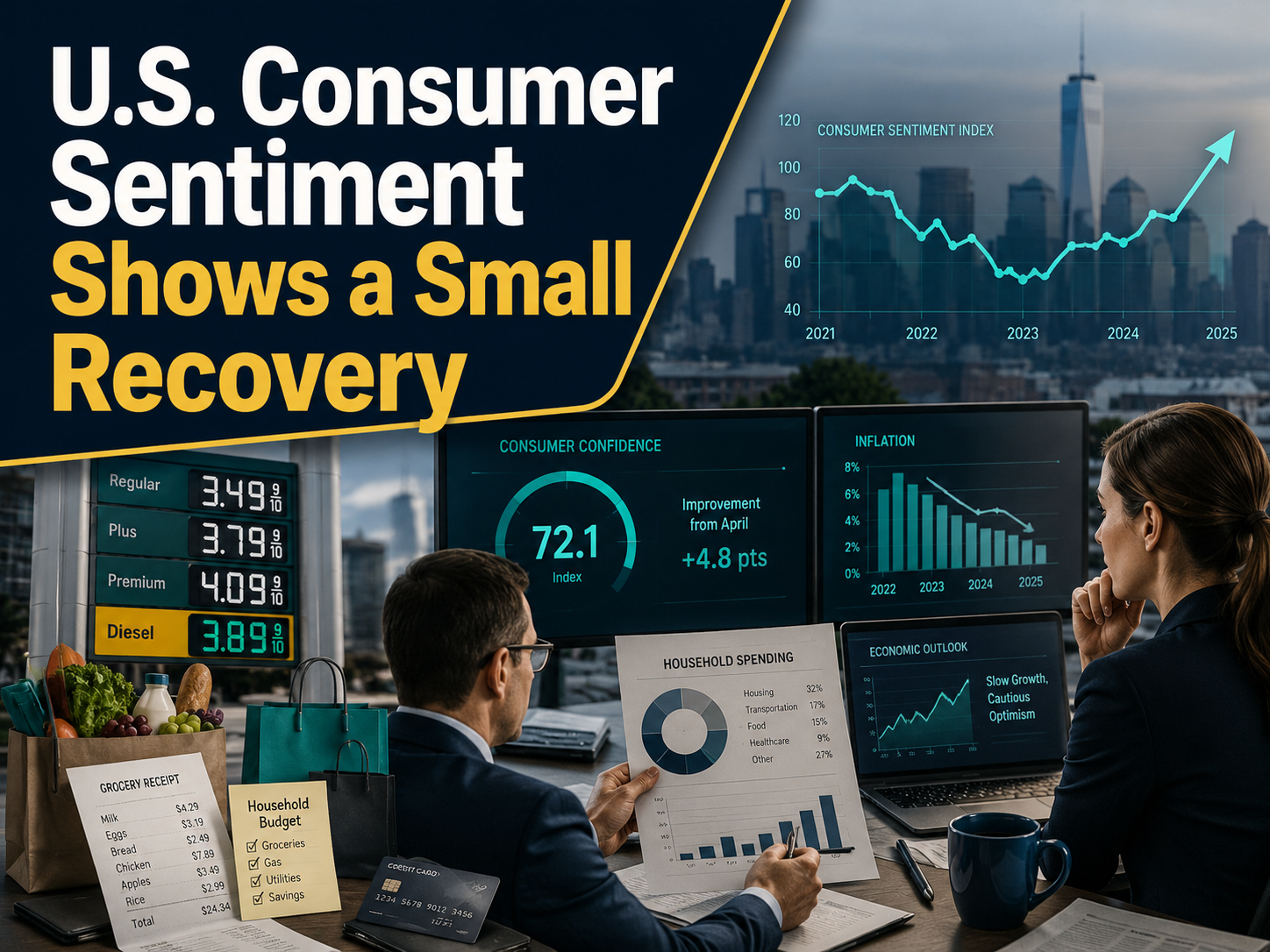
In late April, Americans felt a little better about the economy, but not exactly cheerful. The University of Michigan Consumer Sentiment Index finished April at 49.8, up from the earlier April estimate of 47.6. That small improvement came after a two-week ceasefire and slightly softer gasoline prices helped reduce some pressure on households. (The Epoch Times)
Why the U.S. Consumer Sentiment Number Still Looks Weak
Even with the small recovery, U.S. consumer sentiment remained very low. The University of Michigan reported that the final April reading was down 6.6% from March and down 4.6% from April 2025. The current economic conditions index also fell to 52.5, while the consumer expectations index fell to 48.1. In plain English, consumers still felt squeezed, even if the situation looked slightly less bad than earlier in the month. (University of Michigan Surveys of Consumers)
Gas Prices Remain the Big Problem
Reuters reported that many households focused more on price pressure than on diplomatic news. The Iran war disrupted shipping in the Strait of Hormuz, which pushed up oil prices and raised the cost of gasoline and diesel. Reuters also noted that gasoline stayed above $4 per gallon in April, while diesel stayed well above $5 per gallon. When fuel costs rise, families feel it quickly because transportation affects daily life, delivery costs, and business expenses. (Reuters)
Inflation Worries Are Still on the Table
The inflation picture also made consumers nervous. AP reported that a key inflation measure watched by the Federal Reserve rose 0.7% in March from February and 3.5% from a year earlier, the biggest yearly increase in almost three years. Gas prices jumped nearly 21% in March, while the national average gas price reached about $4.30 per gallon. That means many households had less money left for other things. In business terms, higher fuel prices can “eat into the budget” fast. (AP News)
Confidence and Sentiment Tell Different Stories
There was one interesting twist. A separate Reuters report said the Conference Board’s consumer confidence index rose slightly to 92.8 in April. That survey showed people felt a bit better about the labor market and stock prices. However, Reuters explained that the University of Michigan survey often reacts more strongly to inflation worries, while the Conference Board survey focuses more on jobs. So, the message is mixed: workers may still see a decent job market, but shoppers still feel nervous at the gas pump. (Reuters)
What This Means for Everyday People
For English learners, this story is useful because it connects big economic words to daily life. Consumer sentiment is not just a number for economists. It reflects how people feel when they pay for gas, buy groceries, plan vacations, or decide whether to make a big purchase. If people feel uncertain, they may cut back. If they feel more confident, they may spend more. Right now, Americans seem to be saying, “Things improved a little, but we are not out of the woods yet.”
Vocabulary
- Consumer sentiment (noun) – how confident or worried consumers feel about the economy.
Example: “U.S. consumer sentiment improved slightly in late April.” - Index (noun) – a number used to measure changes in something over time.
Example: “The Consumer Sentiment Index ended April at 49.8.” - Ceasefire (noun) – an agreement to stop fighting for a period of time.
Example: “The ceasefire helped calm energy markets for a short time.” - Gasoline (noun) – fuel used in cars and many other vehicles.
Example: “Higher gasoline prices made consumers worry about their budgets.” - Diesel (noun) – a type of fuel often used by trucks, buses, and ships.
Example: “Diesel prices stayed above $5 per gallon in April.” - Inflation (noun) – a general rise in prices over time.
Example: “Inflation made everyday goods more expensive.” - Household (noun) – a person or group of people living together, often as a family.
Example: “Many households had less money after paying for fuel.” - Disruption (noun) – a problem that interrupts the normal flow of activity.
Example: “The war caused a disruption in shipping through the Strait of Hormuz.” - Confidence (noun) – the feeling that things are stable, safe, or likely to improve.
Example: “Consumer confidence rose slightly in a separate survey.” - Budget (noun) – a plan for how to spend money.
Example: “High gas prices can eat into a family’s budget.”
Discussion Questions (About the Article)
- What happened to the University of Michigan Consumer Sentiment Index in April?
- Why did consumer sentiment recover slightly late in the month?
- Why did gasoline and diesel prices matter so much to consumers?
- How did the University of Michigan survey and the Conference Board survey show different results?
- Why can consumer sentiment affect the wider economy?
Discussion Questions (About the Topic)
- How do fuel prices affect your daily spending or travel plans?
- When people feel nervous about the economy, what kinds of purchases do they usually delay?
- Which matters more for consumer confidence: job security or prices? Why?
- How can businesses respond when customers feel worried about spending?
- What signs do you personally notice when people feel more or less confident about the economy?
Related Idiom
“Not out of the woods yet” – still facing danger, difficulty, or uncertainty, even after some improvement.
Example: “U.S. consumer sentiment improved slightly, but with high gas prices and inflation worries, consumers are not out of the woods yet.”
📢 Want more practical English through real news stories? Sign up for the All About English Mastery Newsletter here: allaboutenglishmastery.com/newsletter
Want to build stronger English in less time? Check out Mastering English for Busy Professionals.
Follow our YouTube channel @All_About_English for more English tips and practice.
This article was inspired by: The Epoch Times, University of Michigan Surveys of Consumers, Reuters, and AP News


 English
  한국어
한국어