

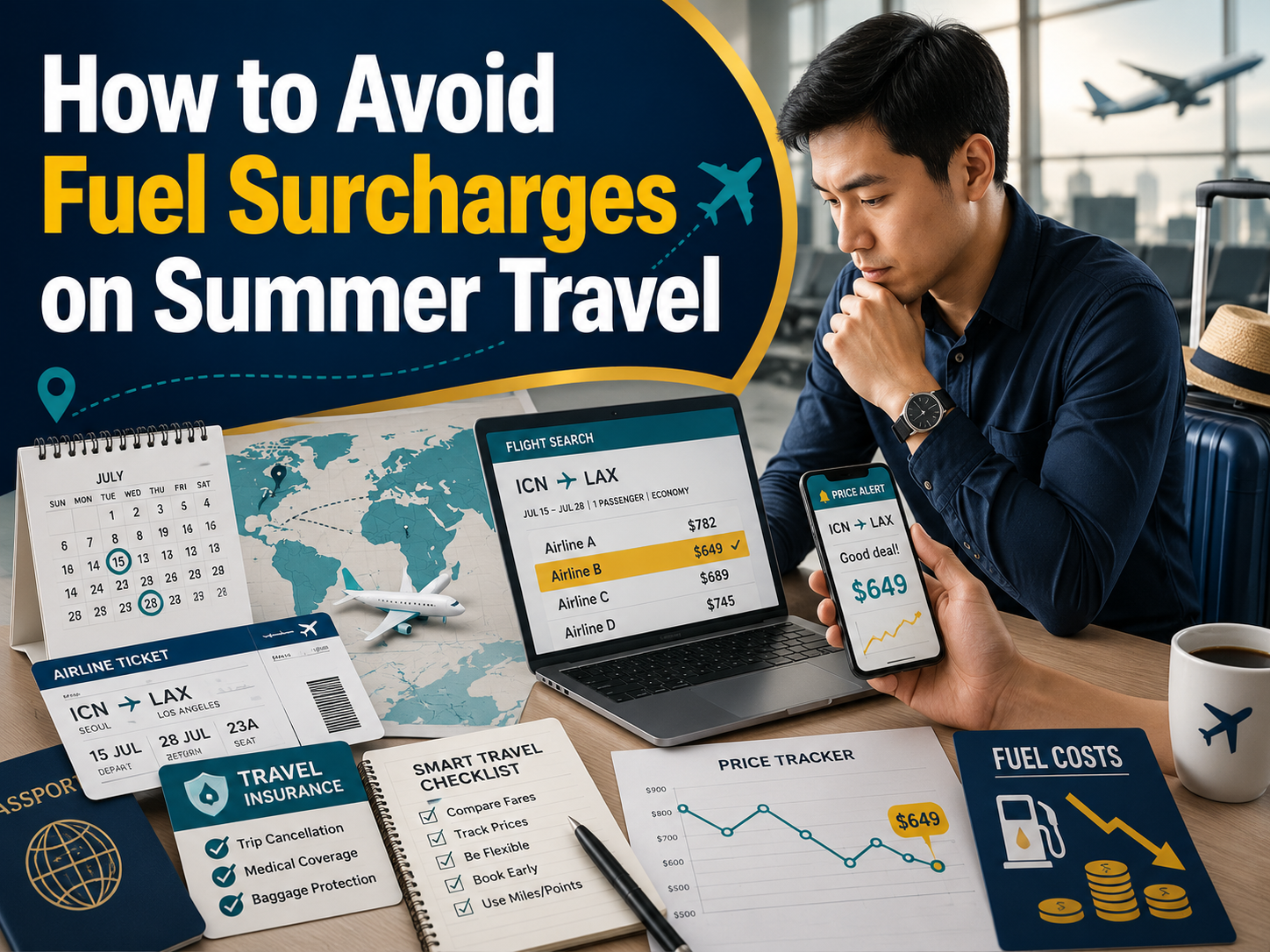
How to Avoid Fuel Surcharges on Summer Travel
Beginner | June 23, 2026
✨ Read the article aloud on your own or repeat each paragraph after your tutor.
How to Avoid Fuel Surcharges This Summer
Summer travel can be exciting, but it can also be expensive. A recent Kiplinger article explained that rising jet fuel prices and global tensions have made travel planning more stressful for many people. Airlines may raise ticket prices, add fuel-related fees, or reduce flight schedules when fuel becomes more expensive. That means travelers need to plan carefully if they want to avoid fuel surcharges and protect their budget. (Kiplinger)
Why Travel Costs Are Rising
According to Kiplinger, the conflict between the United States and Iran has affected airline operations in the Middle East and pushed up global oil market concerns. Jet fuel is one of the biggest costs for airlines, so when fuel prices rise, travelers often feel it in their wallets. Sometimes the cost appears as a higher ticket price. Other times, travelers may see a separate fuel surcharge or extra fee. Either way, the result is simple: flying can cost more. (Kiplinger)
More Travelers Are Worried About Delays
A survey from Global Rescue found that 85% of travelers were concerned about travel disruptions connected to global conflicts. These disruptions could include airspace closures, flight rerouting, airport delays, or missed connections. That does not mean people should cancel every trip. But it does mean travelers should think ahead, keep their plans flexible, and avoid making last-minute decisions when prices are already high. (Global Rescue)
Smart Booking Can Help You Save
One simple way to avoid fuel surcharges is to compare flight prices early and often. Kiplinger recommends using tools like Google Flights, Hopper, and Skyscanner to track prices and find better deals. Travelers can also save money by flying on less popular days, especially Tuesday or Wednesday. If your schedule is flexible, you may find a cheaper flight by leaving one day earlier or coming home one day later. That small change can make a big difference. (Kiplinger)
Book Directly and Choose Simple Flights
Kiplinger also suggests booking directly through the airline when possible. If a flight is canceled or changed, it is often easier to solve the problem with the airline than through a third-party website. Travelers should also download the airline’s app so they can get fast updates about delays, gate changes, and rebooking options. Early morning flights and nonstop flights may also reduce the chance of problems. In business language, this is called reducing risk before it becomes a headache. Very professional. Very adult. Slightly boring—but useful. (Kiplinger)
Think Carefully About Travel Insurance
Travel insurance can help with some problems, but it does not cover everything. Many standard travel insurance policies do not cover cancellations caused by war or political conflict. Travelers who want more flexibility may look at Cancel For Any Reason coverage, often called CFAR. According to Squaremouth, CFAR may reimburse 50% to 75% of prepaid, non-refundable trip costs, but it usually costs more and must be bought soon after the first trip payment. So before you buy insurance, read the details carefully. Fine print: the tiny boss fight of adult life. (Squaremouth)
Why This Story Matters
This story matters because travel is not only about fun. It is also about planning, money, and risk. For English learners, this article is useful because it teaches common travel and business words like “flexible,” “surcharge,” “direct booking,” and “travel insurance.” It also gives practical language for real life. If you are planning a trip, you can ask, “Is there a fuel surcharge?” “Can I change this ticket?” or “What does this policy cover?” Good questions can save money—and maybe save your summer vacation from becoming a financial horror movie.
Vocabulary
- Surcharge (noun) – an extra fee added to the normal price.
Example: “The airline added a fuel surcharge to the ticket.” - Fuel (noun) – material used for energy, such as gasoline or jet fuel.
Example: “Jet fuel is expensive this summer.” - Flexible (adjective) – able to change easily.
Example: “Flexible travel dates can help you find cheaper flights.” - Disruption (noun) – a problem that stops something from continuing normally.
Example: “The storm caused a major travel disruption.” - Rerouting (noun) – changing the path or route of a trip.
Example: “The airline used rerouting after the airspace closed.” - Direct booking (noun) – buying a ticket directly from the airline, hotel, or company.
Example: “Direct booking can make rebooking easier.” - Nonstop flight (noun) – a flight that goes from one city to another without stopping.
Example: “A nonstop flight may reduce the chance of delays.” - Travel insurance (noun) – protection that may help pay for travel problems.
Example: “She bought travel insurance before her trip.” - Policy (noun) – an official plan or contract, often from an insurance company.
Example: “Read the policy before you buy travel insurance.” - Reimburse (verb) – to pay someone back for money they spent.
Example: “The insurance company may reimburse part of the trip cost.”
Discussion Questions About the Article
- Why are some summer travel costs rising?
- What did the Global Rescue survey say about traveler concerns?
- Which apps can help travelers track flight prices?
- Why does Kiplinger suggest booking directly with the airline?
- What is CFAR travel insurance, and why should travelers read the details carefully?
Discussion Questions About the Topic
- Do you usually compare prices before booking a flight? Why or why not?
- Would you rather pay more for a nonstop flight or save money with a layover?
- What travel problems worry you the most?
- Do you think travel insurance is worth the money?
- What is one smart travel tip you would give to a friend?
Related Idiom
“Better safe than sorry” – it is better to prepare now than regret something later.
Example: “Buying the right insurance and checking flight options early is better safe than sorry when summer travel is uncertain.”
📢 Want more practical English through real news stories? Sign up for the All About English Mastery Newsletter here: allaboutenglishmastery.com/newsletter
Want to build stronger English in less time? Check out Mastering English for Busy Professionals.
Follow our YouTube channel @All_About_English for more English tips and practice.
This article was inspired by: Kiplinger, Global Rescue, and Squaremouth


 English
  한국어
한국어