

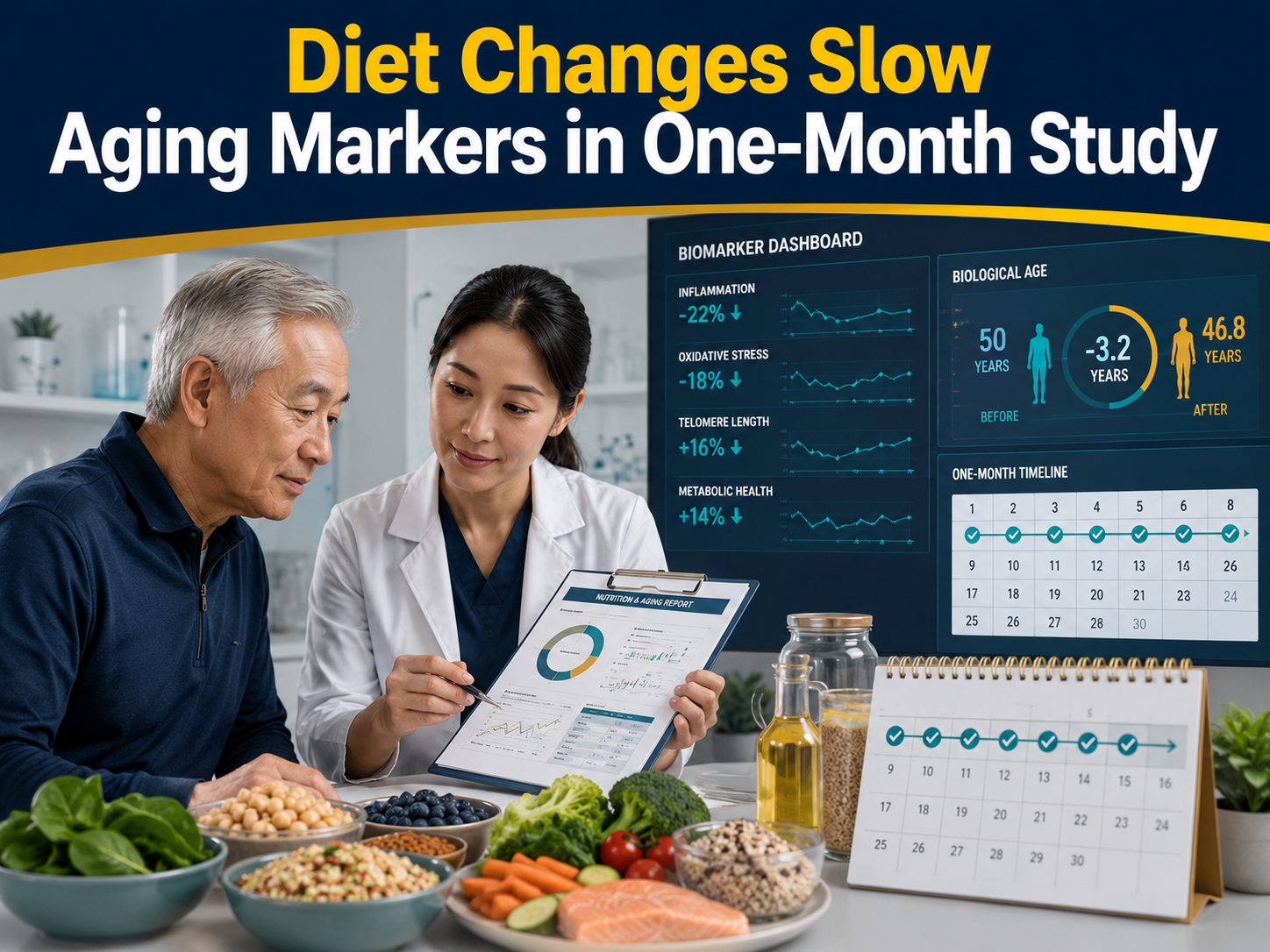
Diet Changes Slow Aging Markers in One-Month Study
Beginner | June 9, 2026
✨ 혼자서 기사를 소리 내어 읽거나 튜터를 따라 각 단락을 반복해서 읽으세요. 레벨...
Diet Changes Slow Aging Markers in One-Month Study
Can food really affect how fast your body ages? A new study from the University of Sydney suggests that some diet changes may improve signs of biological aging in just four weeks. The study looked at older adults between 65 and 75 years old and measured health markers before and after a short diet program. In simple terms, the researchers found that diet changes slow aging markers in some people — but they also warned that the results are still early. (New York Post)
Why Diet Changes Slow Aging Markers Matters
The study focused on something called biological age. This is different from chronological age. Chronological age means the number of years you have been alive. Biological age looks at how healthy or “old” your body seems based on signs inside the body. Researchers measured 20 biomarkers, including things like cholesterol and insulin levels. These markers can give a better picture of health than birthday candles alone — which is good news, because candles are terrible at giving medical advice.
What the Researchers Studied
The study included 104 participants aged 65 to 75. They were divided into four diet groups for four weeks. Two diets were omnivorous, meaning they included both animal and plant foods. Two diets were semi-vegetarian, meaning they got about 70% of their protein from plant sources. The diets were also divided by fat and carbohydrate levels: some were higher in fat, while others focused more on carbohydrates. All four diets got 14% of their energy from protein. (Aging Cell)
Which Diets Showed Better Results?
After four weeks, three of the four groups showed lower biological-age measures. The strongest improvements came from diets that were rich in complex carbohydrates and plant-based foods. The one group that did not show a meaningful change was the high-fat omnivorous diet group. This does not mean everyone must become vegetarian tomorrow morning. It simply suggests that eating more plant-based foods and reducing certain high-fat animal-based patterns may help improve health markers in older adults. (Medical Xpress)
What This Does Not Prove Yet
This is the important part: the study does not prove that people will live longer because of a four-week diet change. The researchers said the findings are preliminary. That means the results are interesting, but scientists still need more research. The changes may show short-term improvement in the body’s health profile, not a full “reverse aging” miracle. So no, this is not a magic anti-aging button. If it were, someone would already be selling it for $999 next to a very dramatic before-and-after photo.
A Practical Lesson for Everyday Life
Even with that caution, the study gives us a useful message. Small diet changes may matter, even later in life. Eating more whole foods, complex carbohydrates, vegetables, legumes, and plant-based meals could support better health markers. For English learners, this story is also a great topic for conversation because it connects food, health, science, and daily habits. You can practice explaining your opinion with simple sentences like, “I think diet affects aging because food changes the body,” or “I would like to eat more plant-based meals, but I still enjoy meat.”
Food Choices and Long-Term Habits
The big takeaway is not that one perfect diet will fix everything. The better lesson is that food choices can affect the body quickly, and healthy habits are worth building step by step. The study suggests that diet changes slow aging markers, but smart people will treat this as a starting point, not the final word. One month can show a change, but long-term health usually comes from repeated choices. In other words, your dinner may not make you young again, but it may help your body work a little better.
Vocabulary
- Biological age (noun) – how old the body seems based on health signs, not years lived.
Example: “The study looked at biological age, not just chronological age.” - Chronological age (noun) – a person’s age based on their birth date.
Example: “His chronological age is 70.” - Biomarker (noun) – a measurable sign of health inside the body.
Example: “Cholesterol is one biomarker the researchers measured.” - Participant (noun) – a person who takes part in a study or activity.
Example: “The study included 104 participants.” - Omnivorous (adjective) – eating both animal and plant foods.
Example: “An omnivorous diet includes meat, fish, vegetables, and grains.” - Semi-vegetarian (adjective) – mostly plant-based but not fully vegetarian.
Example: “The semi-vegetarian diet included more plant protein.” - Complex carbohydrates (noun) – healthier carbohydrates found in foods like whole grains, beans, and vegetables.
Example: “Complex carbohydrates can give the body steady energy.” - Preliminary (adjective) – early and not final.
Example: “The researchers said the results are preliminary.” - Meaningful (adjective) – important or noticeable.
Example: “One diet group did not show a meaningful change.” - Long-term (adjective) – continuing for a long time.
Example: “Scientists need long-term studies to learn more.”
Discussion Questions (About the Article)
- What age group did the study focus on?
- What is the difference between biological age and chronological age?
- How many participants joined the study?
- Which diet group did not show a meaningful change?
- Why did the researchers say more research is needed?
Discussion Questions (About the Topic)
- Do you think food can affect how people age? Why or why not?
- What healthy foods do you eat often?
- Would you try a more plant-based diet for one month?
- What is harder: changing your diet or exercising regularly?
- How can people build better eating habits without feeling stressed?
Related Idiom
“You are what you eat” – your health and body are strongly affected by the food you eat.
Example: “This study reminds us of the phrase ‘you are what you eat’ because diet may affect signs of aging in the body.”
📢 Want more practical English through real news stories? Sign up for the All About English Mastery Newsletter here: allaboutenglishmastery.com/newsletter
Want to build stronger English in less time? Check out Mastering English for Busy Professionals.
Follow our YouTube channel @All_About_English for more English tips and practice.
This article was inspired by: New York Post, Medical Xpress, Aging Cell, and PubMed


 한국어
한국어  English